
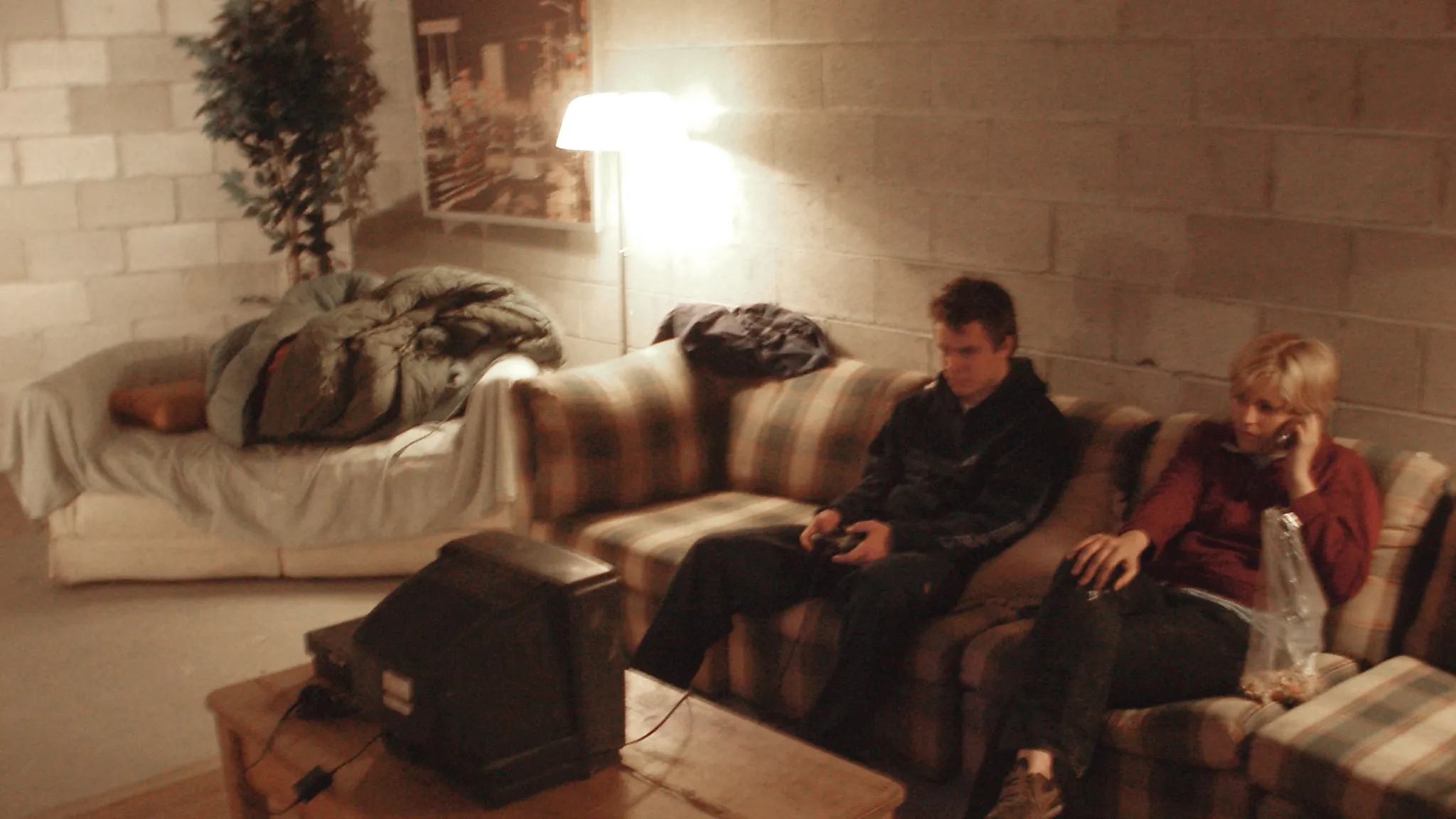
The Liminal Spaces of Secret Mall Apartment are Amazing. I had a near feral, subliminal, emotive response to Netflix’s latest documentary Secret Mall Apartment. The subversive art, the thumb in the eye to capitalistic oppression, the joy of just existing subterraneanly beyond the reach of society at large – the documentary scratched a hell of a lot of itches for me.

Netflix’s documentary “Secret Mall Apartment” tells one of those stories that sounds too bizarre to be true—and yet, it absolutely is. The film chronicles the discovery of a fully furnished apartment secretly built inside a Providence Place Mall in Rhode Island, complete with a living room, bedroom, and even a small entertainment system. But what makes this documentary so compelling isn’t just the audacity of the secret apartment itself; it’s what the story reveals about creativity, urban exploration, the relationship between public and private space, and the peculiar American mall culture that shaped a generation.
The Discovery That Started It All
The apartment was discovered in 2007 by mall security, who stumbled upon what appeared to be a furnished living space tucked away in a back corridor of the Providence Place Mall. The space featured a couch, a bed, a PlayStation, and various other amenities that suggested someone had been living there—or at least spending significant time there. The discovery sparked immediate media attention and launched an investigation into who had created this hidden sanctuary and how long it had existed undetected.
What the documentary reveals is that the apartment wasn’t the work of a desperate homeless individual seeking shelter, as some initially speculated. Instead, it was an elaborate art project conceived by a group of artists who saw the mall’s vast, underutilized spaces as a canvas for exploring themes of consumerism, public versus private space, and the absurdity of modern American life. The project existed for approximately four years before being discovered, a testament to both the creators’ ingenuity and the mall’s labyrinthine architecture that made such a feat possible.
The Artists Behind the Madness
The documentary introduces us to the artists responsible for this audacious project, who describe their motivations with a mixture of mischief and genuine artistic intent. For them, the mall represented everything excessive about American consumer culture—massive buildings designed to encourage spending, filled with dead spaces and utility corridors that serve the commercial engine but remain hidden from shoppers’ view. By carving out a living space within these hidden arteries, they were making a statement about reclaiming space, about finding humanity within the cathedral of capitalism.
Their process was remarkably methodical. They carefully studied the mall’s layout, identified security blind spots, and gradually smuggled in furniture and supplies over months. The apartment wasn’t just thrown together; it was thoughtfully designed with comfort in mind. They installed proper lighting, brought in soft furnishings, and created what appeared to be a genuinely livable space. The artists would visit their secret apartment periodically, sometimes to relax, sometimes to work on other projects, and sometimes simply to enjoy the surreal experience of having a private retreat inside one of America’s most public spaces.
My Own Life and Subterranean Spaces
Growing up, I quickly fell in love with places I wasn’t allowed to be. I stole keys to closet spaces, storage units, etc etc, all with the hopes of creating secret digs that no one else knew about. I’m talking about doing these sorts of things starting at 10. Young. My father worked at a huge school complex, and I knew the air ducts, the back storage units, the crawl spaces, inside and out. Living in Los Angeles near Echo Park, my friends and I found subterranean passages under the lake, and under the streets, and we would play these incredible games of flashlight tag down there. And then my family and I moved to Washington D.C. and I spent my middle school and high school years running around downtown D.C. And by running around… I know the catacombs of Capitol Hill and the surrounding areas like the back of my hand. On a tour of the White House, I slipped away, and went up the elevators to the residence. Let me be clear, I snuck into the President’s house, in the White House. That particular jaunt ended poorly at the hands of two men with uzis strapped to their chests. I explained I was a Senator’s son, and got all mixed up and turned around. So to say that I resound to this story of these artists crafting this living space at the liminal edge of the rest of this capitalistic experience – is an understatement.
Capitalism, The Mall, and the Levers of Control
What elevates “Secret Mall Apartment” beyond a simple prank story is its meditation on the American mall itself. The documentary uses the apartment as a jumping-off point to explore the broader history and cultural significance of shopping malls. These structures, which dominated the suburban landscape from the 1960s through the early 2000s, represented a uniquely American vision of community space—albeit one entirely predicated on commerce.
The film includes archival footage and interviews that paint a picture of malls as the “third place” in American life—not home, not work, but somewhere in between where teenagers congregated, families strolled, and communities gathered. But it also acknowledges the darker aspects: the privatization of what felt like public space, the environmental impact of massive climate-controlled structures, and the economic model that ultimately proved unsustainable as online shopping rose to prominence.
By 2007, when the apartment was discovered, many American malls were already entering their decline. The Providence Place Mall still thrives today, but countless others have become “dead malls”—ghostly structures that stand as monuments to a fading era. The secret apartment, in this context, becomes even more poignant: a hidden act of humanity within a dying commercial ecosystem.
Questions of Ethics and Legality
The documentary doesn’t shy away from the complicated ethics of the project. Was this art or trespassing? Creative expression or theft of utilities and space? The mall’s management, understandably, took a dim view of the apartment, seeing it as a security breach and potential liability. From their perspective, the artists had violated private property, used electricity without payment, and created potential fire hazards.
The artists counter that they caused no damage, stole nothing, and merely occupied space that was otherwise wasted. They argue that their project raised important questions about who owns space, who gets to decide how space is used, and whether every square foot of a massive commercial structure must serve the singular purpose of generating profit.
The documentary presents both perspectives without heavy-handed moralizing, allowing viewers to draw their own conclusions. It’s this balanced approach that makes the film more thought-provoking than a simple celebration of rule-breaking would have been.
The Broader Context of Urban Exploration
“Secret Mall Apartment” also situates the project within the larger world of urban exploration—the practice of investigating abandoned or off-limits urban spaces. The film features interviews with other urban explorers who discuss the appeal of accessing hidden worlds within familiar landscapes. For these explorers, there’s something almost archaeological about discovering the infrastructure that supports modern life but remains invisible to most people.
The documentary draws parallels between the mall apartment and other famous examples of creative space appropriation: the artists who lived secretly in the Paris catacombs, the man who built an apartment under a bridge in New York, the communities that have formed in the unused tunnels beneath Las Vegas. Each of these stories represents a different relationship with urban space and different ways of challenging assumptions about where people can and cannot exist.
Legacy and Impact
In the years since the apartment’s discovery, the story has taken on a life of its own. The documentary itself becomes part of that legacy, transforming a local news oddity into a broader cultural touchstone. The artists involved have gone on to other projects, but the mall apartment remains their most famous work—a piece that resonates precisely because it touches something many people feel: the desire to find personal space and meaning within increasingly commodified and controlled environments.
“Secret Mall Apartment” ultimately succeeds because it uses a singular, strange story to illuminate much larger themes about American culture, creativity, and the spaces we inhabit. It’s a documentary that makes you look differently at the buildings you pass every day and wonder what hidden worlds might exist just beyond the public-facing facades. In our current era of dead malls and online shopping, it also serves as an unexpected time capsule of a particular moment in American retail history—one where the mall still loomed large enough in our cultural imagination to be worth infiltrating, worth transforming, worth turning into art.