
Bitter Lake Unveils The Power of Story Telling
This post came simply enough… it was caused by a mistake during a conversation while in the Philippines. Looking back on it, it was incredibly embarrassing, and yet my host took it entirely in stride. He even covered for my lack of knowledge – which makes it even more embarrassing now.
“Why does it seem that the Philippines are so incredibly connected to America?”
Yes. I’m an idiot. But as I was traveling it was as if I had been in the dark and then I stepped off the plane in Manila, and it was like a whiff of normalcy again. His response was simple enough, “Do you not know about your countries engagement with my country under Woodrow Wilson?” I obviously did not by the blank look on my face. And I’m a student of history. I enjoy studying all manner of chronicles of man’s past and our deeds, and mis-deeds, as it were. But this? I had no idea.
 If you, like me, are unaware of our involvement in the Philippines you can read more about it here, but it goes without saying there were somewhere around 30k armed men killed. And something like, 200 to 300k civilians who died of disease. We can debate the ins and outs of that particular engagement, and the moral intricacies, which I don’t intend to do here. But my larger point only is… history is written by the victors. Which gives them enormous sway to recast the engagement in their own favorable light.
As a simpleton growing up I thought that America was the one altruistic country on the planet that lived out our Christian values. There is a lot of data to support this sort of idealism. I’ll give you two absolutely enormous data points. World War I and World War II. Done. Argument over. But what about our involvement with the creation of the Panamanian Canal? No, wait, I meant to say, the Colombian canal? Seeing as though it was on Colombian land… that is, until it wasn’t of course. When Colombia wouldn’t sign the treaty to allow for the 99 year lease we backed rebels that supported a Panamanian government. Roosevelt rushed warships in and recognized the rebels immediately. Three minutes later he then signed an agreement for the creation of the canal. This is what Wikipedia and the New York Times had to say about the imbroglio.
‘President Roosevelt infamously stated that “I took the Isthmus, started the canal and then left Congress not to debate the canal, but to debate me.” Several parties in the United States opposed this act of war on Colombia: the New York Times called the support given by the United States to Mr. Bunau-Varilla an “act of sordid conquest.”‘
I am not going to walk through mistake after mistake after mistake (or is the word ‘mistake’ implying way too much generosity there?) that the U.S. Government has made. There are plenty. And it usually involves money. Manifest Destiny? Basically should have been renamed to Money Money Money. I swear I am not trying to be political here. I promise. I am just saying that my highly optimistic vantage on the world isn’t really justified.
That is where Bitter Lake comes in. Let’s hear it first from Adam Curtis, the director and creator of Bitter Lake, about what his intentions were when he pulled Bitter Lake together:
I have got hold of the unedited rushes of almost everything the BBC has ever shot in Afghanistan. It is thousands of hours – some of it is very dull, but large parts of it are extraordinary. Shots that record amazing moments, but also others that are touching, funny and sometimes very odd.
These complicated, fragmentary and emotional images evoke the chaos of real experience. And out of them I have tried to build a different and more emotional way of depicting what really happened in Afghanistan. A counterpoint to the thin, narrow and increasingly destructive stories told by those in power today.
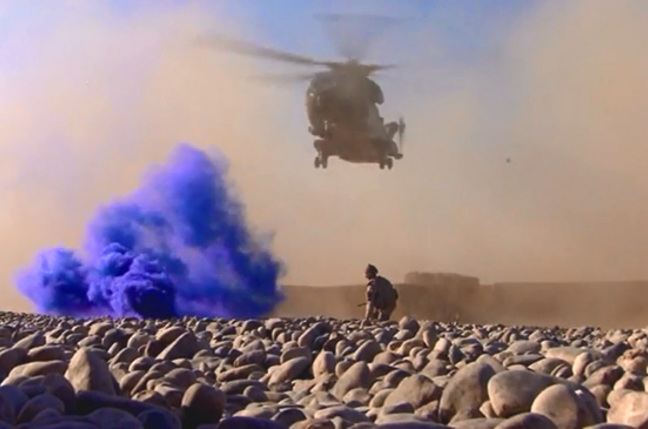 So, Bitter Lake is framed as a retelling of the Afghani events of the past – both near and far – into a more realistic outline of what has happened. This is a counterpoint response to the sound bite version of the news we hear everyday about what is going on over there. Bitter Lake isn’t for everyone. A lot of it is just video montage. Occasionally it is accompanied by an awesomely haunting sound track of gorgeously edited and selected musicians. A few of the more notable musicians included feature Nine Inch Nails, This Mortal Coil, David Bowie and an enormous number of emotive Eastern tracks as well that basically do more of a narration job than the narrator even does.
One of the problems with Bitter Lake is that it falls into its own trap of telling us its own narrative of what happened in Afghanistan without much corroboration or fact checking. How are we to differentiate Curtis’ narrative from anyone else’s? But it is enlightening and truly eye opening all the same. It at least is a significant contra argument to the current unopposed narrative being told today about the region. I enjoyed the movie very much, but in a more visceral sort of emotional experience than from an intellectual heady perspective. Curtis has made the movie available directly to YouTube, and so I have included it here for your viewing pleasure. I would love to know what you think of it if you take the time to watch it.