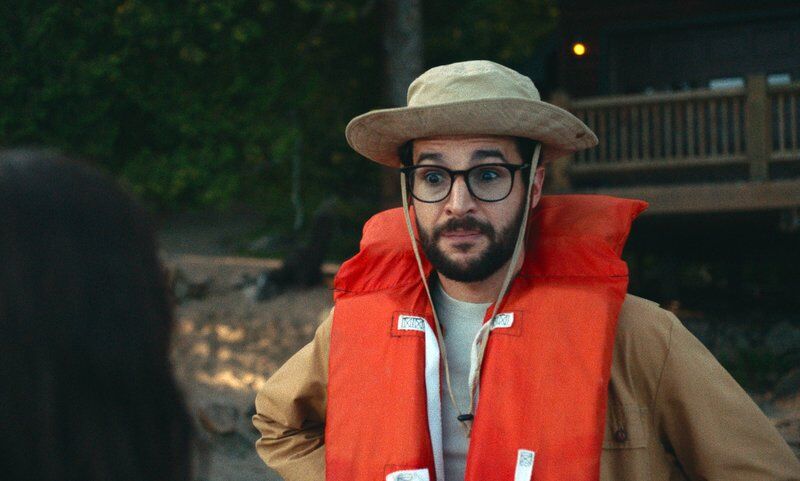
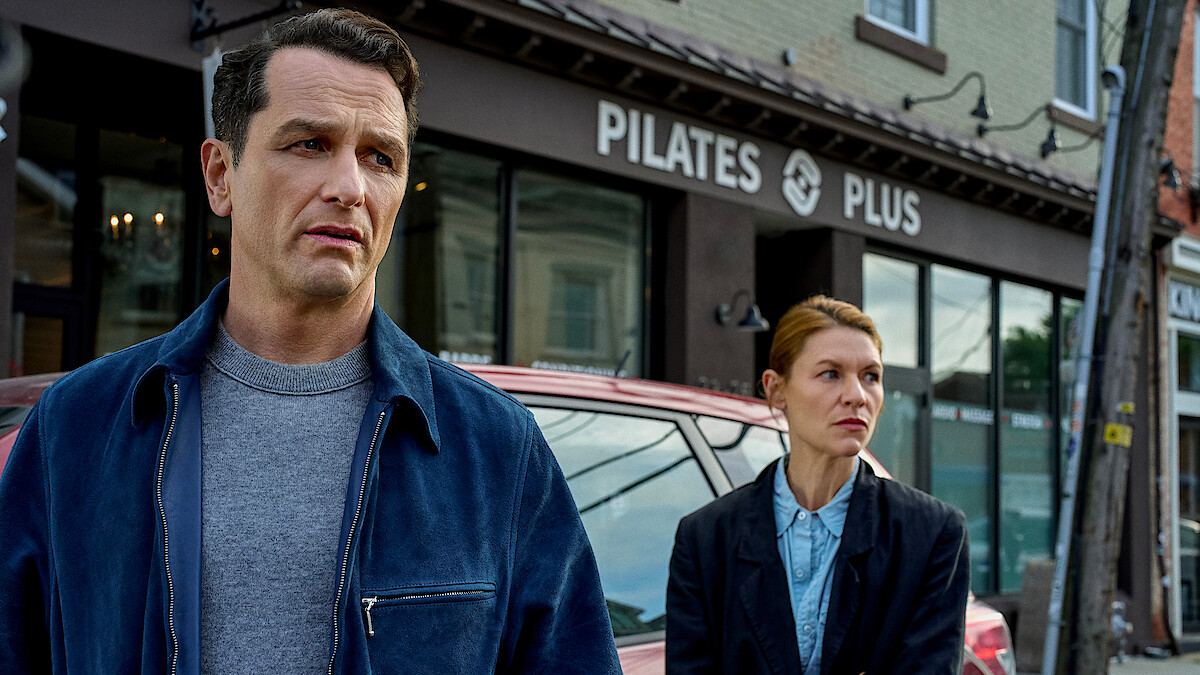
There’s a particular kind of thriller that operates less like a puzzle box and more like a tightening noose—where the premise itself becomes a trap that draws both characters and viewers deeper into dangerous intimacy. Netflix’s The Beast in Me, starring Claire Danes (Romeo + Juliet, Homeland, My So Called Life) and Matthew Rhys (The Americans, The Post), is exactly that kind of show. It’s a psychological chess match disguised as a character study, built on one of the most deliciously uncomfortable conceits recent television has offered: What happens when a grieving writer decides to write a biography of her new neighbor, who may or may not have murdered his wife?
The Setup: A Professional Flirtation with Danger
The brilliance of The Beast in Me lies not in its mystery—though the show keeps you guessing—but in the relationship it constructs between Aggie Wiggs, a Pulitzer-winning author paralyzed by grief, and Nile Jarvis, a charismatic real estate magnate with a missing first wife and no shortage of charm. Aggie is an author struggling to write her next book when Nile, a real estate executive who allegedly killed his wife, moves in next door.
From their first meeting, sparks fly—but not the romantic kind. These are the sparks of two people sizing each other up, recognizing something familiar and unsettling in the other. When Aggie proposes writing Nile’s biography, ostensibly to tell his side of the story, she’s essentially asking him to sit still while she investigates whether he’s a killer. And Nile? He agrees. It’s a mutually destructive pact between two people who have already lost so much that they’re willing to risk everything that remains.
The Dance of Predator and Prey
Claire Danes describes the dynamic between Aggie and Nile as being like a snake and mongoose—they need each other, recognize themselves in each other, and respect the gifts within the other while being keen for a fight. This metaphor captures the show’s central tension perfectly. From episode to episode, you’re never quite sure who has the upper hand, who’s manipulating whom, or whether both parties are simultaneously hunter and hunted.
The show understands something fundamental about the writer-subject relationship that most thrillers ignore: it’s inherently predatory. Writers need stories, and sometimes the best stories come from the darkest places. Aggie, stuck on a boring book about Supreme Court justices and hollowed out by personal tragedy, sees in Nile not just a potential murderer but a career revival. He’s compelling, dangerous, and—most importantly for a writer in crisis—he’s right next door.
Meanwhile, Nile seems to welcome the scrutiny with an almost suicidal curiosity. Why would a man suspected of murdering his wife invite that level of investigation? The show teases out possibilities: arrogance, loneliness, a death wish, or perhaps the simple human desire to be truly seen, even if what’s visible is monstrous.
The Collapse of Distance
As the eight-episode series progresses, the professional distance between writer and subject evaporates like morning fog. Showrunner Howard Gordon describes Aggie’s bereavement as forming the show’s emotional center, with one of the subversive pleasures of being a writer being the ability to work through fears and horrors on the page or screen. Aggie’s research becomes obsession. Interviews become confessions. Boundaries blur until you can’t tell where the book ends and real life begins.
The geography of the show—two houses separated by a shared forest—becomes a metaphor for the shrinking space between them. They orbit each other with increasing velocity and decreasing radius, pulled by a gravitational force that might be attraction, ambition, or mutual recognition of the darkness each carries. Every conversation is a negotiation. Every shared moment is a risk. The plot doesn’t just move forward; it spirals inward, tightening around both characters until there’s nowhere left to hide.
What makes this collapse so compelling is that both Aggie and Nile are complicit in it. She could walk away. He could refuse to participate. But neither does, because each recognizes in the other something they desperately need: Aggie needs purpose after devastating loss, and Nile needs… well, that’s one of the questions the show lets you puzzle over.
Two Performances for the Ages
Danes has one of the most expressive faces in show business, with her trembling chin and cheekbones contorted by sorrow just as arresting as her brow furrowed in fury. As Aggie, she channels grief into a performance that’s physically uncomfortable to watch—all nervous energy, barely contained rage, and the brittle charm of someone who’s learned to function while falling apart. When she puts on her “journalist face,” you can see the mask settle over her features, and the question becomes: which version is real?
Matthew Rhys flows between insults, physical aggression, and charisma with petrifying ease, oozing a toxic magnetism that lures you though you know he might sink his teeth in and never let go. Rhys, best known for playing fundamentally decent but troubled men, reveals unexpected range as Nile. He’s simultaneously charming and terrifying, vulnerable and predatory. You understand exactly why Aggie keeps returning to interview him even as alarm bells ring louder with each visit.
Together, Danes and Rhys create the kind of on-screen chemistry that makes you lean forward in your seat—not because you’re rooting for romance, but because you’re genuinely uncertain who will destroy whom first.
The Conceit as Character
What elevates The Beast in Me above standard thriller fare is how intelligently it uses its central premise. The biography isn’t just a plot device; it’s a weapon that both characters wield against each other. Aggie uses it to justify her proximity to danger, to ask questions that would otherwise be inappropriate, to dig into Nile’s past under the guise of “telling his story.” But Nile uses it too—to monitor what she knows, to shape his own narrative, to maintain control even while seemingly surrendering it.
The scenes where they discuss the book-in-progress crackle with subtext. When Nile critiques her writing, is he being helpful or threatening? When Aggie shares a chapter, is she showing her cards or laying a trap? The biography becomes a conversation about truth, performance, and the stories we tell ourselves to survive. It asks uncomfortable questions about the ethics of storytelling: Is it exploitation if your subject consents? Where’s the line between documentation and participation? Can you write about a monster without becoming monstrous yourself?
A Slow Burn That Earns Its Darkness
This is not a show that relies on cheap shocks or twist-for-twist’s-sake plotting. Instead, it builds with deliberate patience, letting tension accumulate like pressure in a sealed container. Early episodes establish the characters and their fragile equilibrium. Middle episodes begin applying force—new information surfaces, stakes rise, and the professional relationship becomes increasingly personal and perilous. By the time you reach the final episodes, the narrative has collapsed into claustrophobic intensity.
Executive producer Howard Gordon notes that finding the right actor for Nile was challenging because the role required someone who could be by turns dangerous, charming, and vulnerable—and the show lives and dies on maintaining that ambiguity for as long as possible. The pleasure isn’t in finding out whether Nile is guilty (though that resolution comes), but in watching two damaged people use each other as mirrors, seeing reflections they’d rather not confront.
Why This Show Works
The Beast in Me succeeds because it understands that the most compelling thrillers aren’t about whether someone did something terrible—they’re about what drives people to the edge of terrible actions, and what happens when two people teetering on that edge find each other. It’s about grief as a transformative force, about how loss can calcify into rage, about the beast that lives in all of us and what happens when we decide to write its biography.
The show also benefits from Howard Gordon’s involvement as showrunner—his experience on Homeland and 24 shows in the careful calibration of suspense and the intelligence with which character psychology is explored. This isn’t torture porn or gore-fest; it’s a psychological duel where the weapons are words, the battlefield is the space between two properties, and the casualties are the truths both characters would prefer to keep buried.
If you’re a fan of The Sinner, The Undoing, or any thriller that prioritizes character complexity over shock value, The Beast in Me deserves your attention. It’s the kind of show that rewards careful viewing, where facial expressions matter as much as dialogue, and where the real question isn’t “whodunit” but “what happens when the person investigating the crime and the person who may have committed it can’t stop circling each other?”
Final Recommendation
The Beast in Me won’t be for everyone. If you prefer fast-paced action or clear moral lines, this might feel too deliberate, too ambiguous. But if you’re drawn to character studies wrapped in genre clothing, if you appreciate performances that do as much work as the script, and if you’re willing to sit with discomfort while a narrative tightens around its characters like a vise, this is one of the best psychological thrillers of the year.
The show asks: What happens when a writer looking for a story finds one that might consume her? What happens when a possible killer agrees to be studied? And what dark recognitions pass between two people who’ve both lost everything and have nothing left to lose?
The Beast in Me doesn’t give easy answers. It gives you Claire Danes and Matthew Rhys in a battle of wits, will, and words—and it asks you to watch as the distance between them collapses, the plot spirals inward, and the question of who’s really in danger becomes impossible to answer. All eight episodes are streaming now on Netflix. Clear your schedule, because once you start, you won’t want to stop until you see how this dangerous dance ends.