
Historical films walk a tightrope. On one side lies fidelity to the record — documents, testimony, timelines, cultural texture. On the other lies the demand for narrative momentum — arcs, protagonists, emotional clarity. Most films lean one direction or the other. But some manage to do both: they dramatize history without distorting it beyond recognition.
Below are films that strive for historical accuracy — not perfection (no movie achieves that), but rigorous engagement with primary sources, survivor accounts, documented timelines, and material culture. These are movies that respect history enough to let it speak for itself. And while you are here – in case you are looking for a multi-device VPN solution, THiNC. has you covered.
1. Schindler’s List (1993)
Few films attempt historical reconstruction at the scale of Schindler’s List. Directed by Steven Spielberg, the film chronicles the efforts of German industrialist Oskar Schindler to save over a thousand Jewish people during the Holocaust.
The film is based on survivor testimony and Schindler’s Ark. Spielberg shot on location in Poland, near actual sites of atrocity. The production used documented names, replicated uniforms and insignia with forensic precision, and adhered closely to survivor accounts.
Is every conversation documented? No. But the events — the liquidation of the Kraków ghetto, the brutality of the Plaszów camp, the existence of “Schindler’s list” — are historically verified. The film’s power lies not in embellishment but restraint. Its black-and-white cinematography evokes archival footage, grounding the drama in historical texture rather than spectacle.
2. Apollo 13 (1995)
When it comes to procedural accuracy, few films are as admired as Apollo 13. Directed by Ron Howard and starring Tom Hanks as astronaut Jim Lovell, the film meticulously reconstructs the 1970 lunar mission crisis.
NASA engineers were consulted extensively. Dialogue was pulled from mission transcripts. The spacecraft interiors were recreated with obsessive detail. Even the zero-gravity sequences were filmed in NASA’s “Vomit Comet” aircraft to simulate weightlessness authentically.
The famous line “Houston, we have a problem” is slightly altered from the original “Houston, we’ve had a problem,” but the technical and procedural unfolding of events remains remarkably faithful. The film captures not just the incident, but the culture of NASA — methodical, calm under pressure, deeply collaborative.
3. Zodiac (2007)
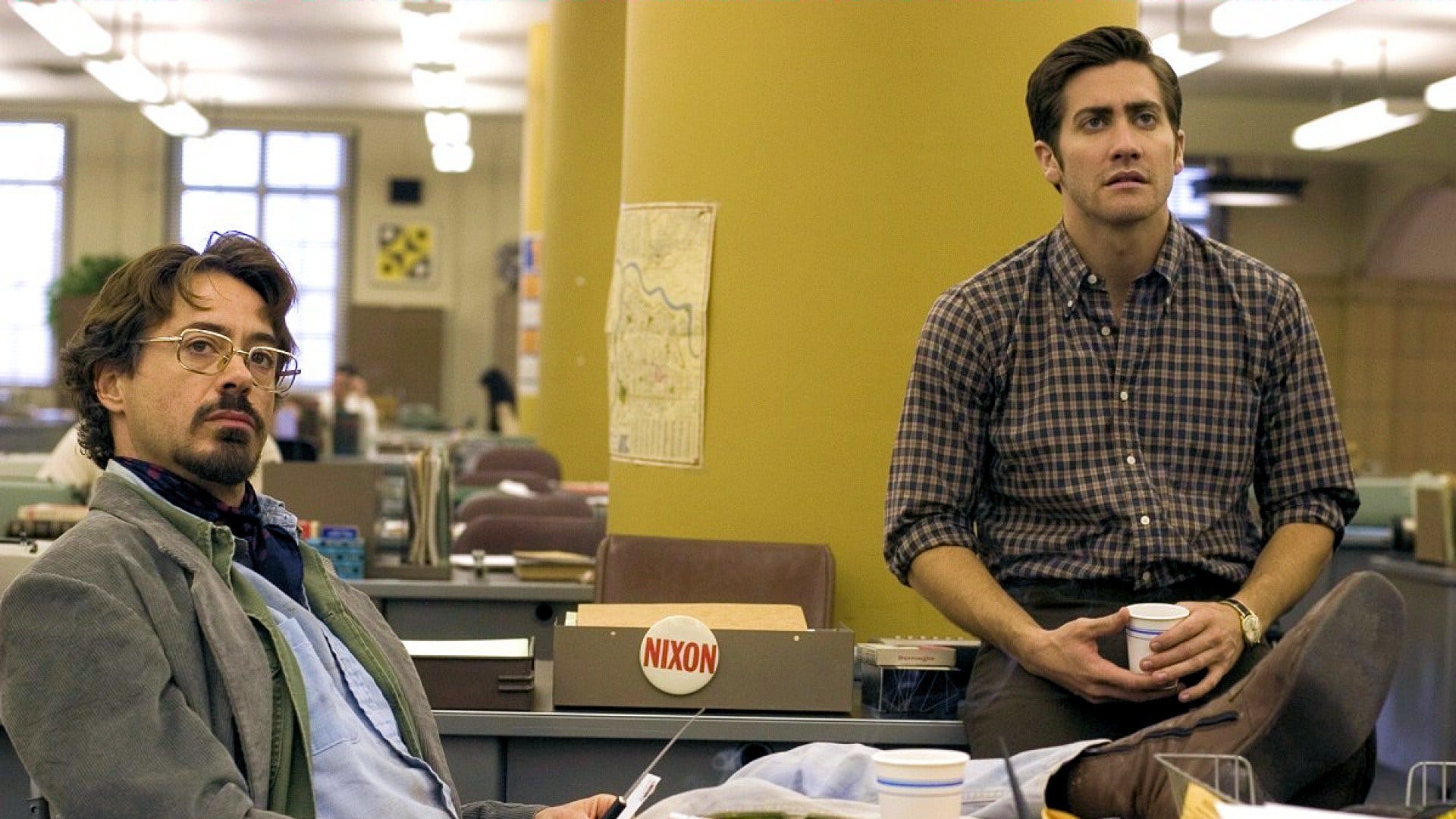
If your taste leans toward meticulous obsession — and knowing your appreciation for layered, investigative narratives — Zodiac is essential viewing. Directed by David Fincher, the film reconstructs the hunt for the Zodiac Killer in late 1960s and 1970s California.
Fincher is known for precision, and here he leans heavily on police reports, court documents, and journalist records — particularly the books written by Robert Graysmith.
Many of the scenes use dialogue pulled directly from witness accounts. The killings depicted match forensic reports. Timelines were recreated carefully. Fincher even digitally reconstructed 1970s San Francisco down to street signage and lighting conditions.
Importantly, the film refuses to offer definitive answers where history does not. That restraint is a form of accuracy.
4. Tora! Tora! Tora! (1970)
This joint American-Japanese production about the attack on Pearl Harbor remains one of the most historically balanced war films ever made.
Unlike many war films that focus heavily on heroism or villainy, Tora! Tora! Tora! presents both American and Japanese strategic planning with documentary-like neutrality. Military historians and surviving participants were consulted extensively. The script avoided fictional subplots in favor of procedural reconstruction.
The result is less emotionally manipulative than many war epics — and more educational because of it.
5. United 93 (2006)
Directed by Paul Greengrass, United 93 dramatizes the events aboard one of the planes hijacked on September 11, 2001.
Greengrass relied on flight transcripts, phone calls, and interviews with family members. Many air traffic controllers played themselves. The film avoids melodrama and instead embraces a near-documentary style.
What makes it historically responsible is not just adherence to documented events, but the refusal to speculate beyond available evidence. In portraying such recent trauma, accuracy becomes a moral responsibility.
6. Lincoln (2012)
Also directed by Steven Spielberg, Lincoln narrows its focus to the political maneuvering surrounding the passage of the 13th Amendment.
Based on Team of Rivals by Doris Kearns Goodwin, the film’s dialogue frequently draws from recorded speeches and correspondence.
Rather than mythologizing Abraham Lincoln, the film depicts him as politically shrewd, morally serious, and pragmatic. The legislative vote tally matches historical record. Even the political bargaining depicted reflects documented strategies.
7. Downfall (2004)
Few films attempt to portray dictators in their final days with such forensic detail. Downfall reconstructs the last ten days of Adolf Hitler in his Berlin bunker.
The screenplay draws heavily from the memoirs of Hitler’s secretary Traudl Junge and other eyewitness accounts. The set design replicates architectural plans of the bunker. Dialogue often echoes documented testimony.
The film’s most famous scene — Hitler’s furious outburst — has become internet meme fodder, but its foundation is rooted in documented accounts of his deteriorating mental and physical state.
8. 12 Years a Slave (2013)
Directed by Steve McQueen, this film is based on the 1853 memoir of Solomon Northup, a free Black man kidnapped and sold into slavery.
The production relied heavily on Northup’s own narrative. Locations in Louisiana were chosen to reflect period architecture. Costuming and agricultural practices were recreated from historical research.
What makes the film historically powerful is its refusal to sanitize brutality. The violence is not stylized. It reflects documented realities of slavery in the American South.
9. Spotlight (2015)
For those drawn to investigative journalism narratives (which tend to appeal to the same audience that appreciates procedural precision), Spotlight stands out.
The film recounts the investigation by journalists at The Boston Globe into widespread abuse within the Catholic Church.
Writers relied on court documents, interviews, and the reporters themselves. Offices were recreated with photographic reference. Even the tone of newsroom conversations mirrors journalistic culture.
The restraint — no swelling music, no manufactured villain monologues — reinforces authenticity.
10. The Battle of Algiers (1966)
Shot in a quasi-documentary style, The Battle of Algiers reconstructs the Algerian struggle for independence from France.
Though some characters are composites, events reflect documented urban warfare tactics and counterinsurgency measures. The film was so accurate in depicting guerrilla tactics that it has reportedly been screened by military organizations studying insurgency.
It feels less like a film and more like recovered footage.
Why Accuracy Matters
Historical films do more than entertain. For many viewers, they become the primary lens through which past events are understood.
When filmmakers distort events dramatically, audiences often internalize fiction as fact. Conversely, when filmmakers respect the historical record, they create space for empathy rooted in reality
No historical film is perfectly accurate. Dialogue must be imagined. Minor characters are condensed. Timelines are compressed. The question isn’t “Is it 100% factual?” The better question is: Does the film distort the core truth of what happened? Which is how we came up with this extraordinary list of accurate films for you to enjoy today.