In a streaming landscape crowded with true-crime retellings, The Perfect Neighbor (2025) stands apart not because of bells and whistles, not because of dramatic reconstructions or big-name talking heads, but because of its astonishing restraint — and its insistence on letting truth speak for itself. Directed by Emmy-winning filmmaker Geeta Gandbhir, this remarkable Netflix documentary delivers one of the most haunting and masterfully told real-life stories in recent memory, primarily through raw police body-cam footage and other recorded material, with zero narration guiding the audience.
Right from its Sundance Film Festival premiere in January 2025 — where it won the U.S. Documentary Directing Award — The Perfect Neighbor left critics and audiences unsettled, moved, and profoundly changed. When other documentary directors would have told the audience what to think – or tipped their hand by over slathering the bread with hate for one side or the other, Gandbhir places the audience inside the moments as they unfold, creating an immersive experience that is as intimate as it is devastating.
A Story Told Through the Lens of Reality
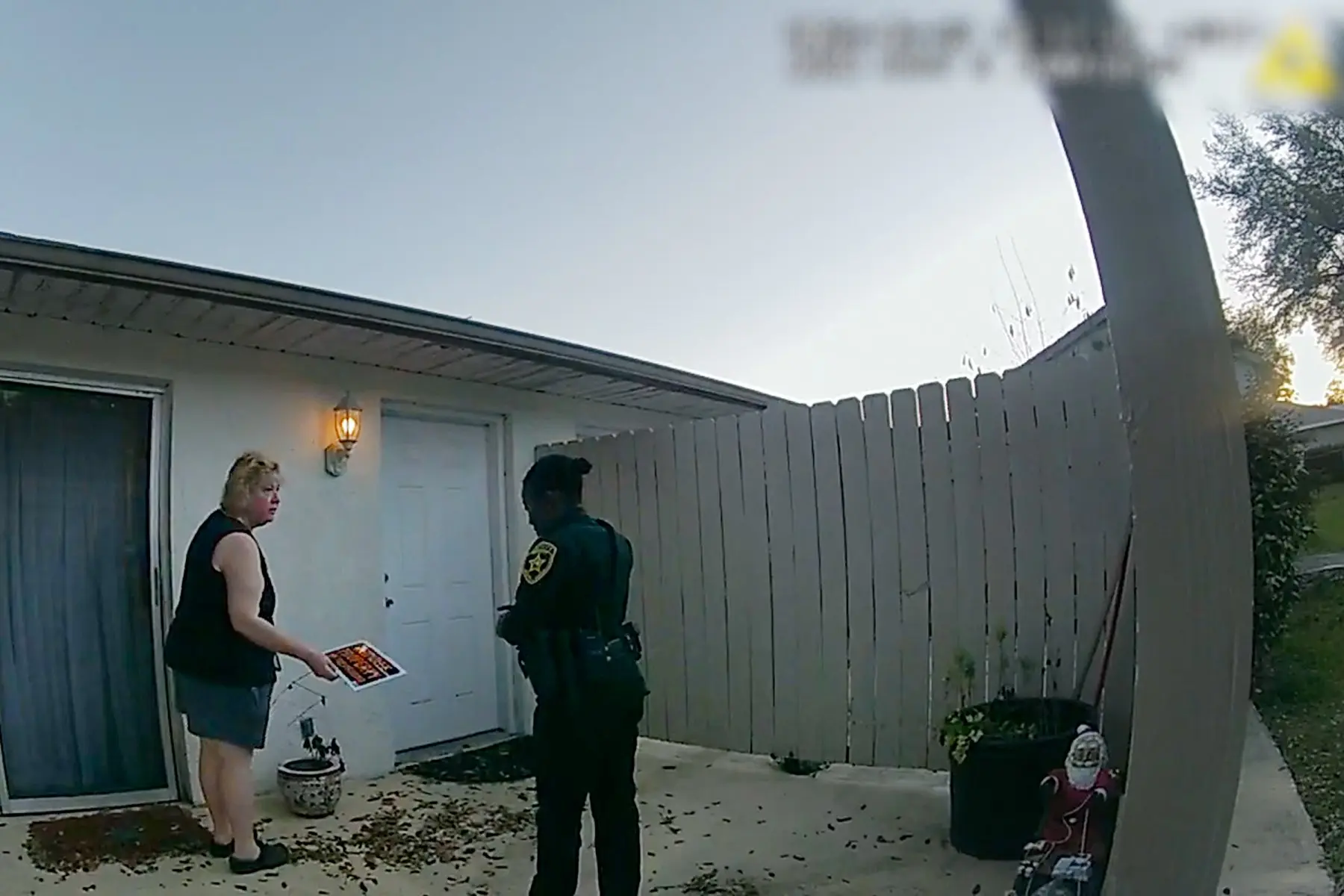
The choice to construct the film almost entirely from body-cam footage, 911 calls, security recordings, and law enforcement interactions is not merely stylistic — it’s a powerful ethical decision. Instead of narrators or external experts, what we see unfolds before us like a slow, heartbreaking reveal: misunderstandings, unheeded warnings, mounting tensions, and then, the unthinkable.
This approach gives The Perfect Neighbor an almost documentary-journalistic integrity that pulls the viewer into the uncertainty and discomfort felt by those who lived through it. We see the escalation directly, and we hear the voices of the officers and neighbors as they respond to an increasingly volatile series of events. It’s cinema that trusts its audience — and in doing so, delivers one of the most affecting portrayals of contemporary American tragedy.
The Human Cost of Fear and Prejudice
At the center of this film is the heartbreaking reality of what unfolded in Ocala, Florida, between neighbors Ajike “AJ” Shantrell Owens and Susan Lorincz. Owens, a vibrant and beloved mother of four, was shot and killed on June 2, 2023, when Lorincz fired through her locked front door after an altercation involving Owens’ children and a series of persistent neighborhood complaints.
It’s difficult to overstate the tragedy of this moment. Here was a woman simply going about her life — a mother, a friend, a member of her community — whose life ended in the most senseless way imaginable. Through the documentary’s unfiltered footage, viewers are made painfully aware that AJ’s final actions were rooted in love for her children, not malice. In contrast, the footage reveals Lorincz’s increasing hostility over time as something far beyond neighborly irritation; it culminates in a moment with lasting consequences that reverberated far beyond that small Florida street.
The court case itself wound its way around the axel of Florida’s Stand Your Ground laws. The info screen at the end of the film says everything you need to know when it comes to racial disparity and the controversial Stand Your Ground law in Florida and elsewhere.
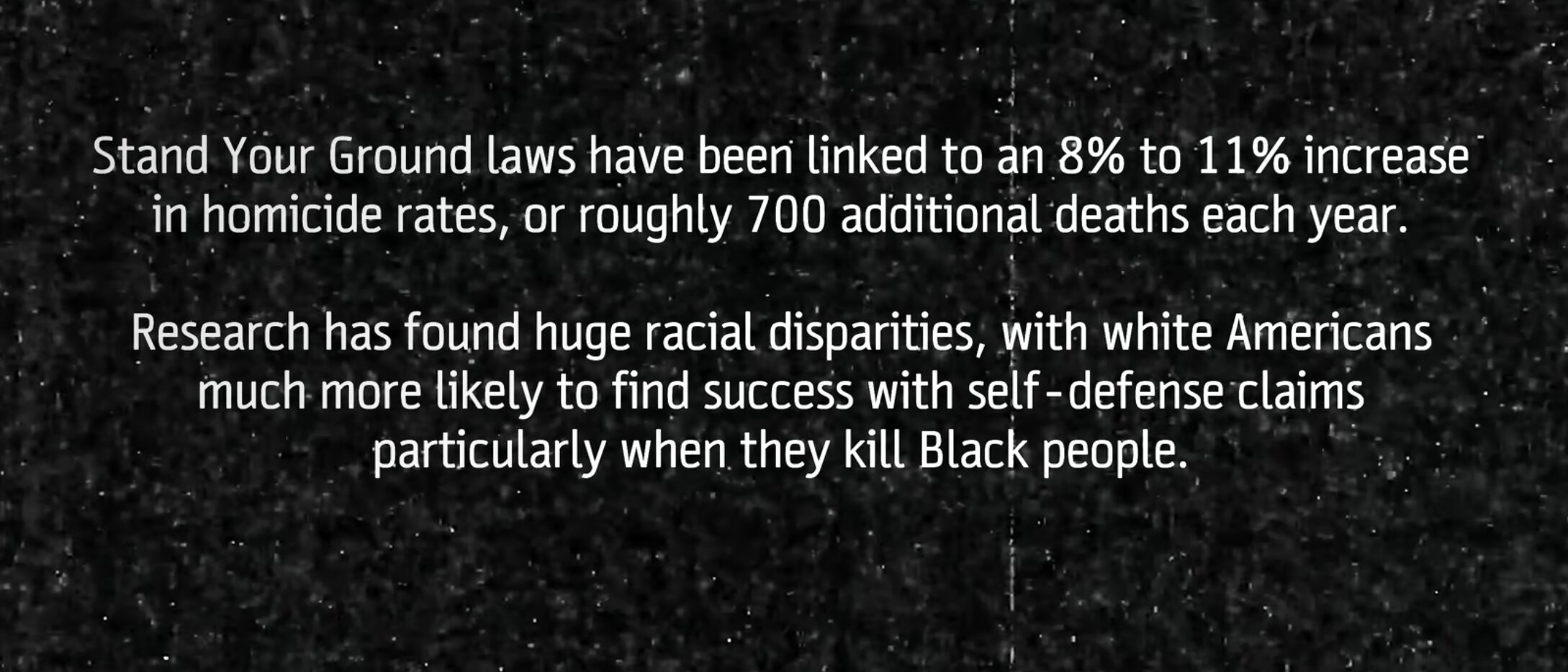
While some reports suggest that Lorincz wasn’t actively researching “Stand Your Ground” laws on the same day she committed the killing, it is evident from the legal aftermath that the defenders of Lorincz’s actions attempted to invoke Florida’s controversial self-defense legislation during the investigation. Those laws, which allow individuals to use deadly force if they believe they are in danger, have become a flashpoint in national debates about race, gun violence, and justice.
Whether or not Lorincz literally researched legal defenses earlier that day, her invocation of fear — amplified through repeated calls to police and a belief that her own prejudice justified violence — shaped a moment so tragic that it has become an urgent cultural touchstone. The result: AJ lost her life, and her children lost their mother. She was taken from the world not through accident, but through a chilling combination of hostility, entitlement, and systemic legal protections that can embolden individuals to act on fear.
Storytelling That Shows, Not Tells
One of the most remarkable achievements of The Perfect Neighbor is how it places audiences directly in the archival material without commentary, analysis, or interpretation. This technique gives the film a quiet intensity, and makes its emotional and ethical weight all the more profound.
Body-cam footage can be clinical, dispassionate, even mundane. But in the skilled hands of Gandbhir and her editing team, these clips — shot over months and years — build into a narrative that is as clear as it is devastating. You watch, almost helplessly, as tension escalates, misunderstandings fester, and the humanity of all involved is both revealed and tested.
This approach also strips away the typical dramatic flourishes of true-crime storytelling. There are no ominous voiceovers; no expert panels; no dramatic reconstructions. Instead, the material unfolds like real life — messy, frustrating, and all the more heartbreaking for its authenticity. It’s a storytelling choice that elevates the subject matter and honors the memory of AJ Owens by letting the events — and the consequences — speak for themselves.
Accolades and Impact
The Perfect Neighbor has not only earned critical acclaim but has been recognized by major festival juries and awards bodies:
- U.S. Documentary Directing Award at the 2025 Sundance Film Festival, a prestigious honor that highlights outstanding achievement in nonfiction filmmaking.
- Critics Choice Documentary Awards — including Best Documentary Feature and Best Director — consolidating its status as one of the most celebrated documentaries of the year.
- Special Jury Awards at festivals like Full Frame Documentary Film Festival, and accolades from organizations like The Albies for its contribution to justice-oriented storytelling.
Beyond awards, the documentary has sparked broader conversation about structural bias, gun laws, and how everyday interactions can spiral into irreversible tragedy when systems meant to protect us fail.
A Tragedy Remembered, a Story Told with Respect
At its core, The Perfect Neighbor is a work of deep empathy and searing clarity. It honors the life of Ajike Owens — a mother whose life was stolen in an act of violence that should never have happened — while reminding viewers that real human beings lie behind every headline and statistic.
To watch the film is to confront uncomfortable truths: about fear, about prejudice, and about how easily system and society can fail the people they are meant to protect. It’s also a tribute to AJ’s legacy — and to the countless families whose lives have been irreversibly altered by guns, laws, and unchecked hostility.
In the end, The Perfect Neighbor doesn’t just document a tragedy. It asks us to see it.