
Ok. I need you to stay with me here for a second.
You’ll recall — and if you’re a longtime reader of THiNC. you definitely recall — that when I walked out of Midsommar, I was a wreck. A full, clinical, sucking-on-ice-chips-at-a-Starbucks wreck. I have never been so genuinely, existentially undone by a film in my life. The horror of it wasn’t the gore, though lord knows there was plenty of that. It was the sunshine. The smiles. The relentless, cheerful brightness that accompanied some of the most inhumane spectacles I’ve ever had the displeasure of watching through my fingers.
So when I tell you that I am gently placing Bring Her Back in the same sentence as Midsommar… well, then, you should understand what that means. It doesn’t mean it’s the same movie. It isn’t. But it means something. Something significant.
Here’s how I’d put it: if Midsommar is a horror film drenched in perpetual Scandinavian daylight, Bring Her Back is its photo negative. Take all that bright, sun-soaked, smiling terror, and invert it. Drain the color. Replace the meadows with dark hallways. Replace the pagan commune rituals with basement rituals so steeped in genuine menace that I had to remind myself to breathe. The daylight made Midsommar unbearable. The darkness — the actual, pressing, physical darkness — is what makes Bring Her Back crawl under your skin and stay there.
And then there are the VHS tapes.
I’m not going to pretend I didn’t feel it the moment they appeared on screen. That queasy, deeply specific dread that you only get when a horror film weaponizes magnetic tape and static and the particular wrongness of something that should not be recorded but was. This is Ringu territory. This is The Ring territory. And the Philippou brothers know exactly what they’re doing with it. We eventually come to understand the purpose of these digital fingernails on a chalkboard and it only gets worse the more we understand. They arrive like poison letters and they do their work, and I sat there in my seat making sounds I am not proud of.

If you know the Philippou brothers from Talk to Me, and you should, because Talk to Me was a genuinely interesting piece of work about addiction wearing a supernatural mask, then you already know these guys aren’t here to play around. Talk to Me announced two directors who clearly understood something fundamental about horror that a lot of people making horror movies right now seem to have forgotten: that the monster inside a person is almost always scarier than the monster outside of one. Just let that resonate for a second… think about that. Because it’s the real truth in horror films… but it’s the real truth in life, and that is the most unsettling thing I could possibly say when considering this movie.
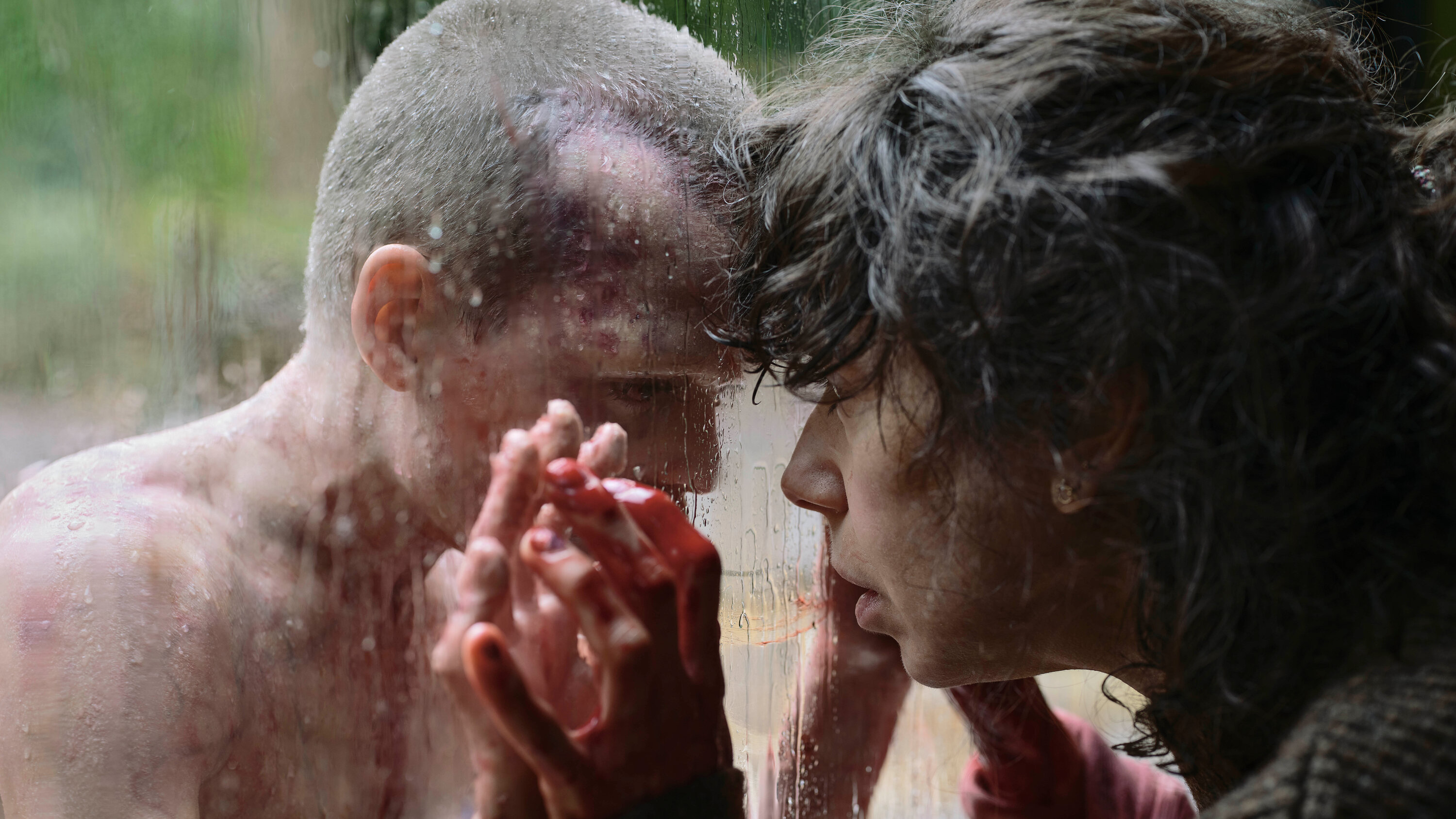
Bring Her Back is, at its core, a movie about grief and loss. Just like Midsommar. Just like Hereditary. A woman named Laura (played with extraordinary, unsettling precision by Sally Hawkins, who you know from The Shape of Water) lost her daughter years ago. She has not recovered. She will not recover. And the two foster children placed in her care, step-siblings Andy and Piper – who happens to be blind, are not there because Laura is charitable. You understand this within minutes of meeting her, and that understanding never leaves you, even when you want it to. It’s super clear from the jump that Laura has ill intent for these two children.
Sally Hawkins is the film. I want to be clear about that. She operates in this movie like a tuning fork for wrongness — everything about her is calibrated just slightly off, and yet she’s magnetic. Her warmth toward Piper reads as genuine and her coldness toward Andy reads as tactical, and the gap between those two modes of operation is where the film lives. She is hateable. She is pitiable. She is, in her own warped, catastrophically broken way, understandable. And that understanding is what makes her so deeply frightening. Where have I seen this disjointedness before?? Oh that’s right… Just like the smiling commune members in Midsommar! That’s right, I knew I’d clocked it somewhere else before. Nobody in that film was twirling a mustache. They were cheerful. And that’s the thing — real horror doesn’t come from monsters that announce themselves. It comes from people who believe, completely and without irony, that what they are doing is right.
The basement rituals in this film carry that same weight. There is a palpable evil in those scenes. Not the theatrical, jump-scare variety, but something older and quieter and far more convincing. Something that feels less like a film set and more like a place that genuinely should not be entered. I found myself leaning back in my seat during those sequences the way you lean away from something hot, instinctively, before your brain has even processed the danger.
Now — is this a perfect film? No. And I’ll be honest with you because that’s what we do here at THiNC. Andy, the protective older brother played by Billy Barratt, spends a great deal of the film doing the horror movie thing where he correctly identifies that something is catastrophically wrong and nobody believes him. This is intentional. It is also, after a certain point, exhausting. And Piper, for all that the film asks of her, remains frustratingly underdeveloped — defined more by her blindness than by any particular inner life. These are real problems.
But here’s the thing I keep coming back to. Ari Aster told us that Midsommar was really a breakup movie. That the fire and the sacrifice and the screaming were all just a metaphor for the apocalyptic carnage of ending a relationship. And Bring Her Back is, underneath everything… the tapes, the rituals, the darkness, the absolutely flooring moments of graphic horror… a film about the thing grief does to people. The way it curdles love into obsession. The way it makes a person capable of things that, in any other state of mind, would be unthinkable.
That’s the kinship between these two films. Not the gore. Not even the horror, exactly. It’s the grief. It’s the way both films insist on showing you what a person looks like when they have lost something they cannot survive losing — and then refuse to look away.
Normally, here is the part where I walk you through the intimate, intricate details of what happened in the movie. I would then give you theories to explain the various interpretations of what this movie was doing and why. But there is no way I’m staying longer in that dark basement than I need to. Yes, this wasn’t as scary as Midsommar… but I don’t even want to be Midsommar adjacent anymore. No thank you.
I wouldn’t say I loved Bring Her Back. But I respect it in the way I respect a film that is genuinely trying to do something difficult and you watch it succeed stunningly at that thing, even if it stumbles on the way. The Philippou brothers are two or three films away from making something that will end careers just by comparison. This is the proof of concept.
And those VHS tapes are going to follow me for a while. I can already tell.