
There are few narrative devices as clean and effective as a wager.
Strip storytelling down to its essentials and what remains? A character facing risk, a possible reward, and the looming threat of loss. In other words: a bet. Wagering, whether literal or metaphorical, has long served as one of cinema’s most efficient engines of tension.
From the polished baccarat tables of Casino Royale to the anxiety-charged chaos of contemporary thrillers, gambling compresses stakes into a single moment. It visualizes risk. It turns psychology into action. And it forces both character and audience to confront consequence in real time.
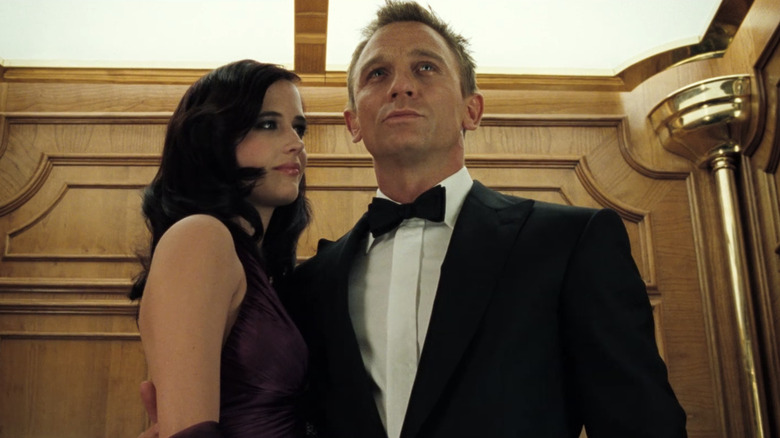
The High-Stakes Table in Casino Royale
When Casino Royale (2006) rebooted the Bond franchise, it made a bold structural choice. The film’s centerpiece wasn’t a car chase or an explosion. It was a poker game.
The extended Texas Hold’em tournament between Bond and Le Chiffre functions as the narrative core. Every raise escalates tension. Every glance across the table carries strategic weight. The chips become more than currency—they’re narrative pressure points.
The brilliance of the scene lies in clarity. Even viewers unfamiliar with poker mechanics understand escalation. They understand risk stacking on risk. The tournament becomes a psychological duel staged in silence, broken only by subtle tells and shifting confidence.
The wager isn’t decorative. It shapes the rhythm of the film.
Gambling as Character Revelation
Wagering in film often serves as psychological exposure.
In Rounders (1998), poker is identity. Mike McDermott’s return to high-stakes games reveals unresolved ambition and an inability to let go of risk. The card table becomes a mirror reflecting ego, insecurity, and hunger.
Earlier films like The Cincinnati Kid (1965) used gambling as generational confrontation. Victory meant legitimacy. Defeat meant humility. The table stripped away illusion.
Thrillers continue to rely on this dynamic. When characters make bets—financial or otherwise—they reveal what matters most to them. Pride. Control. Validation. Survival.
Risk clarifies character faster than dialogue ever could.
The Mathematics of Suspense
From a structural standpoint, wagering compresses narrative time.
Thrillers thrive on escalation. A bet provides a clean binary structure: win or lose. Success or failure. The clarity is immediate and emotionally legible.
Even outside literal casino environments, the structure persists. A final heist executed under a ticking clock. A political maneuver hinging on a single vote. A protagonist placing everything on one decisive move.
These are wagers by another name.
Audiences don’t need to understand odds calculation to feel tension. They simply need to recognize that something meaningful is on the line. That simplicity makes wagering one of cinema’s most durable storytelling tools.
From Casino Floors to the Digital Interface
The cultural image of gambling has shifted alongside technology.
Classic films framed wagering within ornate casinos—chandeliers, green felt, ritualized ceremony. Contemporary thrillers increasingly reflect digital ecosystems where risk unfolds across smartphones and data dashboards.
The global online betting sector has expanded steadily over the past decade, driven by mobile accessibility and real-time analytics. As wagering moved online, its aesthetic changed. Suspense migrated from chip stacks to screens.
Today, digital sportsbooks operate through streamlined interfaces where odds fluctuate instantly and outcomes resolve in real time. MelBet (Arabic: ملبت) exists within this ecosystem—where wagering unfolds not across felt tables, but across dashboards, notifications, and constantly updating data feeds.
Cinema adapts to this visual shift. Modern thrillers frame tension around digital immediacy: rapid decisions, algorithmic movement, volatile swings. The ceremony is gone. The stakes remain.
Risk as Moral Testing Ground
Wagering also functions as ethical pressure.
In Uncut Gems (2019), gambling is kinetic and relentless. Each bet compounds anxiety. The audience feels the escalation not because of abstract numbers, but because every decision intensifies consequence.
Structurally, the film mirrors Casino Royale—risk escalating within compressed time. But where Bond’s wager feels controlled, Howard Ratner’s feels chaotic.
Modern thrillers frequently use wagering to test moral boundaries. How far will someone go? When does confidence become obsession? At what point does strategy collapse into desperation?
The bet forces clarity.
And clarity exposes character.
Control, Chaos, and Illusion
Many wagering-driven narratives explore the tension between mastery and randomness.
Professional gamblers in cinema believe they can outthink the system—read opponents, calculate probabilities, anticipate variance. But unpredictability always lingers beneath the surface.
Thrillers exploit this dynamic. Characters think they’ve accounted for every variable—until something shifts. A final card. A sudden twist. A piece of information that destabilizes the plan.
Wagering externalizes a universal tension: the desire for control in systems that remain partially unpredictable.
That tension resonates far beyond casinos.
Why Wagering Endures
Wagering remains powerful in film because it’s universally understood.
Everyone knows what it feels like to risk something that matters—money, pride, reputation, identity. You don’t need to understand baccarat strategy to feel tension when a character pushes everything forward.
In the end, wagering works because it distills storytelling into a moment of choice. The setting may change—from Monte Carlo to a smartphone screen—but the emotional core doesn’t. There’s uncertainty. There’s consequence. And there’s that quiet hope that the next move will work.
That’s not spectacle.
That’s storytelling at its most human.