
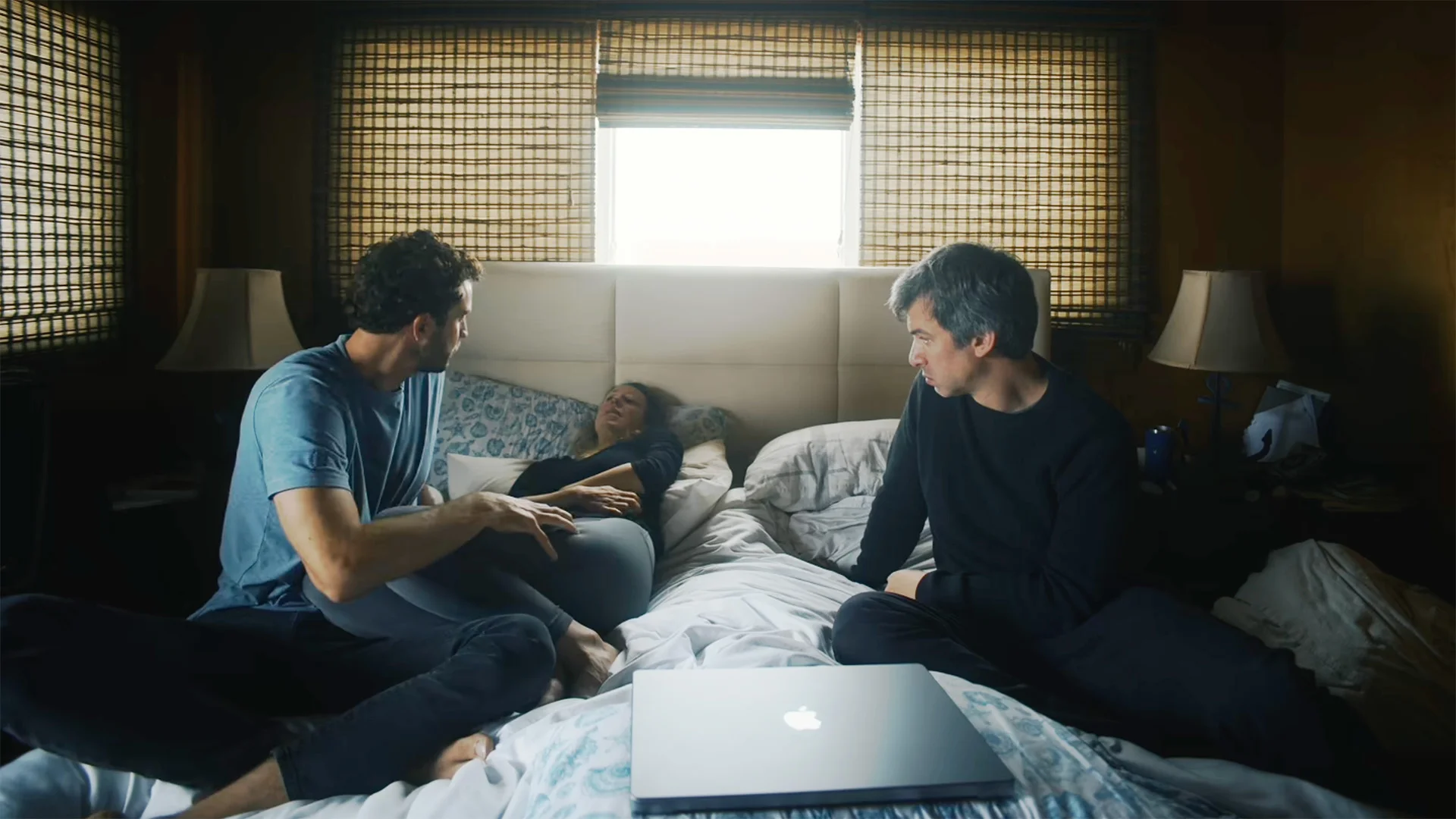
I believe that You Can See Everything deserves the Best Picture win this year. And yes, I know this is a year that included Christopher Nolan’s Odyssey and will also include Dune 3. Doesn’t matter – You Can See Everything is the deserving winner. But in order to make heads or tails out of this movie you need to know a lot to make it make sense. So that is what this primer is going to do, if you are patient, and read through this post from beginning to end, you’ll have a clear understanding of all the various currents running through this extraordinarily complicated movie.
So yeah – before we even get started talking about You Can See Everything, I want to spend real time on Theranos and Elizabeth Holmes, because I don’t think the film works unless you walk in already knowing exactly how bad what she did actually was. It’s too easy to let the teary eyed, soft spoken woman on screen soften the facts in your head as you watch, and I don’t want that to happen to you the way I think it’s actively happening to the guy who directed this thing.
Theranos was a blood testing startup Holmes founded at nineteen, after dropping out of Stanford. The pitch was genuinely revolutionary if it had been real. A device called Edison would run over two hundred different lab tests off just a few drops of blood from a simple finger prick, no needles, no vials, done right there in a pharmacy. And to say that investors went absolutely ape shit is an understatement. By 2015 the company was valued at nine billion dollars, and Holmes, barely in her thirties, became the youngest self made female billionaire in the country. And she played the part, on magazine covers she dressed like Steve Jobs, black turtleneck included. Rupert Murdoch put in over a hundred and twenty million dollars of his own money. The Walton family put in a hundred and fifty million. Betsy DeVos put in a hundred million. The board included Henry Kissinger, George Shultz, James Mattis, men with about as much institutional credibility as exists in this country, all of them vouched for her.
Oh, and by the way, none of it worked. Edison could reliably run exactly one test, for herpes. Everything else the company claimed to do off a finger prick was actually being run on secretly modified commercial Siemens machines, diluted down to stretch tiny blood samples far past what they were built for. I mean, do you realize how horrible this is? They were diluting down samples, and sending out FALSE POSITIVES, worse, FALSE NEGATIVES! Lab employees documented the failures internally. Management threw out the failing results and only reported the ones that happened to land close to correct. A woman was wrongly told she was HIV positive. A pregnant woman was wrongly told she had lost her baby. She hadn’t. And none of these details made it into the film. Trust me, we will definitely get to the why of that in due time, but remember, you promised to let me cook first. So yeah, I’m cooking.
Eventually, two people inside the company blew the whistle. Erika Cheung, a lab assistant, reported the erased failing results internally, got dismissed, and after she left wrote directly to federal regulators. Tyler Shultz, George Shultz’s own grandson, raised the same concerns from inside and got threatened by Holmes’s partner and COO, Sunny Balwani, for it. Both of them eventually fed information to Wall Street Journal reporter John Carreyrou, whose 2015 investigation cracked the whole thing open and later became the book Bad Blood, which I highly recommend. And as a result, Theranos collapsed within a couple of years after that.
Here’s the part that matters most for watching this movie clearly. In January 2022, a jury convicted Holmes on four counts of wire fraud and conspiracy, specifically for defrauding investors, the Murdochs and Waltons and DeVos family types who wrote the checks. The jury acquitted her on the separate charges tied to deceiving patients, the actual people who got the wrong blood results. That split verdict matters, because it means the legal system drew a line that let her be guilty of lying to the rich and not guilty of lying to the sick, and I think that distinction says something true and ugly about which kind of harm this country actually prosecutes. But Elizabeth, and Billy, jump up and down on this point later, so I’ll just flag now that “acquitted” is doing a lot more work in their framing than it should. Acquittal on the patient counts never meant the patient harm didn’t happen, the HIV scare and the miscarriage scare happened regardless of any verdict, it just meant prosecutors couldn’t prove she personally intended to defraud each specific patient, which is a much narrower legal needle than “did this company knowingly give sick people false answers.” We’ll come back to that. She was sentenced to just over eleven years, has had that sentence reduced some since, is currently serving it at a minimum security federal camp in Bryan, Texas, and as of this year reportedly has a clemency petition sitting on Donald Trump’s desk asking him to commute the rest of it.
Which now brings us to the documentary, You Can See Everything. That’s the woman this documentary spends three years following. Nathan Fielder, mostly known for deeply uncomfortable comedy about manufactured social situations, and Lance Oppenheim got what amounts to unrestricted access to Holmes, her partner Billy Evans, and their kids during the thirty four days before she had to report to prison, and they just kept filming for years after that, through her incarceration and beyond. And this is where we start heading into the land of spoiler-ville, so be warned, if you haven’t seen it already, abort. That brings us to Amanda Seyfried, who already won an Emmy playing Holmes in The Dropout. So, the actor that plays Elizabeth Holmes, in a show about the subject of this documentary, she turns up partway through in a role that genuinely surprised me with how far it goes. This is not a normal documentary and it does not behave like one, and critics have been near unanimous that it’s something special, sitting at a nearly perfect score across the board. And that perfect score is 100% deserved because what this movie accomplishes is other worldly good in every aspect of the craft.

Act One: Nathan Makes Himself at Home
The film opens framed around a New York Times profile where Holmes, asked about Seyfried playing her in The Dropout, reportedly says she isn’t bothered because “they’re not playing me, they’re playing a role I created.” Holmes and Evans later claim she was misquoted, that the real line was about a character “they” created, and Fielder spends a good chunk of the movie asking Evans to produce any actual proof of that misquote. He never does. That’s the needle the whole first act gets threaded on.
From there we’re in the rented San Diego beach house with Holmes, Evans, their two kids, and a film crew living alongside them for the thirty four days counting down to her prison date. Evans, a hotel heir, is simultaneously trying to relaunch a new version of the Theranos device, and the whole arrangement reeks of a PR play, the couple clearly hoping the documentary softens her image and markets the next product at the same time. Fielder asks her blunt, almost cruelly simple questions about how the technology was supposed to work, holding pieces of the actual device while she talks, and she never quite lands on an answer that holds up, insisting the chemistry just wasn’t ready yet rather than admitting it was fundamentally not real.
Here’s the thing though, and I didn’t catch this myself until I read Tyler Shultz’s STAT News article, who actually lived through the real thing point it out, that the device laid out in pieces on the kitchen table is not the Edison. The real Edison, the actual machine that got indicted, could only run one single type of test, immunoassays, not two hundred of anything. It couldn’t even dilute its own samples, it had to be fed into a separate commercial pipetting robot first. No microfluidics, no centrifuge, no sample prep automation, just an eight channel pipette sitting in a black box running the same basic chemistry labs have used since the 1970s. It is not an impressive piece of hardware. It is not a piece of hardware you’d want to show an audience right before asking them to feel sympathy for the woman who built her entire empire, and her entire defense, on top of it. So when Fielder sits there semantically parsing the word “could” with her, holding some gleaming, hypothetical, never built future version of the device, he isn’t litigating the actual crime at all. He’s litigating a prop. Whether he knew that and let it slide anyway, or didn’t know and got played, is a question I’ll come back to, because I don’t think it’s a small detail, I think it might be the whole movie in miniature.
Then he pulls out an old Abbott and Costello routine, Who’s on First, and performs it for her and Evans, and obviously Elizabeth says that she doesn’t get the joke. ‘It’s a miscommunication of some sort’!!! And its the exact kind of circular, nobody’s-wrong-everybody’s-confused logic Holmes has been running on everyone, including herself, this entire time.
There’s a scene where Evans takes a mixing bowl right out of Elizabeth’s hands while she’s whisking eggs because he has to do it “the correct way,” which tells you everything about him in about four seconds. He also only asks Fielder for a cut of the documentary’s profits once Holmes has stepped out of the room, which is the first real crack showing that he’s running his own separate agenda alongside hers. The crew sits the couple down to watch scenes from The Dropout together, and Holmes visibly recoils during the moment showing Balwani buttoning her blouse, the one piece of real, unguarded reaction Fielder gets out of her in the entire first act. Her own father, almost as an aside, mentions she was raped at some point, and the film just lets that sit there completely unexamined, never circling back to it, which is its own kind of unsettling choice. The only commentary is Nathan’s wide eyed incredulity.
And running underneath all of it is Fielder himself, lurking by windows and doorways, asking questions that are a little too obvious, staring a beat too long when she cries instead of comforting her right away, recording private conversations even when the couple explicitly asks for the cameras off. More than one critic has clocked a faint, uncomfortable romantic charge running from him toward her, and by the time this act ends with Holmes hugging her kids goodbye and walking into Bryan federal prison camp, you get the sense that Fielder has definitely overstayed his welcome, he’s not just documenting this woman anymore, he’s trapped in her orbit.
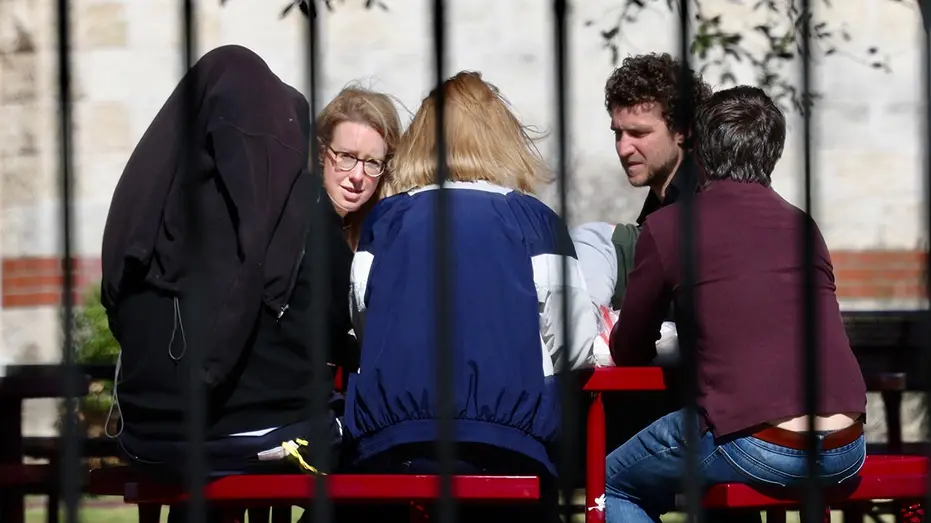
Act Two: Elizabeth Is Incarcerated
The film jumps forward two years. Holmes is gone from the screen, prison rules banning both interviews and recording devices, so Fielder loses his subject entirely overnight. What’s left behind is Evans, and the film pivots hard into watching him try to run the show in her absence. He’s still chasing the device relaunch. He interrupts an interview Fielder’s crew is conducting with a scientist working on the new version of the tech. And in one of the stranger, more purely Fielder-esque images in the whole film, Evans has built an AI avatar of Holmes that he wheels up to the dinner table with their kids while she’s locked up, which is either a genuinely tender coping mechanism or one of the creepiest things I’ve seen in a documentary ever, and the film doesn’t tell you which to feel. It is the definition of befuddling.
And this is where the film goes from a good, really solid, documentary to next level greatness. Unable to reach Holmes directly, Fielder turns to Amanda Seyfried, the one person who’s already spent years inside this story from a totally different angle. He shows her all his accumulated footage of Evans, and she watches enough of it that she starts actively rooting for Holmes and Evans to split up, which tells you plenty about how Evans comes across on camera by this point. And that was supposed to be it for Amanda and this film… but she decided to go all in on this film, and it shows. This is the hinge the whole movie turns on, the moment Fielder effectively recruits his subject’s screen depiction to replace the subject herself, because the real woman is behind bars and unreachable, and the ersatz one is sitting right there willing to dig deeper than Holmes herself ever let him.
Act Three: Amanda Seyfried to the Rescue
This is where the movie goes somewhere I genuinely didn’t expect a documentary to go. Since Fielder can’t record inside the prison, he starts handing Seyfried transcripts, including phone calls, and having her perform them as scripted reenactments standing in for conversations and moments he has no footage of at all. The first reenactment recreates a conversation about David Blaine and ice picks that happened off camera. It’s staged back at the actual beach house Holmes and Evans stayed in, Seyfried playing a version of Holmes that critics have pointed out is genuinely different from her Emmy winning Dropout performance, older, a mother now herself, richer and sadder in the role than the slightly cartoonish version she played the first time around. And this is why I’m all in on Amanda winning a best actor award for this role… even though it will break all the Academy’s rules to make it happen.
Fielder and Seyfried then go undercover together in Texas to corner Evans, who drops two real bombs in the same conversation. First, that he’s the one who’s actually been posting to Holmes’s Twitter account this entire time, not her. Second, that he wants a cut of the film’s box office from A24, and, oh by the way, that Holmes doesn’t know anything about that ask. Seyfried’s shock in that scene plays as completely real. It’s a mind blowing realization. Evans then refuses to let Fielder reach Holmes about any of it, so Fielder arranges a secret prison visit behind Billy’s back.
And here’s where the whole movie quietly detonates. Holmes, told about the box office demand, doesn’t seem upset at all. She says Evans handles things his own way and that she trusts him. Fielder reports this answer back to Seyfried, and it’s genuinely unclear, even on screen, exactly what Holmes said versus what Fielder is choosing to tell us she said. (See our previous conversation about Nathan being trapped in Elizabeth’s orbit.) At first he frames her answer as proof she knew what Evans was planning all along. When Seyfried reads that as her being complicit, Fielder backtracks and suggests maybe Holmes worded it a little differently than he first said. Seyfried starts visibly wondering out loud whether Fielder has softened the wording himself, out of sympathy for Holmes, whether his own feelings for her have quietly started editing the documentary in her favor.
There’s one more small, devastating visual trick buried in here. Early on, Fielder turns down Holmes’s invitation to go swimming with her, telling her he’s afraid of cold water. Later in the film there’s a shot that looks for all the world like Evans swimming next to her instead. Look closer and it’s actually Fielder. He said no to her once, on camera, and then quietly said yes anyway, off camera, and let the edit almost hide that from you. (My wife still doesn’t believe me that it’s Fielder in the ocean with Elizabeth… because that ending would be horrific in its implications!)
The film ends on the prison visitation yard, Holmes, Evans, and their kids together, with on screen text telling us Evans ultimately chose not to take any box office money after all. Fielder starts filming again the moment the real family walks into frame.
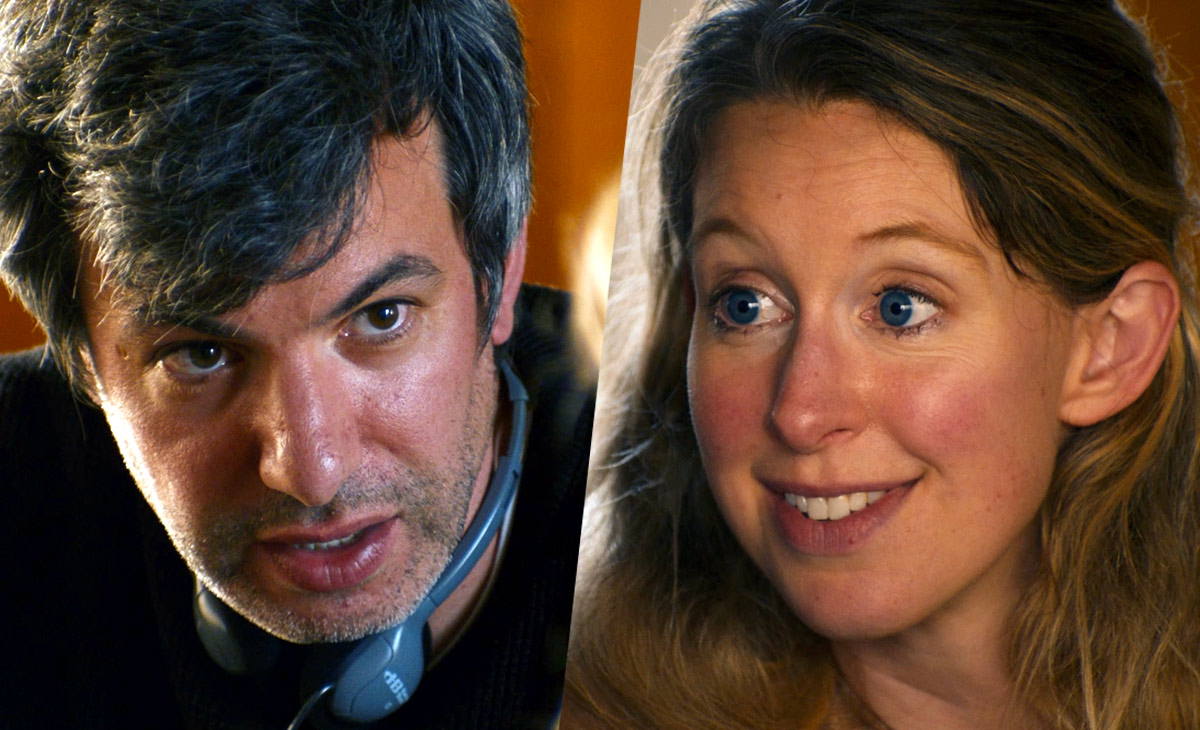
Why This Was Never a Documentary
I need to zoom all the way out here, because I think the movie actively wants you not to, and I don’t think that’s an accident.
A documentary, at its core, is supposed to be journalism, a conduit for finding and reveal the truth. What Fielder made is a piece of art built to manufacture ambiguity instead, and the honest title of this thing should probably be You Can See Everything That We Chose To Point The Camera At. The entire film takes place inside the walls of one rented condo and whatever Fielder could later reconstruct from transcripts. Widen that frame even slightly, the way someone who actually lived next to this story for over a decade can, and the ambiguity evaporates almost immediately into something a lot less mysterious and a lot more damning.
Start with the device on the kitchen table, because I flagged it back in act one and I meant it when I said it might be the whole movie in miniature. Elizabeth didn’t hand Fielder the Edison. She handed him some future, never built, more impressive version of the idea, and let him spend an entire act parsing the word “could” against a prop that was never the thing she went to prison for. If she’d put the actual device on that table, the one that could only run a single test, that needed to be fed into someone else’s robot just to dilute a sample, that was a glorified pipette running sixty year old chemistry in a black box, there’s no semantic debate left to have. Nobody watches that scene and comes away uncertain. She knew that. So she showed him the version that keeps the question open instead.
Then there’s the staging of the house itself, which is the same trick she’s been running for over a decade. Billy’s family owns an actual five diamond resort on Torrey Pines. They are not condo people. Yet here they are, living humble and dim for the cameras, with great beach access but very little else, while Elizabeth was reportedly living in a home listed at a hundred and twenty five million dollars before production ever showed up. This is not a new move for her. She pulled the exact same stunt in 2014, when a New Yorker profile described her as living an “austere” life in a two bedroom Palo Alto condo with an empty refrigerator, no friends, no dating, nothing but the work, while she was actually living in an Atherton mansion with her boyfriend and COO, Sunny Balwani. Same with the drive to Texas. Billy has said in an interview since that they flew to San Diego to Texas on a private jet to begin her sentence. The film shows them driving off in a Cybertruck. Either Fielder didn’t know the real story both times, or he knew and decided the humbler version served the film better. I genuinely don’t know which answer is worse.
Now to the part I think changes the whole shape of this movie once you see it, which is the abuse. I believe Sunny Balwani probably did abuse her. That’s a real, serious, true thing, and it deserves to be taken seriously on its own terms, separate from everything else she’s done. But believing that doesn’t require believing she was simply his victim with no agency of her own in the relationship. It’s entirely possible, and honestly I now think likely, that she was drawn to someone exactly that volatile and controlling in part because a man like that is useful. He’s a built in fall guy. He’s the one who gets to be the face of the aggression, the threats, the operational cruelty, while she stays two steps removed, soft spoken, crying on camera, looking every bit the woman caught up in something bigger than her. It is not a coincidence that when an actual whistleblower emailed her directly with real concerns about patient safety, she didn’t respond herself, she forwarded it to Sunny and let him handle it with threats and insults. It is not a coincidence that Sunny was convicted on all twelve counts against him in the real world while she walked away with four. The pattern isn’t new with Billy. Billy is just the current installment of a strategy she has been running on domineering men her entire adult life, and I don’t think she’s passively benefiting from men like this finding her. I think she is the one quietly producing the version of them that’s useful to her. SHE KNEW EXACTLY WHAT WOULD HAPPEN THE MOMENT SHE HANDED HIM THAT MIXING BOWL. She knows how to whisk eggs. She let him grab it anyway, because a man snatching a bowl out of a documentary subject’s hands reads as controlling on camera, and controlling reads as sympathetic for her. Every domineering move Billy makes on screen is a move that makes her look smaller and safer by comparison, and I no longer believe that’s an accident she’s simply standing next to. I think it’s closer to a performance she’s quietly directing from underneath, upside down, letting him think he’s the one in charge of the room.
And finally, the thing that should end any lingering question about whether she genuinely believes her own version of reality, which the film works very hard to keep you wondering about. The SEC’s own findings describe a 2015 meeting where she told a potential investor Theranos pulled in a hundred and eight million dollars in revenue the prior year. The real number was a little over a hundred thousand dollars. During that exact same stretch, she refused to show investors audited financial statements. You don’t fabricate a number that specific and then hide the paperwork that would prove you wrong if you genuinely believe your own story. That’s not confusion about semantics. That’s someone who knows precisely where the line between the lie and the truth sits, and is actively making sure nobody else gets close enough to see it.
To be fair to Fielder, he does leave breadcrumbs for you, sometimes subtly, sometimes not, suggesting he knows he’s a compromised narrator who may be protecting her. The swimming trick alone tells you he’s aware of exactly what he’s doing. But knowing you’re compromised and then building a feature length film around staying that way anyway is still a choice, not an excuse. This was never a documentary trying to find out whether Elizabeth Holmes lied. It’s a beautifully made piece of art about what it feels like to be charmed by someone who already knows the answer and has decided you don’t get to have it.
The Nuance I Can’t Stop Thinking About
So here’s where I actually land on all of this, and I don’t think it’s ambiguous anymore, not for me.
I don’t think Elizabeth Holmes is a woman being used by domineering men. I think she is extremely good at finding domineering, gullible men and cultivating exactly the behavior out of them that she needs, then letting them burn themselves up in public on her behalf while she stays protected behind a performance of total naivety. Look at the actual pattern across her entire life, not just this one documentary. Channing Robertson, her Stanford mentor, vouched for her credibility before she’d built anything real. Sunny Balwani threatened whistleblowers, bullied lab employees, and took the harsher sentence in the real world, nearly thirteen years to her eleven, for operational fraud that happened on the ground floor while she stayed several rhetorical steps removed, the visionary rather than the operator. A board full of aging, powerful men, Kissinger, Shultz, Mattis, lent her their institutional weight because they were charmed by her rather than because any of them actually understood the technology they were vouching for. And now it’s Billy, posting her tweets for her, demanding a cut of a documentary about her own fraud conviction, grabbing the mixing bowl out of her hands because he has to control everything, while she sits one room away, saying almost nothing, emerging from every single one of these relationships looking like the victim of someone else’s overreach rather than the architect who found these men and let them operate the levers she didn’t want her own fingerprints on.
That’s what the Who’s on First bit is actually doing in this movie, beyond just being a clever needle to thread the New York Times misquote through. It’s not a joke about confusion. It’s a demonstration of exactly the rhetorical trick Holmes has used her entire adult life, a structure where everyone involved can honestly believe they’re not the one who’s wrong, where nobody ever quite lands on a clear, falsifiable claim you could hold her to, because the whole exchange is built to generate confusion rather than resolve it. She ran that exact trick on lab technicians, on investors, on a jury that convicted her on the money counts and acquitted her on the patient counts without that acquittal meaning the patients weren’t actually harmed. And now she’s running a softer version of it on Fielder himself, and Fielder seems to half know it’s happening to him in real time and still can’t fully stop it from working.
And then there’s Amanda, who I think comes out of this whole three year odyssey as the only person who actually sizes Holmes up correctly, and I think it’s largely because she’s building her read from transcripts and secondhand footage rather than sitting across a dinner table from her getting the full, practiced, vulnerable performance in person. She’s the one person in this entire story who gets to watch the pattern from a slight distance instead of living inside it, and that distance is exactly what lets her start asking Fielder the question he clearly doesn’t want to answer, whether he left anything out of this film that would actually hurt her. Everyone who gets physically close to Elizabeth Holmes seems to end up compromised on her behalf. The one person who never does is the one person playing her instead of meeting her.
Final Thoughts
I think You Can See Everything is a genuinely great piece of filmmaking, and I also think it is not, and was never meant to be, an actual documentary in any journalistic sense of that word. It plays like an open question for three hours because an open question is more beautiful and more useful to its main subject than an answer would be. But it isn’t actually unresolved. Zoom out past the condo, past the thirty four days, past the one device Elizabeth chose to put on the table, and the shape of her becomes completely legible. She is not a woman caught in the gravity of domineering men. She is the one generating the gravity, every single time, and letting it look like something that’s simply happening to her. Watch this one, then go watch The Dropout again right after, because I don’t think you’ll see Seyfried’s first performance as Holmes the same way ever again, and I don’t think you’ll watch this one the same way twice either.