
I need to set some ground rules before I even get into this one, because I don’t normally do this. I don’t write reviews for movies I disdain. If I don’t like something, I usually just quietly move on and spend my energy on a film worth recommending instead. But I walked out of The Mosquito Bowl, and though I wouldn’t say I exactly had high hopes… but I was cautiously optimistic none the less. So I want to talk through exactly why this one earned the exception.
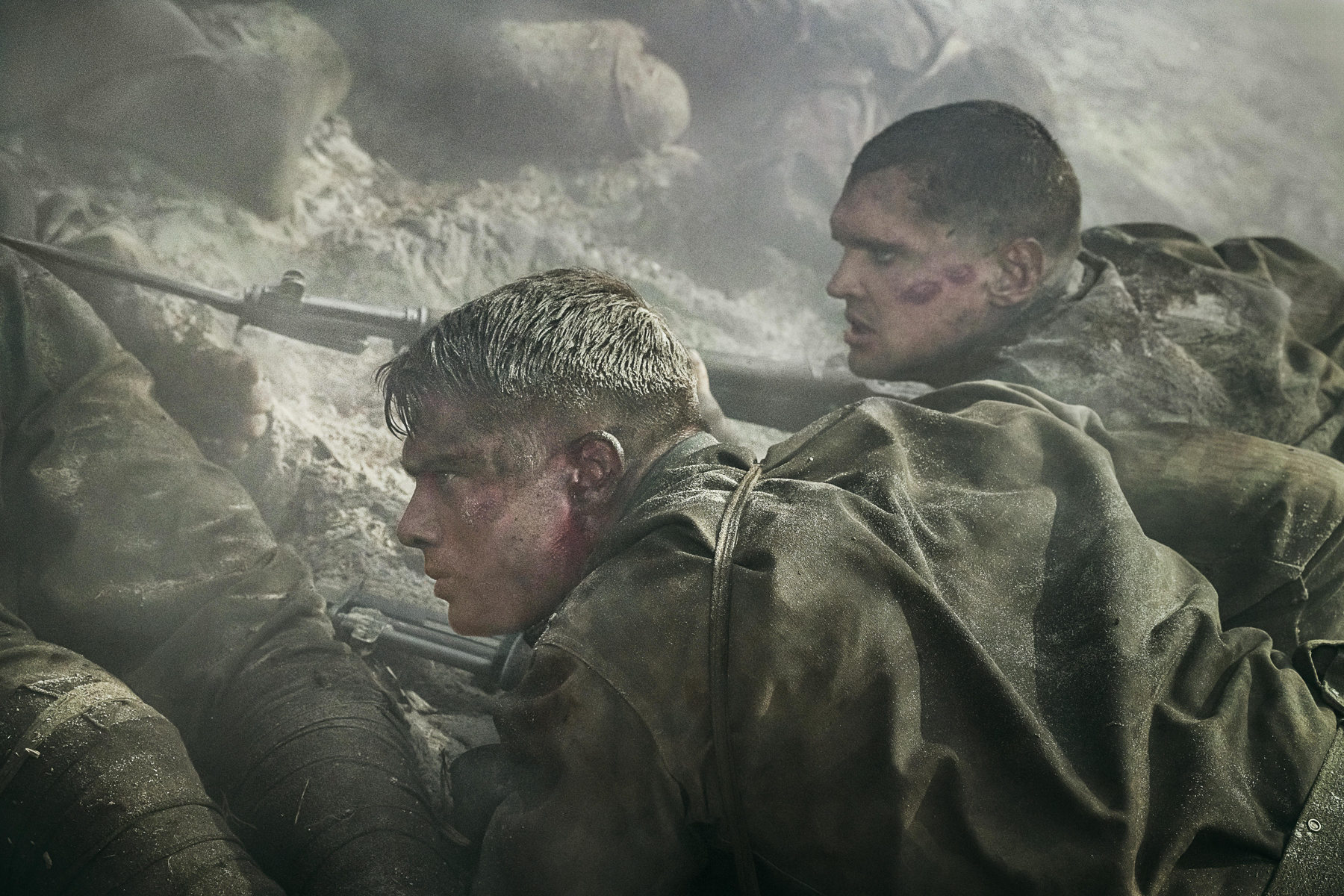
Here’s my theory of war movies, and I think it matters for understanding why this one made me so angry. There are basically two kinds of war movies being made today. There’s the lifelike, unflinching, dirty and horrific kind, the Saving Private Ryan and Platoon and Hamburger Hill kind, or even better, 1917, movies that treat war as the grinding, dehumanizing horror it actually is. And then there’s the other kind, the Pearl Harbor kind, the sepia hued, soda pop drinking, aw shucks idealistic kind, the Fonzie days of war where everything is clean jawlines and earnest patriotism and the horror gets smoothed over into something you can feel good about afterward. The Mosquito Bowl is definitely a derivitive of the former… definitely not the latter. And my issue with movies like this is that you have to know that this rah rah, uncritical glorification of war is not a neutral storytelling choice. It’s a political ideology, one I disagree with completely, and this movie is soaked in it even while it’s trying desperately to look like it belongs to the first category instead.
It’s directed by Peter Berg, based on Buzz Bissinger’s book about the real 1944 football game Marines played on Guadalcanal before shipping out to Okinawa, and it stars Nicholas Galitzine, Bill Skarsgård, Ray Nicholson, and Tom Francis as the college football stars who enlisted after Pearl Harbor. On paper this should have been exactly my kind of movie.
What Actually Happens
Full spoilers from here on, including the scene that made me walk out, so consider yourself warned. John McLaughry, Bob Baumann, Tony Butkovich, and Dave Schreiner are all college football stars whose teams used to face off against each other before the war. Tony walks away from what could have been an NFL career with the Cleveland Rams. John leaves a girlfriend behind. Schreiner leaves behind a girlfriend who’s pregnant. All of them enlist in the Marines after Pearl Harbor, end up training and overseas together, and bond the way jocks in every single one of these movies bond, through insults, ball busting, and a lot of talk about football strategy that the film seems to think translates meaningfully into military strategy. It does not, and the movie doesn’t seem to notice that it doesn’t.
They get shipped toward the invasion of Okinawa, and once they land, the movie switches gears hard into what more than one critic described as a sensory overloading massacre. Marines get cut down as their boats hit the shore. A village gets torched. Civilian women jump off cliffs rather than be captured. A woman detonates a bomb vest. Japanese soldiers fall on their own swords. There’s a POW execution staged as a moment of horror. Real newsreel footage of Japanese atrocities gets spliced in along the way, with basically no historical context attached to it, just enough to remind you which side you’re supposed to be rooting for.
And then, in the middle of all of that, Bob Hope fails to show up to entertain the troops, so somebody decides the thing these exhausted, traumatized men actually need is a football game. So they play one. Not back home, not during training, not at some rear area months removed from the fighting. They have the game right there, practically on top of the invasion they’re in the middle of surviving, as a morale boosting exercise, cameras lingering on muddy jerseys and old rivalries like it’s a halftime special instead of men who were shooting and being shot at hours earlier. That’s the moment I checked out. Please, I begged this movie internally, do not play a football game on the battlefield. They did it anyway. I got up and left.
I’m told, since I didn’t stick around, that the film eventually gets back to burying some of these men, that a surviving veteran returns at some point to bury the dog tags of the friends who didn’t make it right there on the field where they all once played, and that the ending is going for an emotional gut punch about sacrifice and brotherhood. Several critics who did stay said that gut punch never actually lands.
Why This Movie Made Me So Angry
Here’s what’s actually worse than I expected going in. I assumed this was going to be straightforward Pearl Harbor style nostalgia, clean and corny and easy to dismiss. It isn’t that. Critics have pointed out that Berg dresses this thing up in all the visual language of the gritty, unflinching school of war film, handheld cameras, mud, blood, sound design that’s been compared favorably to Saving Private Ryan’s opening. But underneath all that grit, the actual politics of the movie haven’t moved an inch from Pearl Harbor. One review called it an apolitical meat grinder of horrors driven by nothing more than a generic, unexamined patriotism, and called the whole thing a pandering WWII drama that can’t decide whether it’s condemning the jingoism on screen or just quietly cheering for it. That’s worse than old fashioned sepia nostalgia, honestly. At least Pearl Harbor wasn’t pretending to be something else. This movie wants full credit for looking like it’s grappling with the horror of war while never actually interrogating any of the ideology that sent these specific men to die on that specific island, and the football game is where that contradiction becomes impossible to ignore. You cannot stage a wholesome morale building football game in the middle of a sensory overload massacre and have it read as anything other than exactly the kind of mythmaking I came in already primed to reject.
The real history here deserves so much better than this. Those were actual men, actual college athletes who gave up real careers and real futures, and a disproportionate number of them really did die within months of playing that game, at Okinawa, one of the worst campaigns of the entire Pacific war. Bissinger’s book treats that with some real weight and specificity. The film flattens four distinct human beings into a single interchangeable jock archetype, borrows just enough visceral combat imagery to feel serious, and then undercuts all of it the second it decides the appropriate response to watching your friends die is to go run some plays. Multiple reviews landed somewhere around a D-plus or lower, calling it confused, monotonous, and a fumble in every aspect that isn’t pure sensory spectacle. I don’t think that’s critics being harsh for sport. I think that’s what happens when a movie tries to wear the costume of Saving Private Ryan while still being, underneath it, a Pearl Harbor at heart, and refuses to notice the contradiction that’s sitting right there on the field the entire time.