

Some movies do not fail to explain themselves; they deliberately refuse to. That distinction matters. Ambiguity in film is not automatically a flaw. More often, it is a creative choice that keeps meaning open, invites interpretation, and asks the viewer to participate in building the story rather than simply receiving it. The result is a different kind of engagement, one that lingers because the film does not close every door for us.
That principle extends beyond cinema. People often use expert frameworks to make sense of complicated systems, which is why professional online review platforms can be valuable in spaces where trust matters. Whether someone is unpacking a difficult film or comparing the best payment methods for online casinos on sites that focus on unbiased evaluation, the real benefit comes from informed interpretation rather than passive acceptance.
When Withholding Is the Work
There is a meaningful difference between a film that fails to explain itself and one that chooses not to. The distinction comes down to intent. Confusion born from poor writing is a flaw. Confusion born from deliberate craft is a statement.
David Lynch’s Mulholland Drive (2001) is perhaps the clearest example of this principle in practice. Lynch has consistently refused to explain the film, describing the experience of watching it as something closer to a feeling than a puzzle. The narrative, which moves from an idealized Hollywood fantasy into a fractured, guilt-driven nightmare, resists linear reconstruction by design.
As Britannica has noted, the film’s striking images and mysterious atmosphere have sparked a wide range of interpretations, none of which Lynch has confirmed or dismissed. That refusal is not evasiveness. It is the work. The film, named the best of the 21st century in a 2016 BBC critics’ poll, earns its place precisely because it operates on the viewer’s subconscious rather than their intellect.
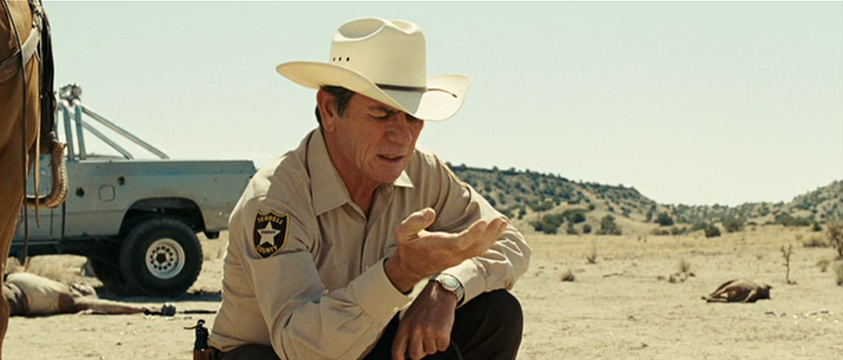
The Coen Brothers took a different but equally deliberate approach with No Country for Old Men (2007). Where Lynch builds dream-logic, the Coens strip narrative logic away entirely. The protagonist is killed off-screen. The villain escapes. The lawman retires, defeated and confused. Rather than building toward a climax, the film dissolves into a quiet monologue about dreams, then cuts to black.
Critics and scholars have described this as a masterclass in elision — the film’s real power residing not in what is shown but in what is withheld. The Coens’ fidelity to Cormac McCarthy’s novel meant retaining its pitiless worldview, and what audiences initially read as an anticlimactic failure was, in fact, the only thematically honest ending the story could have.

The Audience as Co-Author
What these films share is a relationship with the audience that most commercial cinema avoids. They do not position the viewer as a passive recipient of meaning. Instead, they make the viewer an active participant in constructing it.
This approach has deep roots in cinema history. Michelangelo Antonioni abandoned the central mystery of L’Avventura (1960) entirely — the missing woman is never found, never explained — and in doing so argued that the absence of resolution was more truthful than any contrived answer could be.
Decades later, films like Inception (2010) carried the same principle into mainstream blockbuster territory. Christopher Nolan’s spinning top in the final frame became one of cinema’s most discussed images precisely because Nolan declined to settle it. As Deep Focus Review has observed, the ending continues to inspire theories that shift depending on the viewer’s state of mind, making every revisit a genuinely different experience.
Ambiguity Is Not the Same as Vagueness
It is worth drawing a clear line here. Genuine cinematic ambiguity is not the same as narrative vagueness or unresolved plot holes. The former is constructed with precision; the latter is the result of unclear thinking. A film that withholds explanation must still be internally coherent enough to support interpretation. When Lynch offered his ten clues to unlocking Mulholland Drive, he was not solving the film — he was confirming that there was something to solve. The ambiguity was load-bearing.
This distinction matters because it is what separates films that frustrate from films that endure. The Coen Brothers’ ending in No Country for Old Men works not because nothing happens, but because everything that does happen carries precise thematic weight. Sheriff Bell’s dream monologue is not decoration — it is the argument of the entire film, compressed into a few quiet sentences.
Why These Films Last
The films that refuse to explain themselves tend to accumulate meaning over time in ways that neatly resolved films rarely do. Each viewing adds new detail, surfaces new questions, and sometimes reverses earlier conclusions. That kind of staying power is not incidental; it is the direct result of the filmmaker trusting the audience to do interpretive work.
This is ultimately what separates a great ambiguous film from a frustrating one: the sense that the filmmaker has put in more than the viewer is immediately able to see. The withholding is generous, not withholding for its own sake, but because some things can only be understood by being felt.