
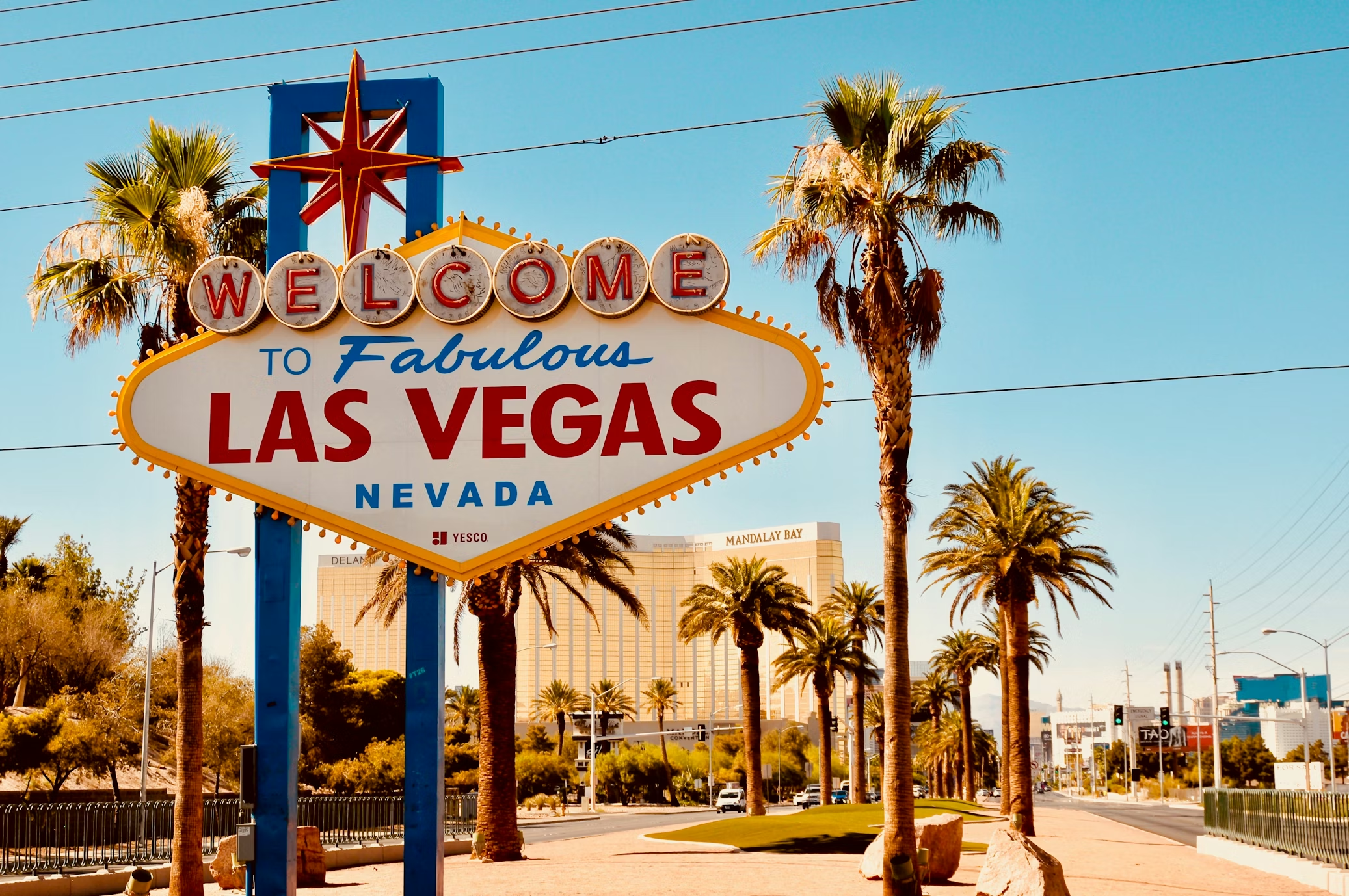
Las Vegas is one of the most recognizable cities in film history. For decades, Hollywood has presented it as a space of risk, fast money, and decisive moments. This image did not appear by chance. It was shaped by specific films, genres, and recurring narrative patterns. Over time, cinema turned a real desert city in Nevada into a global symbol of chance and ambition.
The Early Screen Image of Las Vegas
In the 1950s and 1960s, Las Vegas entered mainstream cinema as a place of glamour and spectacle. Films such as Viva Las Vegas (1964) with Elvis Presley linked the city to bright lights, music, and casinos. The Rat Pack era also mattered. Performers like Frank Sinatra were closely associated with the Strip, reinforcing the idea of Vegas as a playground for stars and high rollers.
By the 1970s, the tone shifted. Directors began to explore the darker side of the city. Gambling was no longer just entertainment. It became a system tied to organized crime, debt, and power. This evolution prepared the ground for more complex portrayals in later decades.
From Physical Floors to Digital Platforms
Cinema often shows the casino floor as a space of tension. Players sit at tables. Dealers control the pace. Cameras observe everything. The physical casino becomes a visual metaphor for control and risk. Over time, this atmosphere started to extend beyond the walls of the Strip.
A good example of how this logic translates into the digital space is Slotpalace. The platform offers slot games, table games, and live dealer options in a structured online format. The interface is clear. The rules are transparent. Each game displays its mechanics and payout logic. The live casino section recreates the visual rhythm of physical tables through streaming technology, which mirrors the cinematic image of dealers and controlled environments.
Unlike film narratives, online casinos focus on user control rather than dramatic tension. Players set limits. They choose formats. They can switch between slots and blackjack in seconds. This shift reflects a broader transformation. The myth of Las Vegas as a center of risk now exists in two parallel spaces: the cinematic screen and the browser window.
Crime, Control, and the Casino System
Two films often cited in discussions of Las Vegas mythology are Casino (1995), directed by Martin Scorsese, and Ocean’s Eleven (2001), directed by Steven Soderbergh. They show different sides of the same city.
Casino is based on real events connected to the Stardust Resort and Casino. It presents Las Vegas as a tightly controlled financial machine. Every bet is monitored. Every table is part of a larger structure. The film explains how casinos operated in the 1970s under mafia influence. It focuses on management, surveillance, and profit extraction.
Ocean’s Eleven, in contrast, uses the casino as a stage for a heist. The target is the Bellagio, a real luxury resort. Here, Vegas is modern, polished, and corporate. Security systems are advanced. The risk is calculated. Money moves in digital form. Together, these films shaped the idea of Las Vegas as both a dream factory and a high-security vault.
Las Vegas as a Symbol of Risk and Fast Decisions
Hollywood consistently frames Las Vegas as a place where decisions are made quickly. Characters double down. They take loans. They attempt one final bet. This structure appears in films like The Hangover (2009), where the city amplifies impulsive behavior, and in dramas where gambling debt drives the plot.
Several elements recur in these stories:
- Bright lights and night settings
- Large sums of cash or chips
- High-stakes poker or blackjack scenes
- Surveillance rooms and security systems
- Rapid shifts between success and loss
These motifs reinforce a simple message. Vegas is not neutral. It intensifies action. It compresses time. A single night can change everything. Even when films exaggerate reality, the repetition of these elements creates a stable myth.
The Role of Architecture and Space
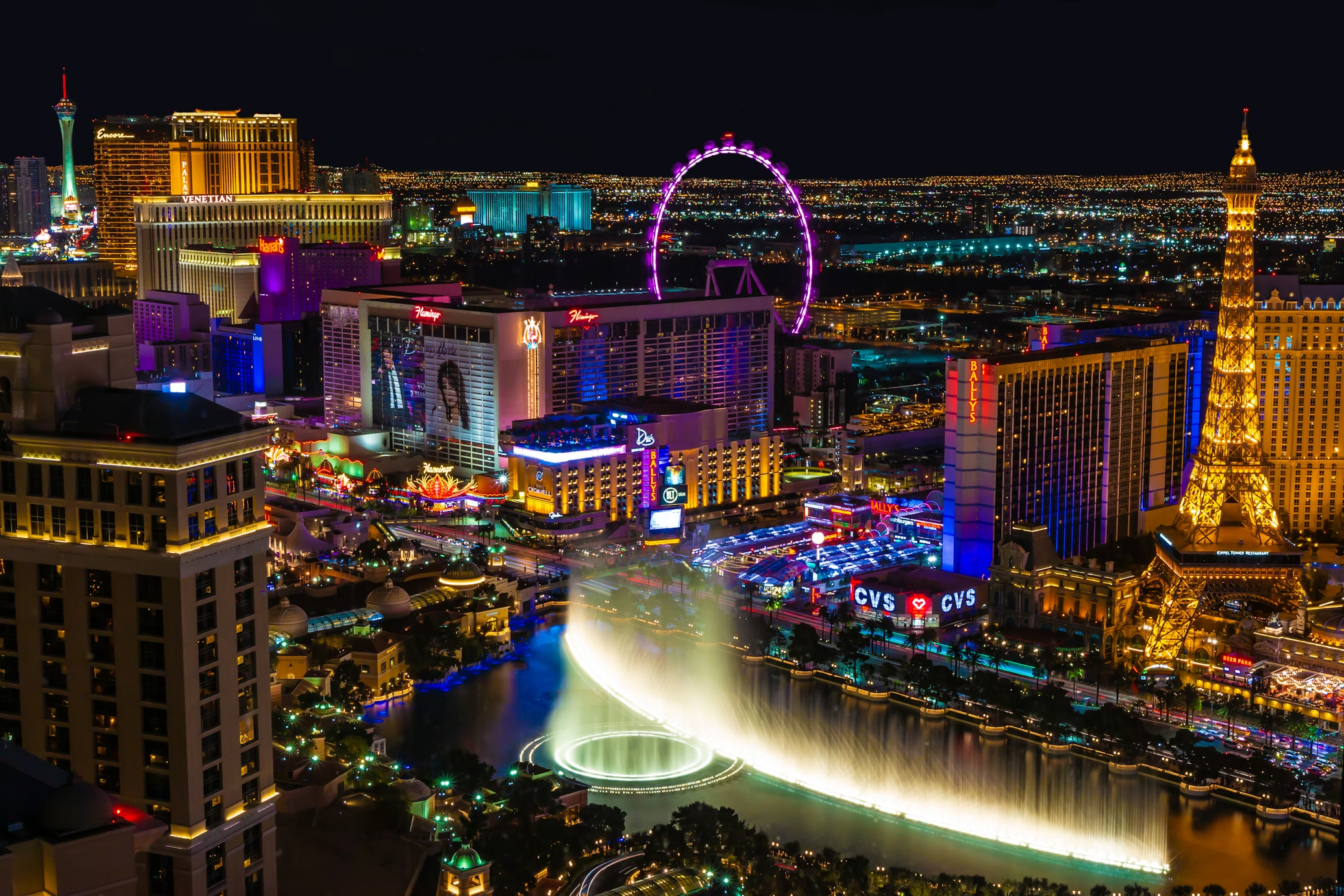
The visual design of Las Vegas plays a central role in cinema. The Strip is built for spectacle. Replicas of Paris, Venice, and ancient Rome stand next to each other. Directors use this architecture to create contrast. A character can move from a quiet hotel room to a loud casino in seconds.
Cinematography often highlights:
| Element | Cinematic Function |
| Neon lights | Visual intensity and excess |
| Casino floors | Controlled chaos and movement |
| Rooftop views | Isolation above the crowd |
| Desert surroundings | Contrast between illusion and reality |
This contrast between the artificial city and the empty desert reinforces the idea that Las Vegas is a constructed dream. Hollywood emphasizes that everything is built for entertainment and profit.
Myth Versus Reality
In reality, Las Vegas is also a residential city with schools, offices, and local communities. Most visitors do not experience extreme wins or dramatic losses. Casino operations are regulated. Corporate ownership replaced mafia control decades ago. Security systems are standardized and audited.
However, cinema does not aim to document daily life. It selects moments of tension. It compresses timelines. It simplifies complex systems into personal stories. Over time, these stories shape public perception more strongly than statistics.
The myth persists because it is functional. It provides a clear narrative structure: risk, confrontation, outcome. This structure works in crime films, comedies, and thrillers alike.
Conclusion
Hollywood did not invent Las Vegas, but it defined how the world imagines it. Through films like Casino and Ocean’s Eleven, the city became a symbol of risk, surveillance, ambition, and fast capital. Repeated visual patterns turned real casino floors into shorthand for high stakes.
Today, that atmosphere also exists online. Digital platforms mirror the structure of games and calculated risk. The myth of Las Vegas continues to move between architecture, film narratives, and digital space, sustained largely by cinema.