
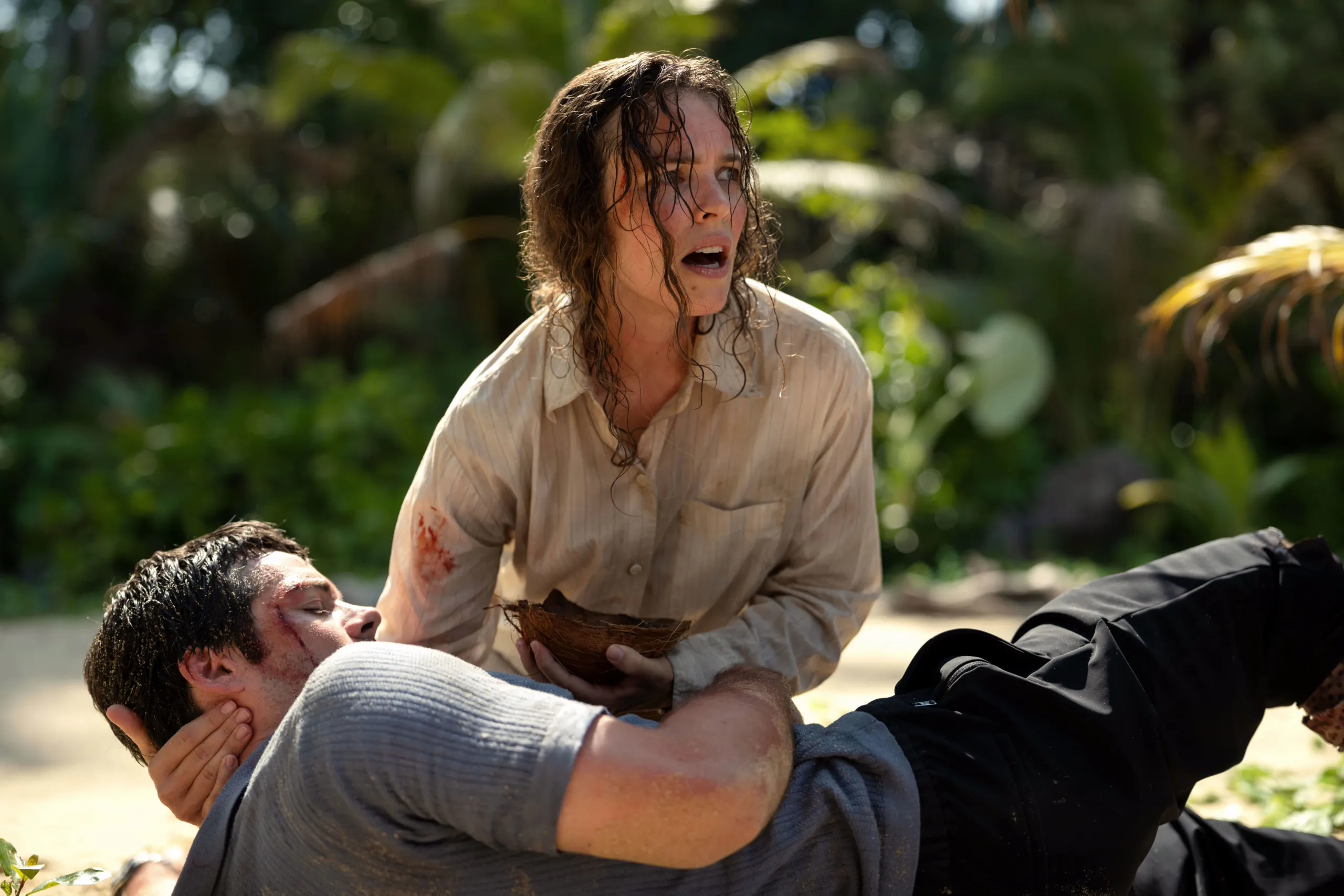
Alright. I have to do this. I know this isn’t my usual thing. You come to this blog for closed-box time travel mindjobs and the kind of films that make your brain hurt in the best possible way. But sometimes a movie gets so universally celebrated when it absolutely shouldn’t that you have to stand up and say something. So buckle up, because I’m about to be That Guy.
Send Help. Sam Raimi. Rachel McAdams. Dylan O’Brien. 94 million dollars at the box office. Critics falling over themselves to hand it trophies. I despised this movie. Let me count the ways.

The Setup That Telegraphs Everything
You know how some movies give you the ending in the first five minutes and then spend the next ninety minutes walking slowly toward it while everyone pretends not to see it coming? Welcome to Send Help.
Linda Liddle (McAdams) is your classic awkward, overlooked, underestimated office nerd. She has tuna fish on her face in her first scene. She obsesses over Survivor. She has been passed over for a promotion she was literally promised, because her new boss Bradley (O’Brien) — a nepo baby frat bro who inherited the company from daddy and promotes his golf buddies — would rather give the job to Donovan, a fraternity brother with a tan and presumably a very firm handshake. Bradley is introduced as an elitist snob who treats Linda like furniture. Donovan is a jock. There is a boss’s fiancée who exists primarily to be in the way.
And then they crash on a deserted island! Where — wait for it — the mousy overlooked survival enthusiast turns out to be… good at surviving! I know. Wild. Who could possibly have seen that coming.
Here’s my genuine question for every critic who called this “unpredictable” and “surprising” and a “devilish treat”: at what point, exactly, were you surprised? Was it when the woman who had been watching Survivor for years turned out to understand wilderness survival? Was it when the entitled boss proved useless without his corporate infrastructure? Because I had the entire arc of this movie mapped out before the plane hit the water. The characters are so aggressively archetypal — so deliberately, almost proudly two-dimensional — that it feels like we all just got teleported back to the era of Can’t Buy Me Love and 1987.
On The Subject of This “Clever” Ending
Let’s talk about the ending. The one that everyone keeps calling clever.
Linda lets her boss’ fiancée die on a cliff. She kills Bradley. She gets rescued and reinvents herself as a celebrity survivalist hero with a bestselling memoir and a movie deal. Oh and that book title? “No help is coming, so you’d better start saving yourself.” The crowd goes wild. COME ON.
This is not a twist. A twist is something that recontextualizes what came before in a way you didn’t see coming. This ending is the only logical destination of the story being told. The film spent its entire runtime establishing that Linda is competent and Bradley is insufferable — so of course she comes out on top. Of course she kills him. Of course the world rewards her for it. That’s not a subversion. That’s just the movie arriving where it was going from minute one.
You want a real twist? Here’s a real twist, free of charge: what if the film had the courage to reveal that Linda isn’t a hero at all — that she’s actually a genuine, calculating sociopath? The drunk driving death of her husband that gets mentioned like a throwaway detail? That wasn’t an accident. The cliff where Zuri falls? Not a moment of fear-induced paralysis. A plan. And what if Bradley — terrible, awful Bradley, the man raised in the shadow of a company he didn’t build and a father who never had time for him — actually arrives at genuine self-awareness on that island, and sees Linda for exactly what she is? He makes it back. And what do the authorities find at her house?
Look, I’m not claiming that’s a perfect movie. But I am claiming it has a more interesting idea of what a human being can be than “overlooked nerd gets revenge and the world applauds her for it.” That’s not subversion. That’s just wish fulfillment wearing a Sam Raimi mask.
The Blood Doesn’t Help
Raimi fans are pointing at the gore as evidence that the film has edge. The boar scene. The blood. The R rating. And yeah, sure — if you want to argue it’s technically in the tradition of Evil Dead, I can’t stop you. But here’s the thing: cartoonishly garish violence that exists purely for spectacle, detached from any real emotional stakes, isn’t edgy. It’s just loud.
When Linda hunts down that boar and blood goes everywhere in a sequence that’s apparently supposed to be thrilling and darkly funny simultaneously, I felt nothing. Not horrified. Not amused. Just… nothing. Because the character dispatching the boar was always going to dispatch the boar. There was never any doubt. The violence isn’t earned by tension. It’s just decoration.
Raimi can do genuine horror-comedy. Drag Me to Hell earns its gross-out moments because you genuinely care about the protagonist’s stakes. The horror functions because it matters. In Send Help, the violence is window dressing on a story that was already decided.
What This Movie Is
Send Help is a 1995 movie that got made in 2026 and everyone is applauding it for being brave. The “mousy overlooked woman who turns out to be more capable than the men around her” arc was already a cliché when Sigourney Weaver was doing it. There is nothing wrong with that arc! But it requires characters who feel like humans, not archetypes wearing name tags. Bradley is so comprehensively awful from frame one that watching him get his comeuppance carries zero emotional weight. You need to believe in a person, even a little, for their downfall to mean something.
The critics calling this “viciously clever” are, I suspect, being seduced by Raimi’s craft — and look, the man can direct. The plane crash sequence is well executed. McAdams is doing everything she can with the material. But craft in service of a story that has nothing to say is just a very well-lit empty room.
I wanted to like this. I really did. I wanted Sam Raimi back in horror doing something interesting. And instead I got a movie that mistakes predictability for inevitability, and dresses up a revenge fantasy in enough gore and dark humor that people confuse it for something transgressive. You want a movie that actually pulled this feat off? That took a 1995 idea and turned it inside out and gave you a truly surprising ending? Bodies Bodies Bodies. I won’t spoil that one here for making a point, but you will not see that one coming, and it’s perfect in its ability to skewer an entire sub-genre of film. But Send Help? Please. Somebody send ME help. I want my two hours back.
If you want a movie that actually plays with power dynamics in genuinely unsettling ways — the kind where you can’t chart the ending from the opening frame — go watch Heathers. Or Sanctuary. Or The Menu. Or how about It’s What’s Inside (which I am now realizing my deep dive primer on that movie is now awol from my site… man you guys have to watch that one to realize what is really possible in this world of stereotypes!) Or frankly, any of the movies on my time travel list. Your brain will thank you.