Backrooms Youtube eps 1 – 10 explanation post
Backrooms Youtube eps 11 – 17 explanation post
Backrooms Youtube eps 18 – 22 explanation post
Backrooms Movie explanation walkthrough
Backrooms Movie Theories Explanation
Backrooms Definitive Timeline
We Are Analyzing The Backrooms Youtube Videos Prior to Watching the Movie – join in on the fun. This is going to be a spoiler filled Youtube video ride… but it’s meant to be a companion compendium to your experience of the movie.
At first I assumed that going in blind to seeing the movie The Backrooms was the way to go. But then I started seeing more and more people list out the key Backrooms Youtube videos that are critical watches before going into the cinematic experience.
The Lore and History of the Backrooms
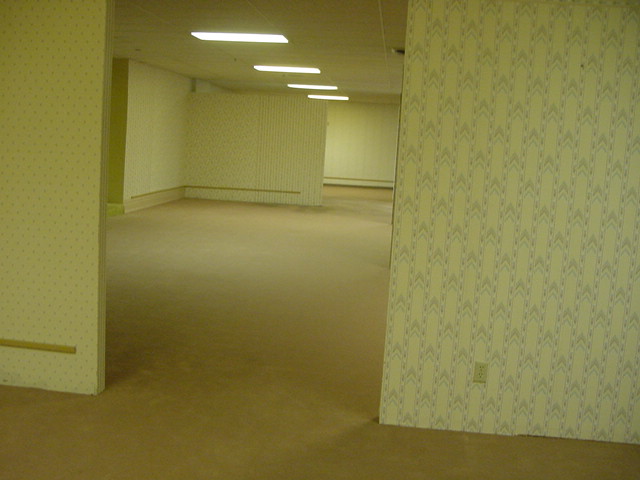
So the backrooms/liminal spaces concept actually hit the internet in 2011. It all began with one simple, disjointedly askew photograph. Carpet. Flourescent lighting. Pale yellow saturated the entirety of the frame. Random dividing walls. Yeah, not scary, but definitely not right. Not okay.
The photo was posted by an anonymous user and it threaded its way through 4chan’s paranormal board where it was discussed in a space where users were asked to post photos that just felt off. Not normal. Another user commented on the thread the following:
If you’re not careful and you noclip out of reality in the wrong areas, you’ll end up in the Backrooms, where it’s nothing but the stink of old moist carpet, the madness of mono-yellow, the endless background noise of fluorescent lights at maximum hum-buzz, and approximately six hundred million square miles of randomly segmented empty rooms to be trapped in – God save you if you hear something wandering around nearby, because it sure as hell has heard you.
Okay, a really quick explanation of noclipping to the non-gamers here starting on this backrooms journey with me. There are hacks in many (most?) video games. They are command line executions that change the game play. For example: /Godmode allows for unlimited damaged and all weapons, /TCL turns off collisions, and /noclip let’s the player walk through walls and literally outside the confines of the game walls. Makes for some potentially really trippy views of the game, like this one.
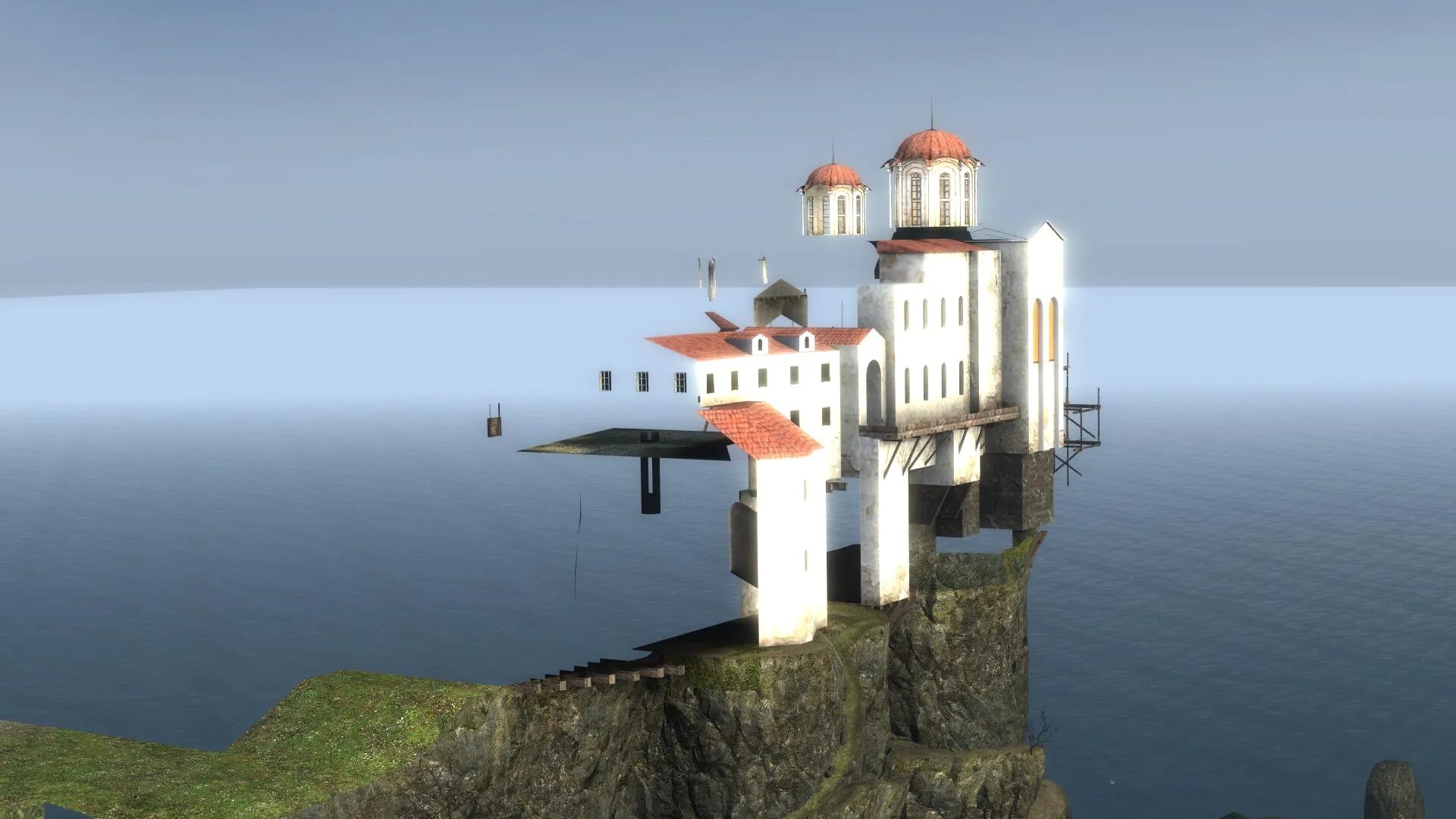
Get it? /noclipping means that you can accidentally slide out of the level and drop into somewhere else that the game designers didn’t plan for you to go into. It’s like seeing a shirt from the inside out. You can generally get the idea of the thing – but it’s not right. Something is really very wrong about it.
Let’s Get to the YouTube Sensation
Alright, so we’ve established the origin point. The carpet. The fluorescent hum. The mono-yellow. The guy who typed something into a 4chan thread and accidentally wrote the defining horror mythology of a generation. Now we need to talk about the man who took that mythology, stuffed it into a VHS camcorder aesthetic, and made it genuinely terrifying.
Kane Parsons — better known online as Kane Pixels — was sixteen years old when he started working on The Backrooms (Found Footage) in late 2021. Sixteen. Let that sit. He uploaded it to YouTube on January 7, 2022, and the internet lost its collective mind. The video now sits north of 78 million views, and it is, without exaggeration, one of the most effective pieces of analog horror ever committed to digital format.
And then A24 came knocking. Obviously.
The movie hits theaters today — May 29, 2026 — and rather than walking in cold, I’ve been spending the past week doing something I rarely do: homework. Because unlike most franchise films where the source material is a book or a comic, the “source material” for the Backrooms movie is a YouTube channel. And you absolutely should watch at least some of it before you buy your ticket.
Here’s the thing, though. The Kane Pixels Backrooms series is now 24 episodes deep. That’s a lot of content for a pre-movie warm-up. So I’ve pulled out the three that I think matter most — the ones that will make the movie land harder, the ones that give you the right mental furniture for the experience ahead.
Let’s go.

Episode 1: The Backrooms (Found Footage)
January 7, 2022 | ~9 minutes | 78M+ views
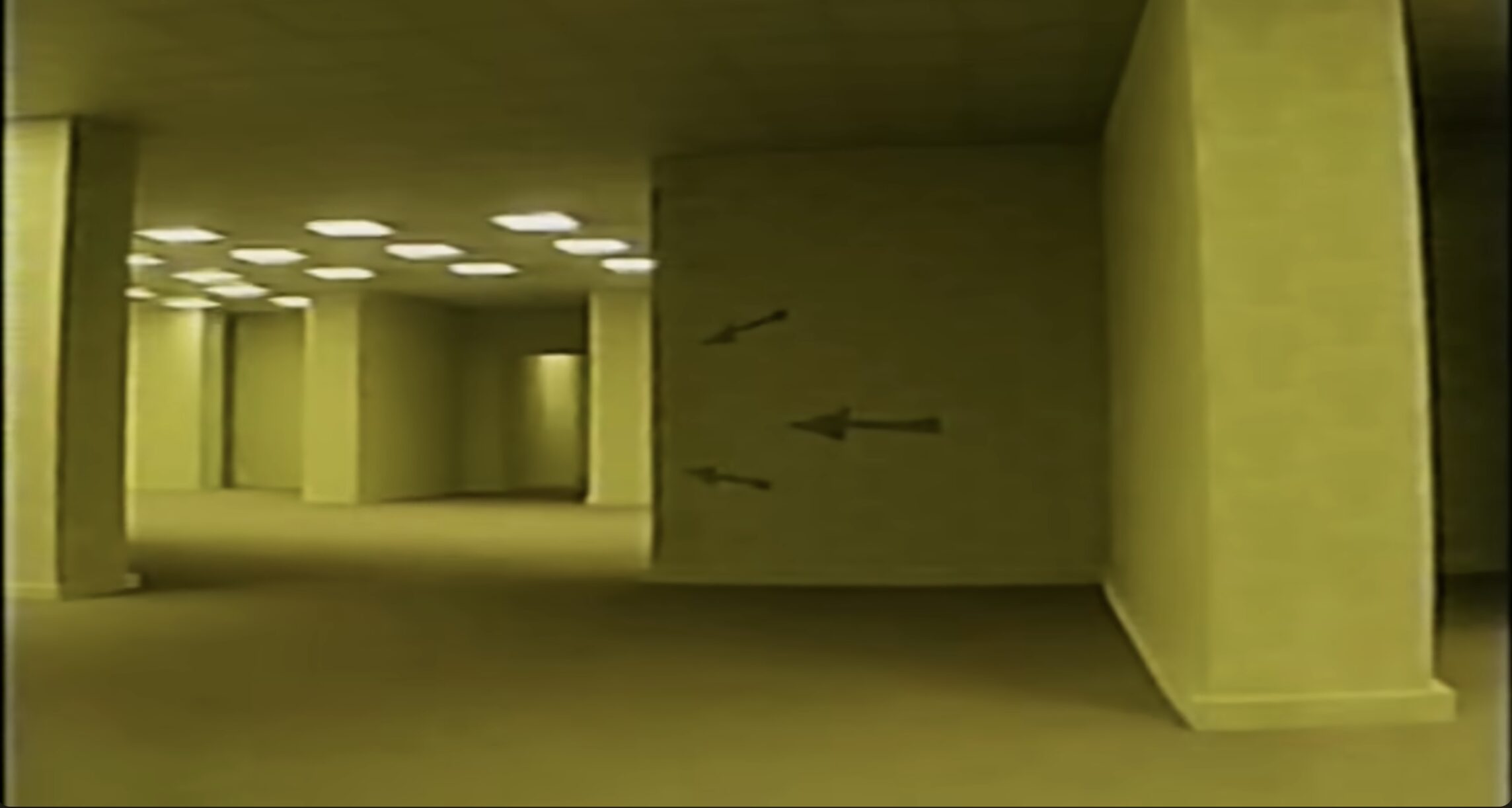
This is ground zero. The video that started everything — or at least, the video that took that 2011 4chan photograph and turned it from a creepypasta comment into a visceral, first-person nightmare. The setup is deceptively casual. It’s July 4th, 1991. Kane (playing a fictionalized version of himself) is working as a cameraman on a low-budget amateur film shoot with some friends. The director asks him to back up for a wider shot. Kane backs up. And then — the way a ship slides into dark water with almost no ceremony at all — he phases through the floor.
He noclips out of reality.
Just like that, he’s in the Backrooms. What follows is nine minutes of pure, controlled dread. There’s no jump-scare setup and payoff cycle here. There’s no musical telegraphing. Kane wanders through the Level 0 corridors — that maze of mono-yellow walls, the endless segmented rooms, the fluorescent lights flickering overhead at maximum buzz — and the camera catches something. Hiding around a corner. Gone before he can confirm it. And then the monster screams bloody murder (Those screams by the way, are edited chimpanzee audio. You’re welcome for that detail. You’ll never un-know it.)
He finds arrows scratched into the walls. He follows them to a wide, open room. On the wall: a series of frantic drawings and writings. “I’M STILL ME” scrawled over and over. “IT’S HERE IT HEARS.” “God closed his eyes.” And then, in the center of it all, the most heartbreaking phrase: “don’t move stay still.”
Someone was here before him. Someone survived long enough to write that. Then the Lifeform reveals itself.
This is the creature at the center of the Kane Pixels universe — and it is properly unsettling in that specific way that only good VFX-as-suggestion can be. It’s humanoid. It’s wrong. It’s made of something dark and vine-like, all elongated limbs and bent torso, and it charges. Kane runs. He drops into a pit that leads to a different section of the Backrooms. He hides. He’s found again. And eventually — the camera falls.
It lands in the sky above a suburban neighborhood. The footage was recovered on September 23, 1996. Five years after Kane went in.
What Kane Parsons accomplishes in nine minutes with a free 3D software tool (Blender, for those keeping score) and an analog-filter VHS aesthetic is genuinely remarkable. The reason this video went viral isn’t that it’s technically polished — it’s that the feeling is exactly right. It nails what the 4chan comment described. The stink of old moist carpet. The madness of mono-yellow. The background noise of fluorescent lights. The absolute certainty that you are trapped in something that has no exit, and that something in here knows you’re here.
Episodes 2-9: Backrooms — Informational Videos
February 12, 2022 | ~26 minutes
These are the episodes where the mythology graduates from personal horror into institutional horror — and that shift is what turns the Backrooms from a scary place into a terrifying place.
We’re introduced to Async. The Async Research Institute is a private organization that, through their Low-Proximity Magnetic Distortion System (Project KV31), has figured out how to deliberately open a doorway into the Backrooms. They call the doorway “the Threshold.” They have been using it since at least the late 1980s. They have sent researchers through it. Some have not come back.
This video is structured as a training or orientation film — a text-to-speech narration over technical schematics and documentation footage, the kind of dry, institutional aesthetic that makes the whole thing feel genuinely classified. It’s dated February 29, 1990 (a date that, incidentally, doesn’t exist).
A team of Async researchers goes into the Backrooms. They’re suited up. They’re professional. They have equipment and protocols.
And then in Episode 7 – Peter Tench – gets separated from the group. He hears something. Wanders off to investigate. His colleagues vanish in a direction he can’t follow. And Tench is suddenly alone in the same yellow maze that swallowed Kane two years earlier.
Here’s why this episode matters as pre-movie prep: the Backrooms is no longer just a place that people accidentally fall into. It’s a place that humans have deliberately been poking at, funding, studying, and covering up. There’s an organization that knows it exists. There’s a government official (James D. Watkins, actual US Secretary of Energy from 1989-1993, worked into the fiction with archival footage) who’s been briefed on it. There’s money and interest and ambition behind the Threshold. And hidden within the video’s text flashes a single truncated line: “Not that it would do you any good but peop…” Not that it would do you any good. But people are ending up in here.
The Backrooms is no longer an accident. It’s a consequence of human arrogance, desire for infinite storage, and nearly infinite resources. It’s fueled by a greed that puts humanity’s safety at risk. And that is a very different kind of scary.
Episode 10: Backrooms — Pitfalls
April 2022 | ~14 minutes
If Episode 1 is the terror of being alone in an impossible place, and the next few after that are the horror of institutional hubris, then Episode 10 – Pitfalls, is the episode where both threads braid together into something genuinely dreadful.
We’re with Marvin, an Async researcher who has gone back into the Backrooms as part of a documentation team. He’s not an accidental tourist like Kane. He’s a professional, equipped, intentional visitor. He has protocols. He has colleagues. He has a job to do.
And then he hears something crying for help.
This is the moment the series reveals the Lifeform’s real predatory intelligence, and it’s awful. The crying sounds human. It sounds desperate. It sounds like exactly the kind of thing that would make a decent person divert from their protocol to investigate. Marvin follows it. Further into the corridors. Away from his team. Down toward whatever is making that sound.
The cries are not from another lost person. They are not from a survivor. The Lifeform has learned to lure.
Marvin runs. The chase sequence here is different from Kane’s — more claustrophobic, more tactical, shot with surveillance-camera angles that give it a clinical, documented quality that somehow makes it worse. He escapes, barely. But this is the episode that quietly establishes that the Lifeform isn’t just an ambient predator lurking in a nightmare landscape. It’s learning. It’s adapting. It’s using human behavior against humans.
This is also the episode where the series begins genuinely paying off the institutional threads from Eps 2 – 9. We’re seeing what Async’s researchers actually encounter when they go in. We’re seeing the gap between what their training materials presented (manageable, documentable, observable) and what the Backrooms actually is (a place that is actively hunting you back).
Backrooms Movie In Youtube Context
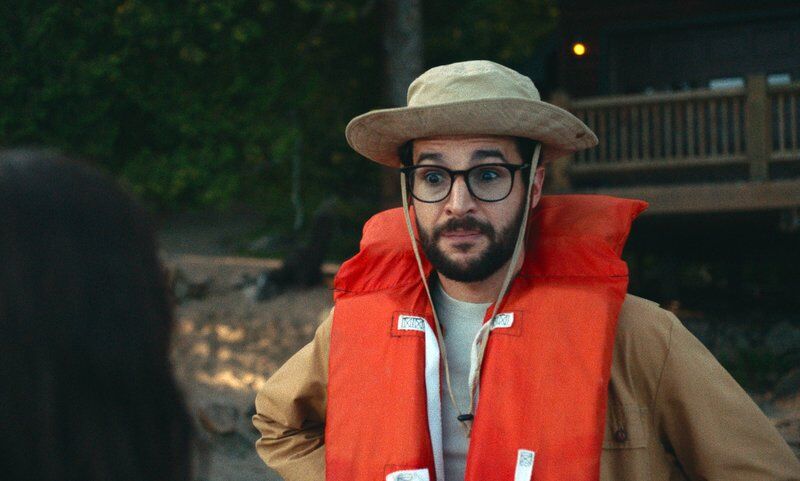
If you are wondering where in the Youtube Backrooms lore the movie falls in the larger Backrooms universe, the cinematic experience begins in 1990 in the Santa Clara Valley. It follows new characters, including a particular furniture outlet manager who /noclips his way through to the backrooms. The movie therefore separates itself from specific, previously uploaded episodes. So as a result it’s Backrooms Youtube adjacent… in the same canon and universe. The film is specifically designed in order to be watched by anyone, even absent watching any of the 22 Kane Backrooms videos. The Async project is still there – the Backrooms 90’s rift is still there. And it is definitely not a sequel to the 22nd video, Found Footage #3.
So Why Is Any of This Actually Scary? The Psychology of Liminal Spaces.
I’ve been chewing on this since I started this series. Because objectively — a yellow carpeted office hallway is not threatening. Fluorescent lights are not threatening. An empty room with a stained drop ceiling is not threatening. We’ve all been in these places. Most of us have worked in them for years. And yet.
The reason liminal spaces hit the way they do is that they exploit a very specific misfire in the human brain. We are wired for social cues. We read environments the way we read faces — for information about whether they’re safe, whether they’re inhabited, whether we belong. Every human-built space carries implicit social information: who designed it, who uses it, what it’s for. A grocery store. A hotel hallway. A school at night. You know these spaces. You know their language.
Liminal spaces break that language without breaking the grammar.
The Backrooms looks like a place humans built. The carpet is cut and installed. The walls are framed and drywalled. The lights were wired by someone. Every physical detail says a person made this for a purpose. And yet there is no purpose here. There are no people here. There is no exit here. The entire social contract embedded in the architecture — this space exists to serve human activity — is a lie. You are in something that looks like a human space but is not a human space. Your brain keeps reaching for the familiar social cues and keeps finding nothing. And that cognitive mismatch — that gap between what your pattern-recognition is screaming and what your perceptual reality is showing — is exactly where dread lives.
It’s our normal environments turned into a Venus Flytrap. I maze sans Minotaur. A downward spinning siphon into a black abyss.
Kane Parsons understood this intuitively at sixteen. The Backrooms isn’t scary because of the monster. The monster is almost beside the point. The Backrooms is scary because you are alone in a space designed to make you feel like you shouldn’t be alone, and nothing you do will fix that. You can’t call anyone. You can’t find a door that leads out. You can walk for what feels like a million square miles and find nothing but more carpet, more fluorescent hum, more mono-yellow.
And then you hear something.