
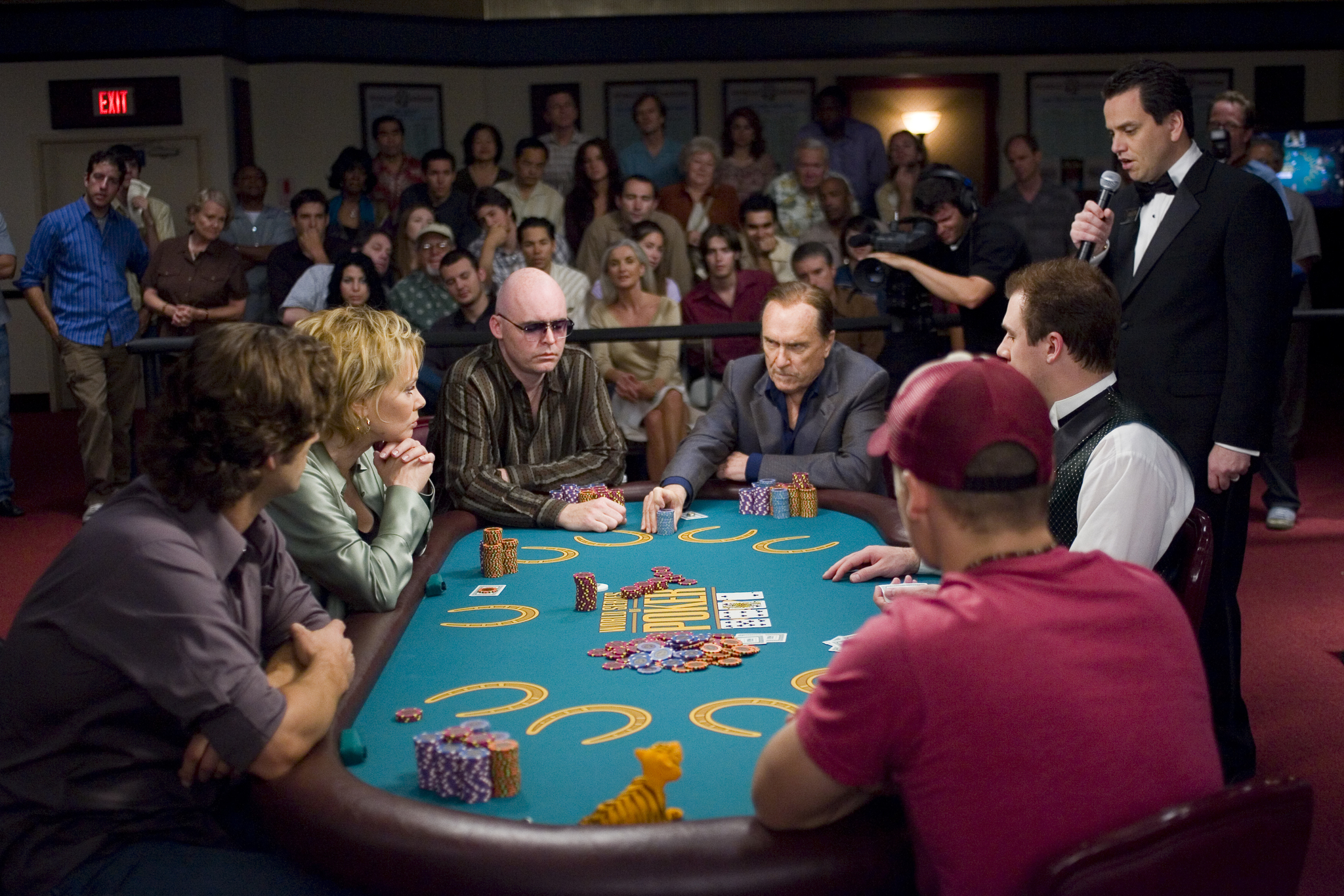
Lucky You builds its whole argument around one private choice made in public. Curtis Hanson sets up a familiar contest in Las Vegas: a gifted man chases a title, a father stands in the way, and every scene seems to push toward a clean win. Yet the film refuses that easy finish.
Huck Cheever, played by Eric Bana, spends most of the story measuring his worth through cards, money, and the need to beat L.C. Cheever, the father who shaped him and failed him. When the final hand arrives, the result matters less than what Huck is ready to give up. That is why the ending lands with more force than any tournament result could.
Why casino stories keep returning to people who drift
Gambling has long been a recurring motif in cinema, often used to explore ambition, uncertainty, and personal choices. In Lucky You, Huck moves between poker rooms, hotels, and personal encounters while struggling to find direction in his life. Other well-known films approach gambling from different angles. Casino examines the power struggles surrounding Las Vegas casinos, while Rounders follows a talented poker player drawn back into competitive play. The Gambler takes a more personal approach, showing how repeated risks influence the main character’s decisions and relationships.
The casino culture portrayed in these films also has a clear connection to the real world. For decades, physical casinos have competed for visitors through their gaming facilities, service standards, and reputation. Las Vegas became one of the most recognizable examples of this competition, with individual establishments working to distinguish themselves in an increasingly crowded market.
As gambling moved online, much of that competition followed. Online casinos began competing through their game selections, payment methods, website features, and overall service quality. The number and variety of platforms have grown considerably, creating a market where operators are increasingly compared and evaluated. This development has even led to dedicated industry recognition initiatives, such as the CasinoJager casino awards, which recognize the best-performing online casinos across different categories.
Huck’s problem starts long before the last hand
From the opening stretch, Huck is presented as highly skilled and deeply damaged. He reads situations fast, trusts his instincts, and carries himself with the confidence of someone who has survived on talent for years. At the same time, he treats other people as interruptions. His distance is plain in the way he handles Billie, played by Drew Barrymore, and even clearer in the cold respect he extends to his father. Skill has become his shield. As long as he can keep proving himself, he never has to admit what that shield costs him.
L.C. Cheever, played by Robert Duvall, gives that problem its emotional shape. He is a legendary two-time WSOP champion, but in Huck’s life he is also the man whose approval remains unresolved. Huck wants to beat him for reasons that go far beyond money or prestige. Defeating L.C. would seem to settle years of anger, envy, and neglect in one visible moment. That is why Huck’s pursuit feels so harsh. He is trying to solve a personal wound through public victory.
Billie exposes the weakness in that plan. She sees charm in him at first, then discovers how quickly ambition can turn him selfish. When Huck takes money connected to her, the damage is larger than the amount itself. He proves that his need to come out ahead can override care, trust, and even basic decency. By then, the film has made one thing clear: the last hand will matter because Huck has built his whole identity around refusing to let go.
The final table turns strategy into a moral test
By the time Huck reaches the WSOP Main Event final table, the story has arranged the perfect stage for the result he has wanted all along. He is heads-up against L.C. The crowd, the pressure, and the years behind them all point toward a simple payoff: the son finally defeats the father. Hanson uses that setup carefully because it carries a trap. If Huck wins in the expected way, nothing in him changes. He gets the proof he has chased, but he remains the same man who hurts people while calling it discipline.
Then the film shifts the ground. Huck reads L.C. perfectly during a decisive hand. He knows where he stands. He knows he can eliminate his father and take the title. This is the rare point where total insight and total opportunity meet. In a standard sports drama, that is the signal to strike. Lucky You does the opposite. The scene matters because it asks what a man does when he can win and finally understands the price of wanting that win too much.
Huck folds a winning hand on purpose. That choice is startling because it is active, not passive. He is not losing by mistake. He is refusing the version of himself that treats triumph as the answer to every wound. The tension in the scene comes from restraint. For once, Huck uses his talent to stop rather than take. That is why the moment carries more weight than a championship could have carried.
Folding the hand repairs what victory never could
The meaning of Huck’s decision becomes sharper when viewed through Billie. Earlier, his hunger to get ahead had made him careless with her trust. He wanted connection, yet he behaved as if relationships could absorb any damage as long as he stayed on course. The fold breaks that pattern. By giving up the hand, he proves he can place another value above his own image. That shift speaks directly to the harm he caused Billie. He finally shows that someone else can matter more than his need to prove himself.
The decision also changes the emotional balance with L.C. For years, Huck has defined their bond through opposition. Beat the father, and perhaps the old pain disappears. Yet the fold reveals a more mature reading of the situation. L.C. is not a puzzle to solve or a wall to break through. He is a flawed parent whose approval can no longer decide Huck’s worth. Letting the moment pass is therefore a form of separation. Huck stops asking the table to settle what life never settled.
That is why the scene feels like growth instead of surrender. He does not become weak. He becomes clear. The film argues that adulthood sometimes looks less dramatic than conquest. It may come in the form of a limit accepted at the exact second a person could push past it. Huck’s fold carries force because it turns self-control into proof of change.
The ending rejects the usual meaning of success
L.C. wins the tournament, but the result offers little satisfaction. He appears to sense that Huck let the hand go, which drains the public victory of its full meaning. That response is important. The film does not humiliate L.C., yet it refuses to frame him as the true winner. His title stands, though the emotional center has already moved elsewhere. A bracelet can confirm status, but it cannot repair years of distance between father and son.
Huck’s refusal of L.C.’s offer to share the winnings completes the turn. Earlier in the film, money is tangled up with pride, compulsion, and self-worth. Taking the cash would keep that old logic in place. Refusing it breaks the chain. Huck is no longer measuring himself in chips, debts, or visible triumphs. He has chosen a different scale, one based on self-respect and his capacity to care for another person without trying to gain from it.
The closing note makes the point with unusual restraint. Instead of ending on ceremony, the film leaves us with a casual game between Huck and L.C. and the possibility of real reconciliation with Billie. That choice defines the whole message. Lucky You says a person can lose the prize, walk away from the spotlight, and still come out ahead in the only way that lasts. Huck does not win the event. He wins back the part of himself that was worth more than the title.