
I need to lead with this. Everyone needs to be watching Redux Redux. Not “you might like this one,” not “worth a watch if you’re into the genre,” everyone. I loved absolutely everything about this movie, and I’ve been sitting here trying to figure out how to convey that without just repeating the word “loved” fifteen times, so let me try it this way instead. The closest thing I’ve seen to Redux Redux is the movie Coherence. If you’ve read this blog for more than five minutes you know Coherence sits in my personal top five movies of all time, so when I tell you Redux Redux is the closest thing I’ve found to it, understand that is about as high a compliment as I am capable of giving a movie.
Here’s the setup, spoiler free as always. Irene Kelly is a mother whose daughter was murdered. She has built, or found, or somehow acquired, a machine that lets her jump between parallel universes (she’s sliding to the left and the right in the multi-verse), and she is using it to hunt down every version of the man who killed her daughter, one universe at a time. That’s it, that’s the premise, and from that absurdly simple starting point the movie builds something that is somehow bleak and funny and devastating and thrilling all at once. It stars Michaela McManus as Irene, and it was written and directed by her actual brothers, Kevin and Matthew McManus, which matters a lot to the rest of what I want to talk about in this post.

Go watch the movie before you keep reading. I mean it more than I usually mean it. This is a small film that lives and dies on word of mouth, and the absolute best way to experience it is going in as blind as I did.
Let’s Take A Moment on the Making of Redux Redux
If you’ve been reading taylorholmes.com for a while, you know I have a soft spot for befriending and promoting micro budget filmmakers whenever I find one worth shouting about, and Redux Redux might be the best example of exactly why I do that. This is a film that took Kevin and Matthew McManus ten years to get made. They wrote the script roughly a decade before it premiered at South by Southwest in 2025, which means they were sitting on this concept well before the multiverse became the most oversaturated idea in Hollywood, and they spent years genuinely worried some giant studio movie would beat them to it and make their tiny version feel redundant before they ever got the money together to shoot it. There’s something almost unbearably fitting about the fact that the delay in funding meant their sister Michaela, who plays Irene, actually grew into the role over that decade. When they first wrote it, she was too young to convincingly play a grieving mother. By the time they finally shot it, she wasn’t – she crushed this role.
By all accounts – this was a shoestring of a shoestring budget. The only waypoint we have is that the brothers’ first feasture, Funeral Kings, was made for $125,000. The whole shoot for Redux Redux was 18 days!! EIGHTEEN! That just seems unbelievable to me. They filmed in the Santa Clarita Valley, which is an absolutely brutal schedule for a film that requires its lead actress to emotionally relive her daughter’s murder over and over across a dozen plus scenes, since that murder is basically the reset button the entire story keeps pulling.
And here’s the part that actually impressed me the most once I read into it. The smartest budget decision in this entire movie isn’t a visual effects shortcut, it’s a storytelling one. Kevin McManus has talked about the pitch being something like, what if the multiverse wasn’t wild from universe to universe. Instead of giving Irene a steampunk universe and then a cyberpunk universe and then whatever else, the brothers made the parallel universes almost identical to each other on purpose, differing by small, almost mundane details. That’s a genuinely bleaker and funnier choice than the usual multiverse playbook, and it also means they never had to build ten different worlds on a shoestring budget. A different colored coffee mug or a slightly altered sign is doing the job that an entire new production design budget would normally have to do. Because the shoot happened out of order and the universes look so similar to each other, they actually had to label scenes “Universe 1,” “Universe 2,” directly in the script just so everyone on set could keep track of which nearly identical reality they were filming that day.
The time machine itself is this wonderful piece of scrappy invention too. It’s built out of recycled parts and gets described as looking like something between a refrigerator and a coffin, which feels exactly right once you see it on screen. Kevin apparently built a small balsa wood model first to work out the design before it got built full size, and at one point during the shoot the machine’s hydraulics failed entirely, so the crew fixed it with fishing line and Dixie cups rigged up to make the machine appear to drop right on cue. There’s also a stunt early on involving a cast member getting set on fire that the crew specifically chose because it only needed to work once to be worth the cost, rather than something you’d need multiple expensive takes to nail. None of this reads as a film limited by its budget. It reads as a film that turned its budget into its own creative fingerprint, and that’s exactly the kind of filmmaking I want more people supporting.
Redux Redux Deep Dive: What Actually Happens
Alright, full spoilers from here forward. This is your last chance to go watch it first, and I really do think you should.
Irene Kelly’s daughter Anna is murdered by a man named Neville, a cook. Using her homemade universe hopping machine, Irene has spent what appears to be years jumping from universe to universe, tracking down every version of Neville she can find and killing him, over and over, one parallel reality at a time.
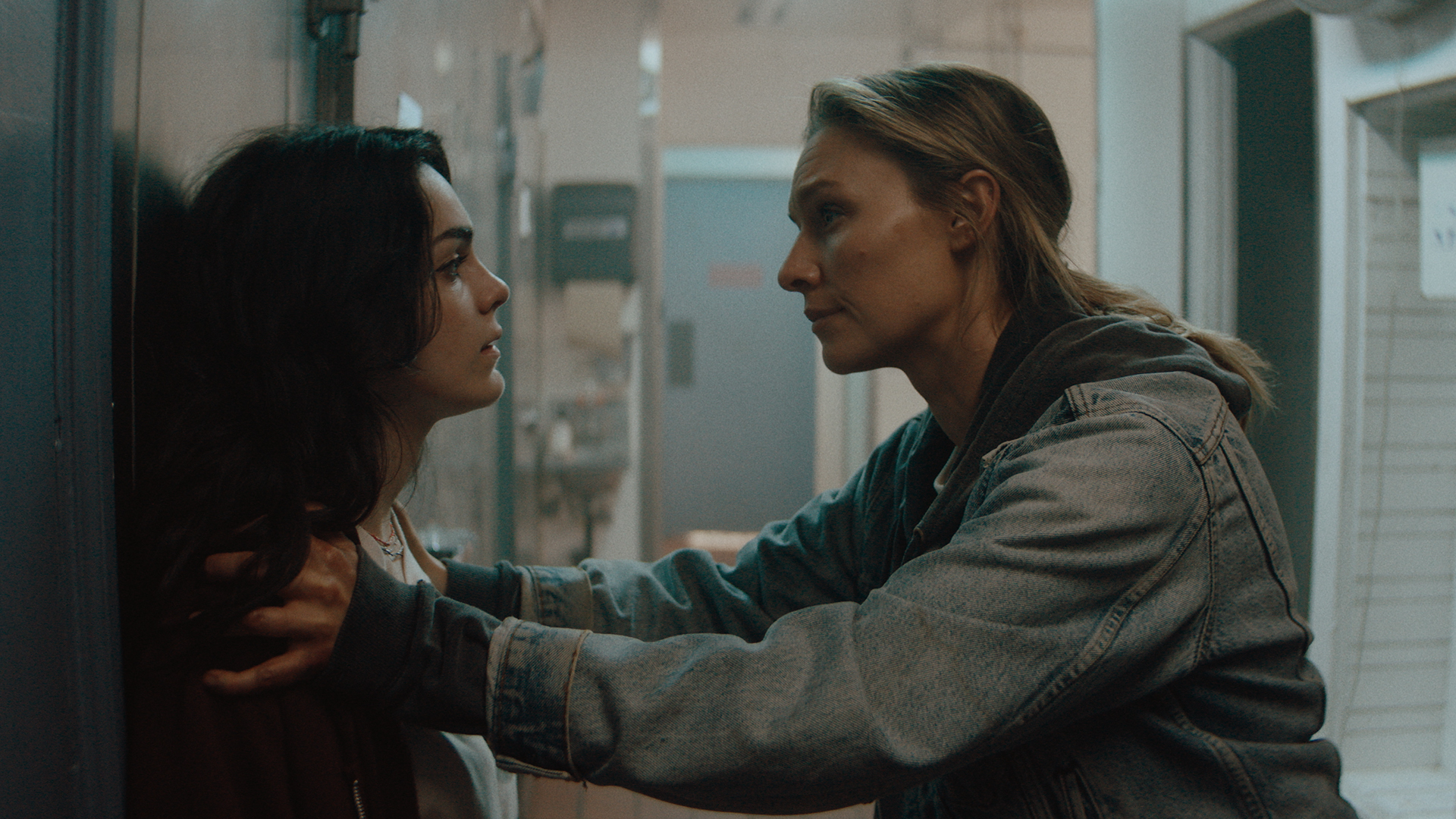
In one of these universes, she arrives just in time to save a teenage runaway named Mia, who Neville was about to kill, scaring him off before he can hurt her. Irene sends Mia on her way afterward, only to discover Mia stole her gun. Mia isn’t running from danger, it turns out, she’s hitchhiking straight toward Neville’s hideout to kill him herself. Irene catches up with her, and the two form an uneasy alliance to finish him together.
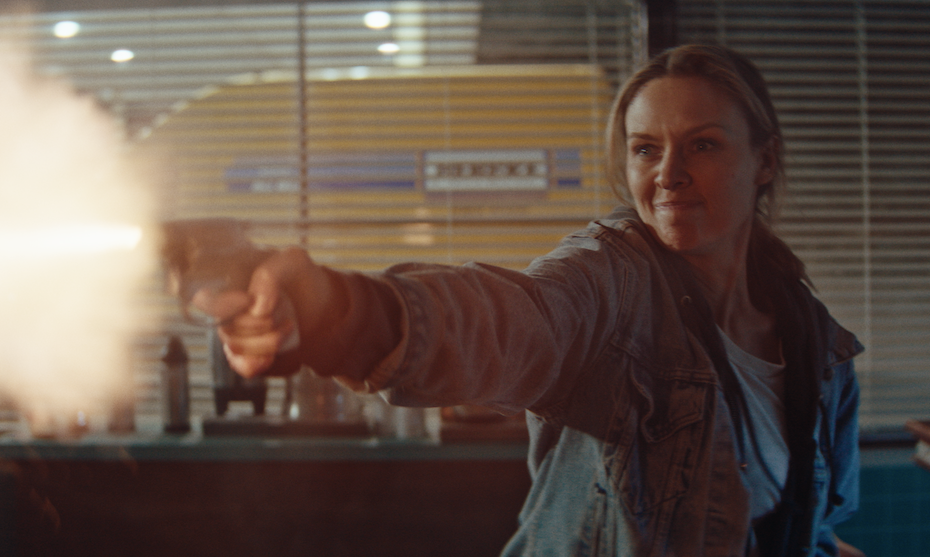
They corner this universe’s Neville at a gas station, and a gunfight breaks out that ends with the store clerk getting shot. Irene pulls Mia into the machine with her right as she kills Neville, and they land in a new universe, one where that same clerk is alive and well. Irene finally lays out the whole operation for Mia here, and in the middle of that conversation she realizes the last jump fried the machine’s fuel core.
That sends them chasing down a pair of smugglers who might have a replacement part. The lead smuggler, Billie, tries to extort Mia herself as payment instead of cash, and when Irene refuses, Billie attempts to trap the two of them inside a hopper. They escape, kill one of the smugglers in the process, and take the fuel core by force.
Scattered across a handful of these universes is Jonathan, played by Jim Cummings, is basically Irene’s recurring fling. He exists in more or less the same form in every universe, which means he’s the one person in this entire multiverse odyssey she can actually be honest with, the closest thing she has to an old friend who already knows her. Whenever things start falling apart between her and Mia, whenever she tries to push the girl away or Mia bolts on her own, Irene’s instinct is to go running back to Jonathan to numb herself out for a night the way she apparently always has. The detail that got me once I understood it properly is that at her lowest point, she goes back to him and can’t even manage that anymore, she’s too flustered and confused to go through with sleeping with him at all. Even her one reliable coping mechanism stops working once Mia is genuinely in her head. That’s a great, quiet way of showing exactly how far this girl has knocked Irene off whatever numb axis she’d been running on.
The next universe is the one that cracked the whole movie open for me. Irene discovers that she’s apparently the only surviving version of herself who didn’t die by suicide after Anna was killed. She’s been using her own abandoned house in this universe as a hideout. While Mia sleeps, Irene checks in on this universe’s Neville and discovers he’s already murdered this universe’s version of Mia. She comes back shaken, having clearly grown to actually care about the Mia traveling with her, and tells her they should stop killing. Mia, still completely consumed by her own need for vengeance, reacts with fury, and the resulting struggle knocks Irene into yet another universe, this one where Neville was arrested fifteen years earlier, meaning this universe’s Anna never died at all.
Finally! Irene locates a multi-verse where her daughter Anna has survived! The heart of her drive for this whole movie has been to find a universe where Neville wasn’t able to kill Anna – Anna survived. So she is obviously overjoyed to see at her own house, Anna and another version of herself living a contented life together. She reveals herself to this version of her daughter, says goodbye, and doesn’t try to stay or take it for herself. That restraint is such a quiet, devastating choice for the movie to make. (And it’s the opposite choice made in the movie Coherence I might add.)
Back in the universe she left, Mia shoots that Neville herself as he’s about to dispose of that universe’s dead Mia, but he overpowers her before she can finish him off. He drags both Mia and the dead girl’s body back to his hideout, stuffs Mia into a barrel, and throws her into a lake to drown. Irene arrives just in time, shoots him, and Neville, recognizing her instantly as just another grieving mother he’s created somewhere along the way, throws her into the same lake after catching her leg in a bear trap. As Irene sinks, Mia frees herself from the barrel and kills Neville herself. Irene frees herself right after and resurfaces.
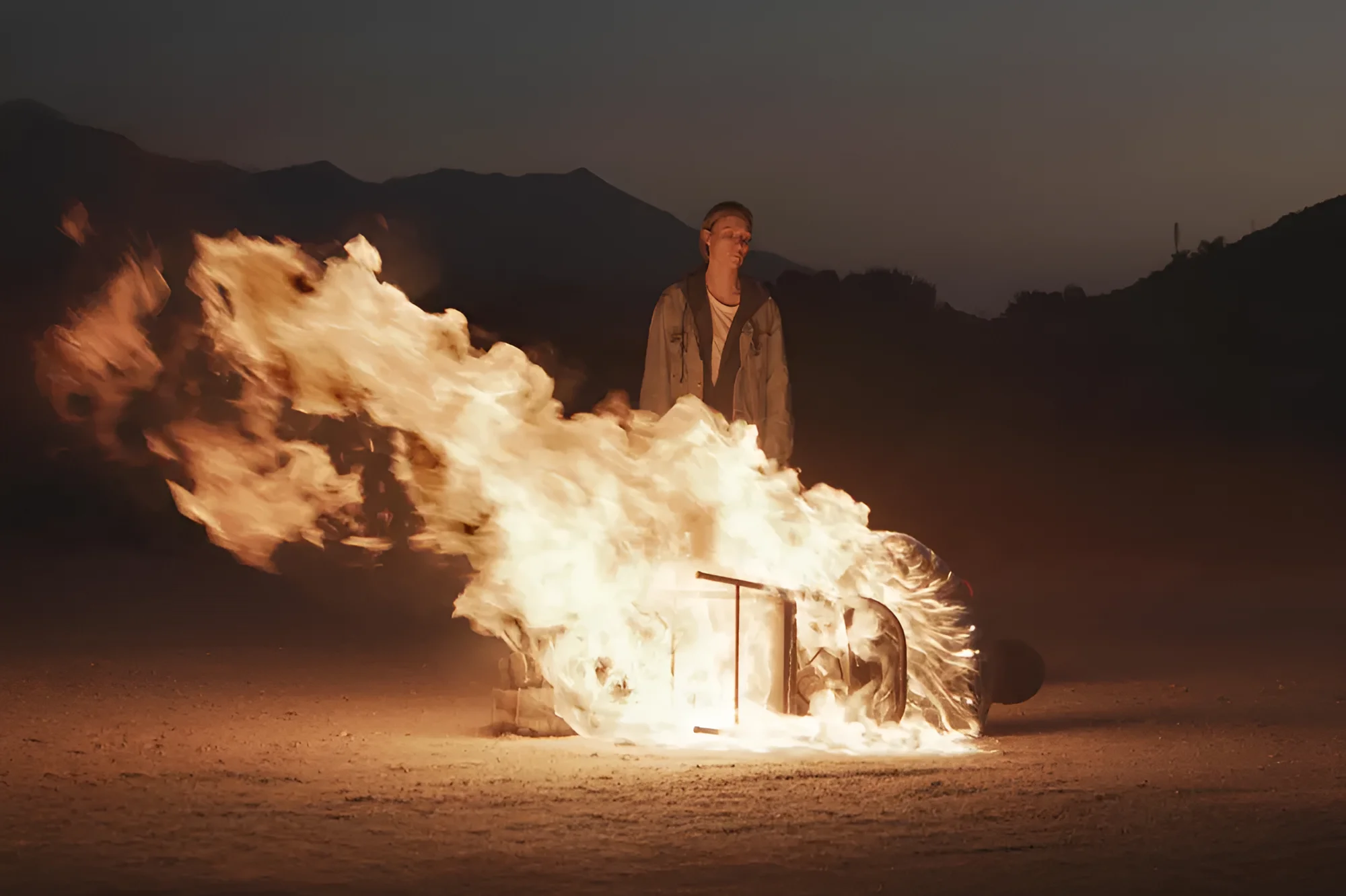
The film ends with the two of them back at the house belonging to the Irene who died by suicide in that universe. Irene sets the entire machine on fire, and the two of them just sit together and watch it burn, Mia resting her head on Irene’s shoulder.
What Redux Redux Is Actually About
Here’s where I landed, and I fully expect other people to walk away with a different read, because I think this movie is built to support more than one.
I think Redux Redux is about the fact that a life built entirely around revenge is already a life you’ve lost, whether or not you ever actually get the revenge. Irene has, functionally, unlimited chances. She has an entire multiverse of Nevilles to kill, and she takes every single one of those chances, and it changes nothing about the fundamental fact that her beloved daughter is gone. Killing Neville nine times, or ninety times, or nine hundred times across nine hundred universes doesn’t bring her daughter back once. It just costs Irene more of herself with every jump, until she’s the version of herself that didn’t die by suicide only in the most technical sense. She’s still functionally been dead this whole time, just walking around and pulling a trigger on a loop instead.
The thing that actually starts to wake her back up isn’t revenge succeeding. It’s Mia. It’s the moment Irene starts caring about keeping this one specific kid alive and safe rather than just using her as a partner in the hunt. That’s the first real, human, present tense thing Irene has felt this entire journey, and I think the movie is very deliberately showing us that connection and care are the only thing in this entire story that actually functions like healing, as opposed to revenge, which just functions like anesthesia with a body count attached.
And then the gut punch, the moment Irene realizes she’s not protecting Mia from that path, she’s actively walking her straight down it. Mia wants blood just as badly as Irene ever did, and Irene finally sees herself in that hunger and recognizes it for what it actually is, not strength, not justice, just contagion. That’s why the machine gets burned at the end instead of just abandoned or broken. It’s not a practical decision. It’s Irene refusing to let this specific tool of self destruction get picked up and used by the one person she’s actually come to love. You can’t undo what revenge already cost you by getting more of it. You can only stop it from costing you the next person too. That’s the whole movie, sitting right there in that final shot of the two of them watching it burn together instead of watching one more universe’s worth of violence unfold.