
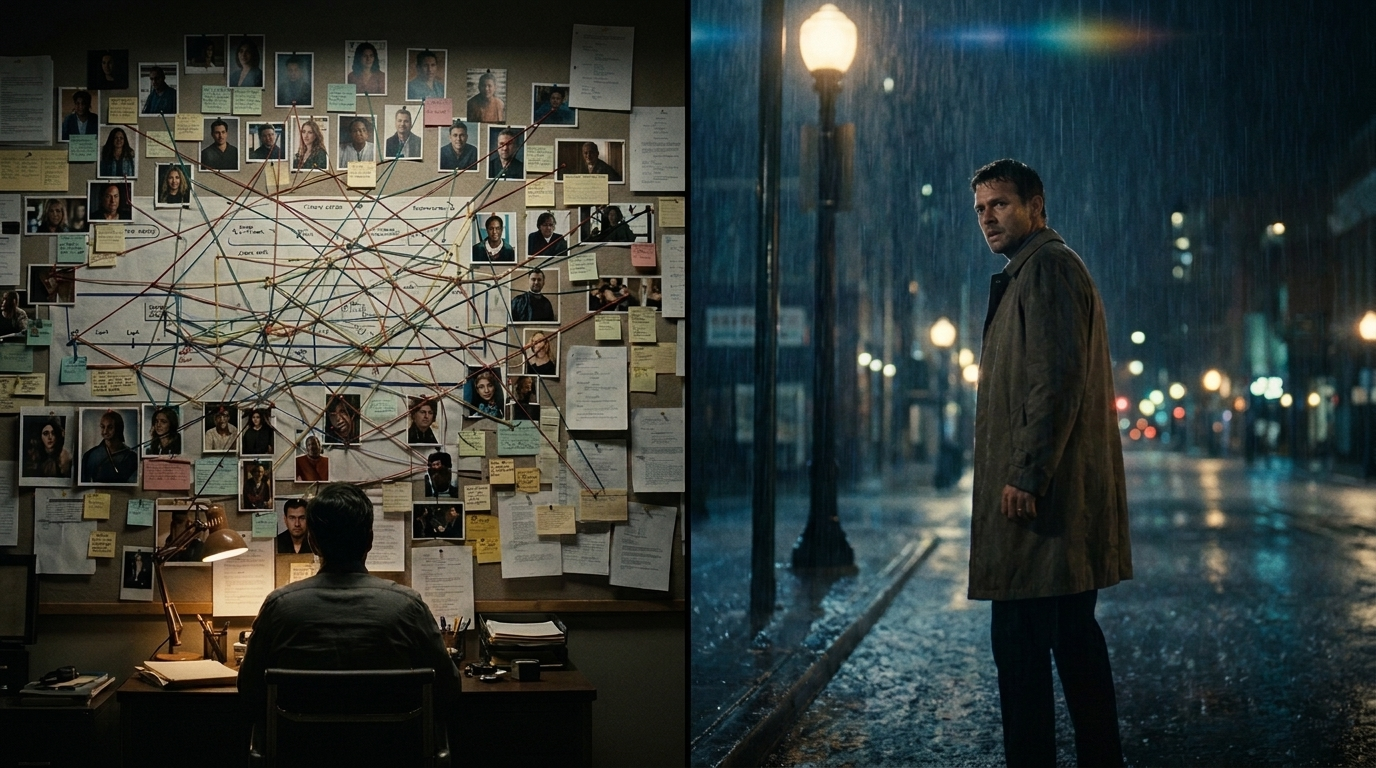
Some stories fit neatly into two hours. Others sprawl across families, decades and dozens of characters, and squeezing them into a single film feels like cutting a novel down to a summary. As streaming has made long-form television more ambitious, the old question has become sharper: is a series or a film the better home for a genuinely complex story? The honest answer depends on what kind of complexity the story has.
Why the Series or Film Question Matters Now
The series or film debate used to be simple: cinema had the prestige, television had the volume. That balance has shifted. Viewers now jump between streaming platforms, film apps and other entertainment services such as https://parimatch.com/en/crypto-casino on the same device, and they’re used to choosing exactly how much time to give a story. A ten-hour season no longer feels like a commitment reserved for hardcore fans.
Awards reflect this change. In 2024 the historical drama Shogun won 18 Emmys for a single season, a record that showed how seriously long-form storytelling is now taken.
What Series Do Best
Series have one big advantage: time. Breaking Bad needed 62 episodes to turn a chemistry teacher into a crime boss, and the slow change is what made it convincing. Game of Thrones juggled dozens of characters and several continents across 73 episodes.
Long formats suit stories built on:
- Slow character change over months or years.
- Large ensembles with many points of view.
- Political or social systems that take time to explain.
- Mysteries that unfold piece by piece.
Streaming also changed how people watch. Releasing a full season at once lets audiences follow complicated plots without forgetting details between weekly episodes.
What Films Do Best
Films win on focus. With a fixed runtime, every scene has to earn its place, and the story usually reaches the audience in one sitting, with one emotional arc. Oppenheimer packed decades of history into about three hours and still won Best Picture in 2024. A film also leaves room for the viewer’s imagination, since not everything has to be explained.
Sometimes filmmakers split a huge story into several films instead of turning it into a series. Denis Villeneuve adapted Dune in two parts, released in 2021 and 2024, keeping the scale of cinema while giving the novel more room.
Series vs Film at a Glance
| Criterion | Series | Film |
| Time for the story | Many hours | Usually two to three hours |
| Character development | Gradual and detailed | Compressed and focused |
| Viewing habit | Over days or weeks | In one sitting |
| Main risk | Filler episodes, weak endings | Rushed or missing plot lines |
Important: Length alone doesn’t create depth. Many series lose quality when they stretch a thin plot to fill extra seasons, while a tight film can feel richer than a bloated show.
Conclusion
For stories driven by many characters and slow change, a series usually serves the material best. For stories built around one idea, one conflict or one intense experience, a film often hits harder. The best creators choose the format to fit the story, not the other way round.