
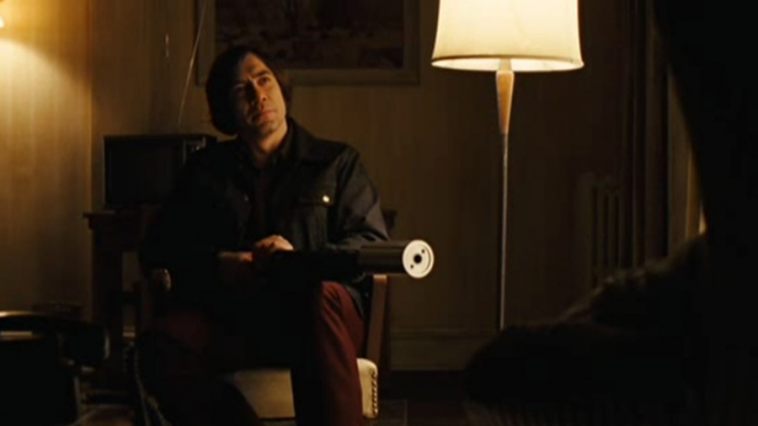
Somewhere along the way, we flattened the antagonist into a cliché. Dark clothing. Cold stare.
Clear-cut evil. Problem solved. Film has never been that simple. If we ask the “what is an antagonist” question and why the story depends on them so much, a casual viewer will usually tell you they’re the villain. The person trying to stop the hero. The obvious threat. That definition works in Saturday morning cartoons. It starts to wobble in serious cinema. The deeper you look, the harder it becomes to point to one character and call them the source of the story’s tension.
In many of the most memorable films, the antagonistic force feels bigger than a person. It might
take the shape of an ideology that refuses to yield. It might emerge over time, as fate, or as a
system that traps everyone inside it. The conflict grows out of pressure. Competing worldviews
grind against each other until something gives. That’s why the best movie villains linger. They represent something the protagonist cannot ignore, outrun, or bargain away. Strip that complexity out, and the story shrinks. Let the antagonist operate as genuine resistance, and the film gains depth that stays with you after the credits fade.
The Villain Is the Easy Answer
Take The Dark Knight. On the surface, the Joker fits the traditional mold. He creates chaos. He
threatens lives. He pushes Gotham to the brink. Label him the antagonist and move on.
But that explanation barely touches what’s happening. The Joker isn’t playing mastermind so much as philosophical saboteur. He’s there to stress-test Batman’s moral code. Each scheme asks the same question in a different key: Will you hold to your principles when the price becomes unbearable? The conflict plays out in ideas as much as it does in action, with chaos grinding against order and anarchy testing the limits of control.
The same applies to Anton Chigurh in No Country for Old Men. He kills without hesitation, yet
what unsettles audiences goes beyond violence. It’s inevitability. He moves through the film like
fate with a pulse, flipping coins as if destiny were speaking through metal and chance. The
tension doesn’t come from whether someone can overpower him. It comes from the creeping
realization that some forces don’t negotiate.
In both cases, calling these figures “bad guys” misses their real job. They embody a worldview
that stands in direct opposition to the protagonist’s. They apply pressure until something
fractures. The antagonist reveals who the hero is once comfort and illusion fall away. That’s where the story finds its depth. When opposition reflects a clash of values rather than a simple obstacle, the story stops feeling like a chase and becomes a reckoning.
When the Antagonist Has No Face
Some films go further. They remove the villain altogether. In Arrival, there is no mustache-twirling adversary orchestrating destruction. The tension grows from time itself. The nonlinear structure places Louise in conflict with something more destabilizing than an enemy. Knowledge becomes the source of strain. The future presses against the present. Choice collides with inevitability. The antagonistic force lives inside the architecture of the narrative.
This approach reflects a long-standing view of dramatic structure as a clash of opposing forces,
whether those forces appear as characters, environments, or internal fractures within a single
mind. The focus shifts from villainy to resistance as the engine of the story. Survival films operate in similar territory. In Gravity, space is indifferent. It has no motive and no malice. Its silence and vastness apply relentless pressure. There is no mastermind plotting against the protagonist, only an environment that refuses to bend.
When the antagonist loses a human face, the story doesn’t lose tension. It often gains weight.
The absence of a clear enemy forces the audience to confront something larger and less
negotiable. The conflict becomes existential, and that kind of pressure tends to linger long after
the screen goes dark.
Conflict Reveals Character
These films understand something simple: the antagonist sets the story’s boundaries by
pushing back. A protagonist can claim any number of virtues in the opening act. Integrity. Courage. Loyalty. Those qualities stay theoretical until the world resists. Pressure exposes fault lines. Beliefs get tested. In The Dark Knight, Batman insists he won’t kill. The Joker designs situations that make that vow feel fragile, forcing Bruce Wayne to confront what his moral code actually costs. In
Whiplash, Fletcher’s cruelty turns ambition into a trap, pushing Andrew toward greatness and
self-destruction in the same breath. That’s where the antagonist stops being “the bad guy” and becomes structural. The opposing force shapes the arc by defining what must be resisted or transformed. Remove it, and the story goes soft. Keep it sharp, and the film reveals something true.
More Than the Bad Guy
When you look closely, the antagonist sketches the blueprint of a film’s meaning. Every force
pushing against the protagonist sets the boundaries of their world. Order collides with chaos.
Faith frays under doubt. Control gives way to surrender. Reducing that force to a stock villain drains the story of its tension. The most enduring films construct opposition with precision. The resistance standing in the way reflects what the protagonist must ultimately confront in themselves or in the world around them. Conflict becomes the lens through which the film wrestles with its central idea.
Consider how Inception’s collapsing realities and unresolved final frame create pressure that no
single character fully controls. The instability of memory, guilt, and perception operates as a
constant opposing force. The antagonist is embedded in the architecture of the narrative itself.
Every descent into another level tightens that pressure. When opposition carries that kind of weight, the story sticks. Without resistance, the narrative floats. With it, every choice starts to matter, and something essential gets exposed. The best movie villains endure because they embody the tension the film can’t escape.