
Imagine a 19th-century philosopher in a movie theater. He squints at the screen. He watches capes, moral puzzles, origin stories. He frowns. Then he smiles. Why? Because the figure on screen — the lonely, powerful, rule-breaking hero — looks a lot like his idea of the Übermensch. That image, adopted by Hollywood, is both tempting and dangerous. It lets filmmakers explore ambition, morality, and power. It also lets them dismantle those things. Short sentence. Long sentence. The point: Nietzsche’s ideas give tools for both celebration and critique.
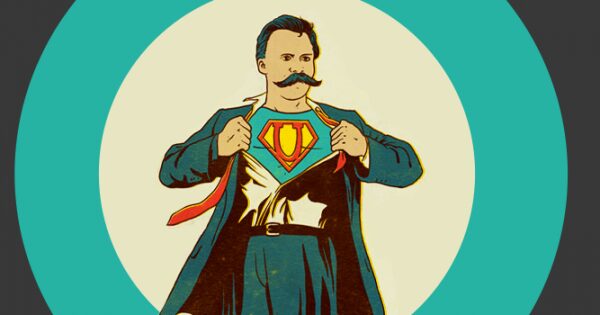
The Übermensch, simply put
The Übermensch is not a muscle suit or a special effect. It’s a philosophical ideal: a human who creates values, refuses herd morality, and affirms life. In plain words — someone who makes their own rules and takes responsibility for them. That idea is attractive to storytellers. It is also easy to misread. When a movie shows a powerful person who imposes their will, viewers may cheer without noticing the moral cost.
Superheroes as modern Übermenschen
Superhero stories often stage the same tension Nietzsche wrote about. Heroes stand above ordinary law. They act decisively. They remake the world. But Hollywood also offers versions that question those actions. Some films celebrate the hero’s self-creation; others show the fallout: trauma, corruption, public fear. This split turns each new blockbuster into a debate about what it means to be “better than” ordinary humans.
Hollywood’s appetite for the theme (a quick stat)
Superhero films have been huge business and cultural forces. Big superhero titles sit among the highest-earning films ever, with the blockbuster Avengers: Endgame earning nearly $2.8 billion worldwide — a reminder that stories about super-human figures attract mass audiences.
And the genre’s share of ticket sales has been measurable: analyses of comic-book adaptations show they can account for a significant slice of box-office revenue in recent years, a pattern that both empowers and pressures filmmakers to keep reworking the same ethical questions.
In literature, the idea of superheroes, in particular, and fantasy, has long been trending. You can find stories about children’s heroes, as well as discover werewolf stories on FictionMe right on your smartphone. That’s the main beauty of reading stories online: the choice. And FictionMe offers a virtually limitless selection of books on a variety of topics.
Two poles: idolization and interrogation
On one pole are films that hero-worship: they show self-made figures who remake the world for the better. On the other pole are films that interrogate: they show how the myth of the superior human can justify cruelty or megalomania. Many modern blockbusters move between both poles in the same scene. A hero can save lives and then be blamed for collateral damage. A director can propose the Übermensch as both tragic and magnetic.
Deconstruction: when Hollywood asks “what if the Übermensch is wrong?”
Deconstruction means taking a familiar idea apart to see its pieces. In films and stories with FictionMe app, that often looks like showing the ugly results of unchecked power. Consider movies where the hero’s choices harm innocent people, or where the hero becomes the problem. These stories use Nietzschean language – power, will, transcendence – to expose costs: isolation, loss of empathy, and societal harm. Simple example: a vigilante who “improves” the city but creates cycles of violence. The film asks: who judges the judge?
Case studies in plain language
Think of franchise epics that treat their heroes like gods, granting them near-absolute moral authority. Then think of smaller, grittier films that make the same characters human, fallible, and often dangerous. Hollywood swings between spectacle and therapy. It sells the dream of transcendence, then pulls the rug to examine the dream’s consequences. This push-and-pull keeps stories honest, or at least interesting.
Why Nietzsche helps storytellers (and viewers)
Nietzsche gives a language for extremes. Words like “will to power” or “revaluation of values” sound grand, but they map neatly to screen drama: choices, clashes, and moral innovation. Filmmakers borrow this vocabulary to ask, “Who gets to make the rules?” Nietzsche’s insights help writers dramatize ethical dilemmas without easy answers. That’s useful for films that want to do more than entertain.
Risks and responsibilities
There is a hazard: the Übermensch can be turned into a glamorous myth that excuses violence or elitism. When audiences root for superiority without critique, the story risks normalizing dangerous ideas. Filmmakers have a responsibility: to show complexity, to avoid simple glorification, and to stage consequences. That responsibility matters because these films reach millions.
Audience reaction: why we care
We watch because the tension feels personal. We ask ourselves: if I had power, what would I do? That question is thrilling and frightening. Movies let us rehearse answers safely. But when stories stop at thrill and ignore aftermath, they rob us of moral growth. Good deconstruction brings both excitement and reckoning.
The future: darker heroes, kinder critique
Studio systems continue to invest in capes and origin stories. Marvel Studios and DC Comics shape much of what reaches the public, and financial stakes push toward spectacle. Yet critics and creators are increasingly interested in nuance. That shift means more films will use Nietzschean themes not to idolize, but to probe: can greatness exist without harm? Can creative self-rule include empathy?
Conclusion: a productive mismatch
Nietzsche to Hollywood is not a perfect fit. But the mismatch is useful. Film takes an abstract ideal and turns it into flesh, blood, and city skylines. Nietzsche gives filmmakers a mirror; Hollywood gives Nietzsche a crowd. Together they produce work that makes us admire, fear, and question. That is the best possible outcome: stories that thrill and teach.