
Let me tell you about the director first, because the director is everything here.
Park Chan-wook? Old Boy? Possibly the greatest mindjob movie of all time? No? Just stop right there, don’t pass go, don’t collect $200. Go watch Old Boy, then come back and we can talk The Little Drummer Girl… or whatever else you’d like to discuss. You might also know Park Chan-wook from The Handmaiden? Though I doubt it if you haven’t seen Old Boy. It also happens to be on my enormous mind-fuck movie list that I’ve been releasing systematically over the last month. It’s a layered, gorgeous, morally labyrinthine story. Park is the Korean auteur who makes films that look like paintings and cut like scalpels.
Regardless, when the BBC handed him a six-episode John le Carré adaptation set in the late 1970s with a cast that includes Florence Pugh, Alexander Skarsgård, and Michael Shannon, the result is exactly as extraordinary as that sentence suggests. The Little Drummer Girl originally aired on the BBC in 2018 and was, bafflingly, not the cultural phenomenon it deserved to be. Critics adored it. Audiences who found it loved it. But it never quite broke through the way The Night Manager did — which is a shame, because it is a considerably more interesting piece of television than The Night Manager ever was.
It is now available on Netflix, and viewers who are discovering it for the first time are calling it one of the best shows they’ve seen in years, with a perfect blend of suspense, romance, and drama. They are correct. It is your next weekend.
What is The Little Drummer Girl About?
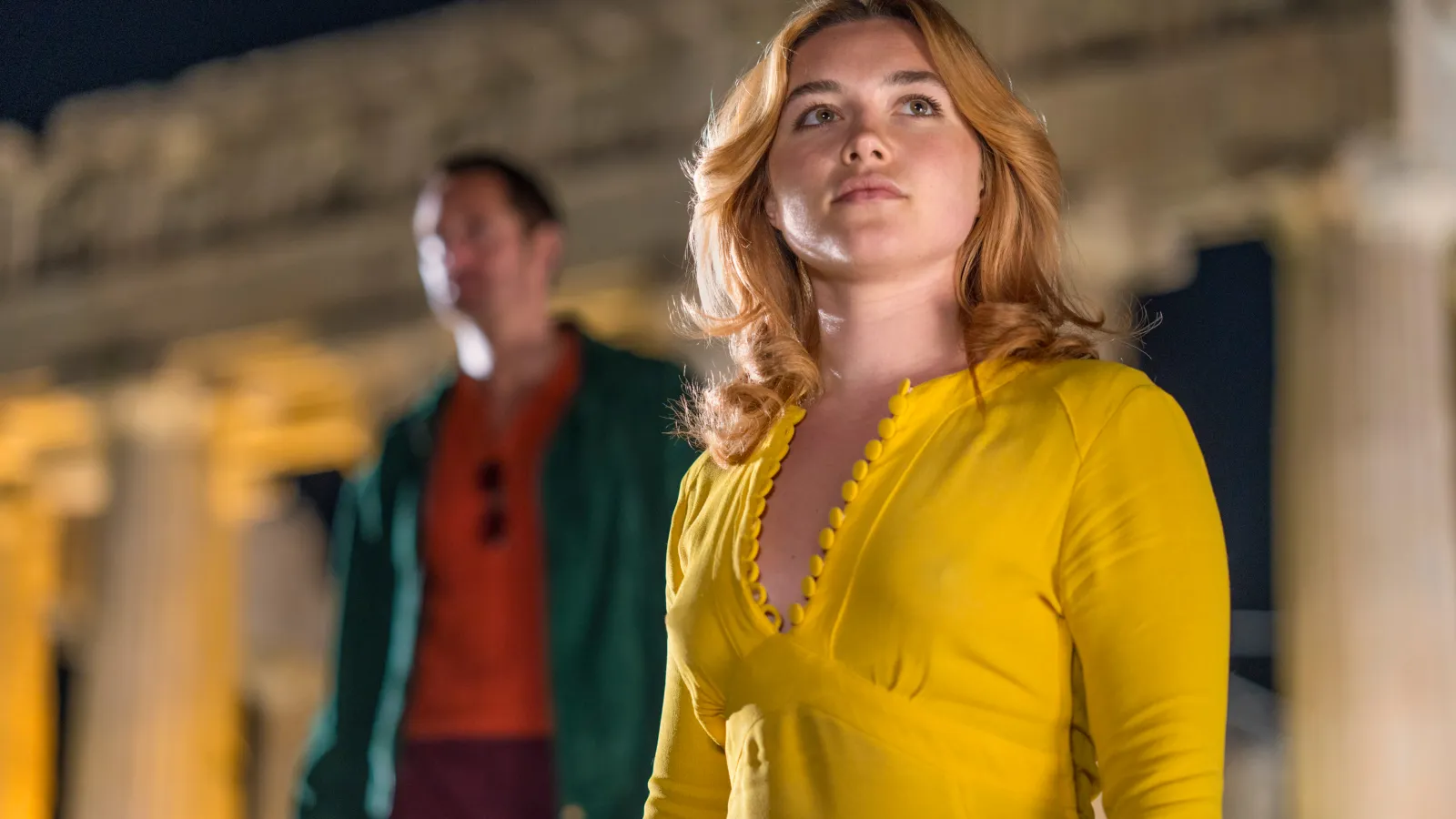
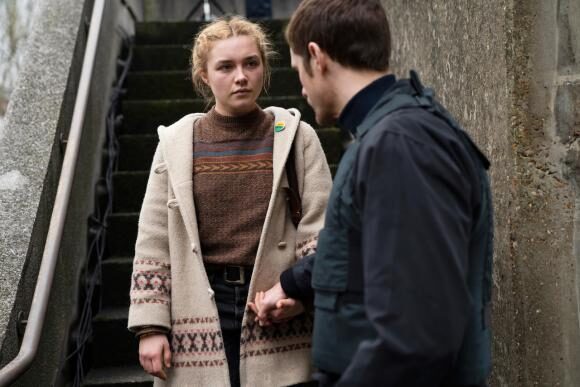
Based on John le Carré’s 1983 novel, the series is set against the backdrop of 1979 and follows Charmian “Charlie” Ross, an aspiring English actress whose life takes a dramatic turn when she is recruited by Mossad, the Israeli intelligence service. It begins in Greece, where Charlie — played by Florence Pugh with the kind of coiled, unpredictable intelligence that makes you understand immediately why this character would be recruited as a spy — meets a stranger named Becker on holiday. He is charming. He is attentive. He is, it turns out, not remotely interested in a holiday romance.
Becker, an Israeli intelligence officer played by Alexander Skarsgård, entangles Charlie in a complex plot orchestrated by spymaster Kurtz, played by Michael Shannon. The mission: infiltrate a Palestinian network responsible for a series of bombings across Europe, trace them back to the elusive architect behind the attacks, and bring the operation down from the inside. Charlie’s weapon isn’t a gun. It’s her ability to become someone else entirely — to inhabit a fabricated identity so completely that the people trying to kill Israelis across Europe will trust her with their lives.
She takes on the role of a lifetime as a double agent in what Kurtz calls the “Theatre of the Real” — but despite her natural mastery of the task, she finds herself increasingly drawn into a dangerous world of duplicity and compromised humanity.
Why You Need to Watch This
Florence Pugh was already one of the most interesting young actors working when this was made — this was before Midsommar (don’t get me started), before Black Widow, before any of the mainstream recognition that would follow. And she is extraordinary here. Charlie is not an easy character. She is idealistic and contradictory and sometimes infuriating and completely, utterly alive in a way that lesser performances would have flattened into a cipher. Pugh plays her with a kind of fearless emotional transparency that makes every scene crackle, particularly as the lines between Charlie’s real self and her fabricated identity begin to blur in genuinely unsettling ways.
Oh, and by the way, Skarsgård. We love Skarsgård here at THiNC. – example 1, example 2, example 3. I could go on, by I’ll show some restraint. Skarsgård plays Becker with a quiet, controlled restraint that makes him magnetic — he is constantly withholding something, and the tension of waiting for it to break is one of the ongoing pleasures of the series. And then there is Michael Shannon as Kurtz, operating on a frequency that only Michael Shannon can access, making a spymaster feel simultaneously like a father figure, a chess player, and something genuinely frightening. The three of them together are a marvel.
But this is ultimately Park Chan-wook’s show, and his visual sensibility transforms what could have been a competent prestige thriller into something that genuinely feels like cinema. The series blends 70s stylization, era-defining aesthetics, and a moral ambiguity that refuses to resolve cleanly — blurring the fine lines between love and hate, truth and fiction, and right and wrong throughout. The Palestinian-Israeli conflict is handled with a moral seriousness that le Carré always brought to his work — nobody here is simply a villain, nobody is simply a hero, and the show trusts you to sit with that discomfort rather than resolving it tidily.
Six episodes. About an hour each. You can finish the whole thing in a weekend and you absolutely will, because episode two ends in a place that makes stopping physically impossible. This is the best television you haven’t watched yet. Go fix that.