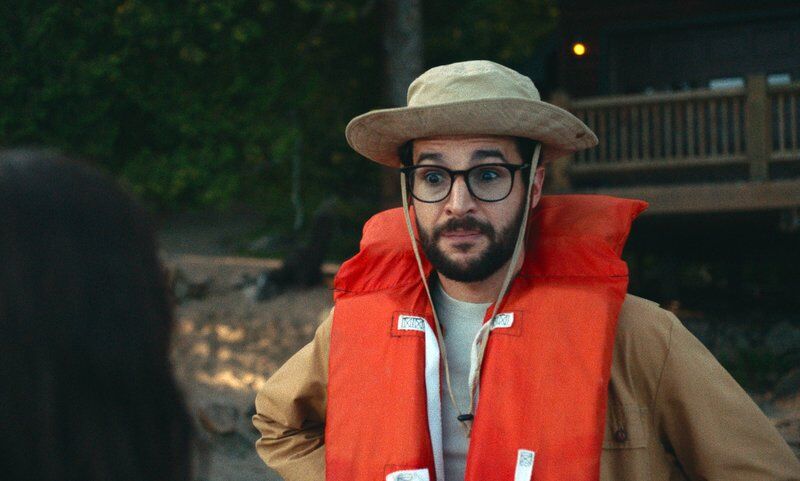
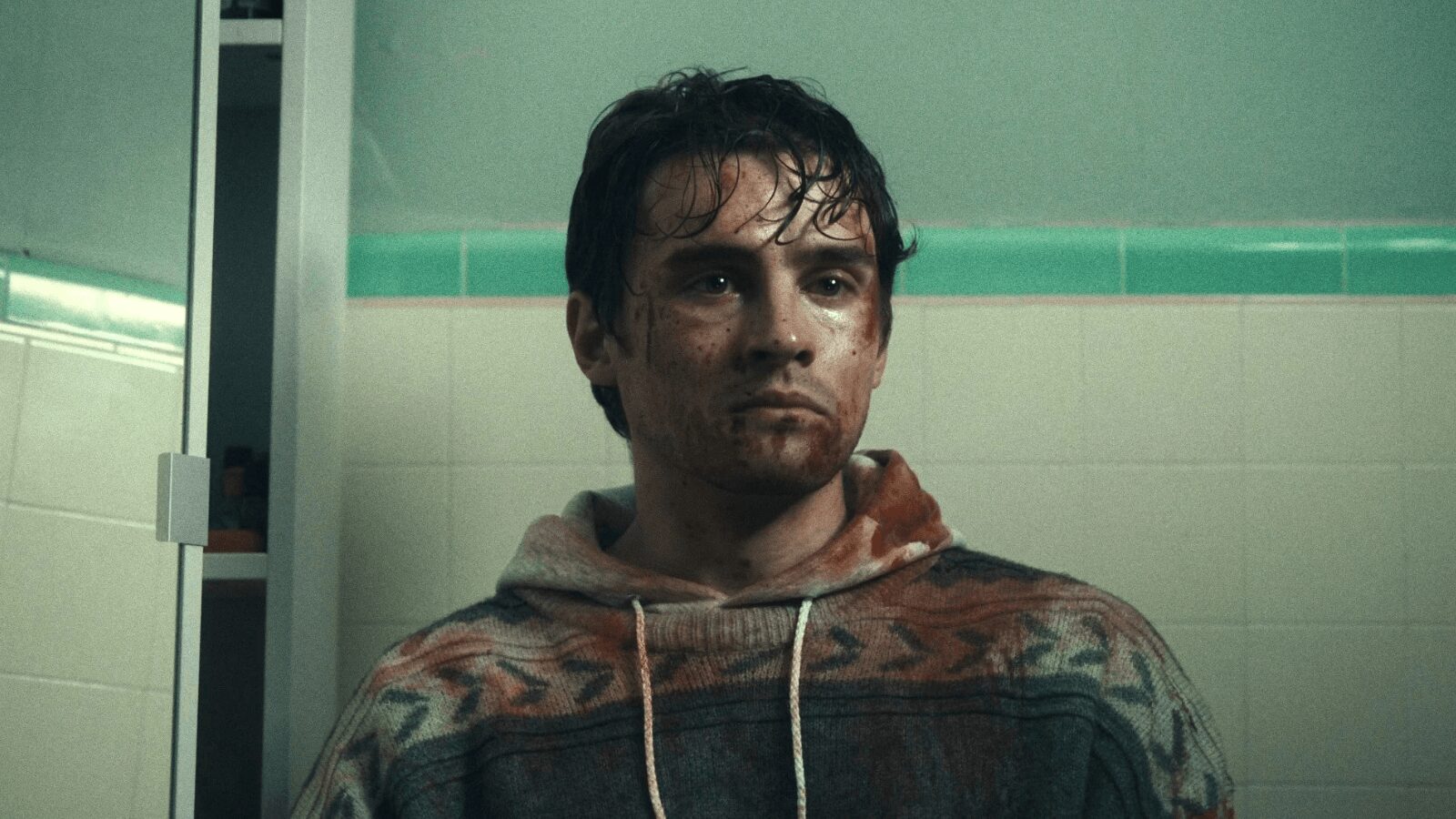
Okay. Real talk. I walked into Obsession with modest expectations and walked out with a new obsession of my own. Curry Barker, a 26-year-old YouTuber-turned-filmmaker who made a micro-budget slasher on his channel and then promptly got acquired for $14 million, has delivered one of the most unsettlingly effective horror films in recent memory. It’s the kind of movie that doesn’t just get under your skin. It scurries, under your skin, it flees your tweezer-filled attempts at extraction, it slides behind your eyes, and it takes up residence, unwittingly, in your cerebral cortex. And somehow, impossibly, it’s only 109 minutes and cost a million dollars to make.
Spoiler-Free Introduction to Obsession
Obsession is a 2026 supernatural horror film written, directed, and edited by Curry Barker, distributed by Focus Features, and produced under the Blumhouse banner. It premiered at the Toronto International Film Festival in September 2025 as part of the Midnight Madness block — the exact kind of midnight-crowd playground this movie was born to inhabit — before landing in wide US theatrical release on May 15, 2026.
The premise is deceptively simple. Bear (Michael Johnston) is a shy, socially awkward music store employee who has been silently pining over his childhood friend and coworker Nikki (Inde Navarrette) for years. He can never quite pull the trigger on telling her how he feels. So one night, in a fit of hopeless desperation, he snaps a novelty tchotchke called a One Wish Willow — a gag gift he found at an occult shop — and makes a wish. He wishes that Nikki would love him more than anyone in the entire world. Then the wish comes true and it goes as horribly wrong as you might expect.
That’s your setup. Be careful what you wish for, right? You’ve heard that one before. But — and I cannot stress this enough — you have never heard it like this. Barker takes that monkey’s paw premise and cranks it past the point of reason into something completely unhinged, deeply uncomfortable, and genuinely brilliant. The film boasts a near-perfect 97% on Rotten Tomatoes at the time of writing, and Inde Navarrette’s performance as Nikki has earned early Oscar buzz that feels entirely justified.

Everything below this point is a full, detailed, scene-by-scene walkthrough of Obsession – why? Because I want to talk to other Obsession fans, and I want to talk about what it means, what it’s saying. Okay? So major spoilers follow below.
Detailed Obsession Movie Walkthrough
Act One: Bear and the Wish He Never Should Have Made
The film opens with Bear practicing. He’s standing in his apartment, rehearsing how he’s going to tell Nikki how he feels. He goes over it again and again — different approaches, different angles — and it’s immediately charming and a little pathetic in the best possible way. We are all meant to really like Bear. He seems like a sweet, anxious guy who just can’t get out of his own way.
Bear’s friend group is small and tight: Nikki, Ian (Cooper Tomlinson), and Sarah (Megan Lawless). They all work together at the music store owned by Sarah’s dad, played by Andy Richter in a delightfully dry cameo. The four of them hang out, do trivia nights, banter. It’s the kind of casual, lived-in friend group energy that makes you believe these people actually know each other.
On trivia night, Bear once again fails to make his move. After the bar, he drives Nikki home. This is his moment. This is the scene. He has the One Wish Willow sitting in his car — he’d originally bought it as a gag gift for her — and while they’re sitting outside her place, the conversation gets close to the edge. Nikki even asks him directly: do you like me? Bear denies it.
Nikki goes inside. Bear sits in his car alone, stewing in his own cowardice. And then, in a move that defines the entire film, he takes out the One Wish Willow, snaps it in half, and makes his wish out loud:“I wish that Nikki Freeman would love me more than anyone in the entire world.” And just like that — Nikki reappears at his car window.
She is different. Immediately, unmistakably different. And this is why Inde Navarrette is going to get all the Oscar buzz for this role, because now she is playing a love sick puppy denying that she is completely and irretrievably obsessed. Hahah… and it’s so brilliantly done!
Bear, to his credit (and his enormous discredit), notices she seems different. But he goes with it. And why wouldn’t he? This is is dream come inexplicably true…
At his place, things get romantic — until Nikki suddenly recoils mid-kiss, eyes wide, staring at something just over Bear’s shoulder. She’s terrified. She sees something he can’t. The entity attached to the wish isn’t just in her — it’s not fully settled. There are seams. And already, the atmosphere is suffocating.
Act Two: Freaky Nikki in Full Effect
The next morning, Bear wakes to find that Nikki has retrieved the body of his deceased cat Sandy from the trash can and arranged it on his kitchen floor in an elaborate, candlelit memorial. She thought it would make him feel better. She’s so clearly proud of herself.
This is the first moment where the movie goes full dark comedy — and Barker holds the line brilliantly between funny and disturbing. It’s horrifying. It’s also kind of hilarious. It is neither and both at the same time, and that tonal high-wire act is what sets Obsession apart from the average horror fare.
Nikki starts exhibiting increasingly erratic behavior. She screams at things only she can see. She’s clingy in a way that goes far beyond infatuation — this is possession-level devotion. She makes Bear a sandwich with a little note referencing a conversation they had on one of their early “dates” about him wanting to be a food critic. She’s attentive in a way that is deeply wrong.
Ian and Sarah notice right away. There is something off about Nikki, and they both say so. But Bear is enjoying this. That’s the gut punch that the film is slowly setting up. He knows something is wrong. On some level, he knows the wish worked. And he keeps going anyway.
The confirmation scene is at a restaurant. Bear looks at Nikki across the table and asks, point-blank: “You love me more than anyone in the world?” He’s testing her. The exact wording of the wish. And Nikki tilts her head and says: “Yes, more than anyone.” Spoiler alert – According to Barker in interviews, that is the moment you are supposed to know for certain that Bear is not the hero of this story. He knows. And he does nothing.
Act Three: The Customer Service Call and the Real Nikki
Bear does eventually try to get out of the situation — though not for the reasons we might hope. As Nikki becomes increasingly dangerous and unstable, screaming at invisible entities and becoming more possessive, Bear calls the customer service number printed on the One Wish Willow packaging.
This is one of my favorite sequences in the film. The operator is eerily calm and matter-of-fact. She tells him the wish cannot be undone. The only way to break the spell is if Bear dies. She then — chillingly — asks him if he’d like to speak with the real Nikki. And Bear hears screaming on the other end of the phone!! Such a great twist. Such a great behind the scenes reveal that takes the nightmare of this movie to an utterly new level. Because, let’s admit it, this story has been done to death, and yet, Obsession unhinges this story line in all the perfect spots. The real Nikki is in there. She is aware of everything. And she’s trapped.
Later, in the middle of the night, while the entity that has taken over Nikki’s body sleeps, a small, terrified voice speaks to Bear in the dark. It’s Nikki. Her real voice. Quiet and desperate. She whispers: “Kill me.” She begs him to end it. To set her free. She knows what’s happening to her. She knows what she’s becoming.
Bear refuses.
Let that land. He refuses.
The real Nikki is begging for release from this supernatural torment, and Bear — our nominal protagonist, our “nice guy” — says no. THIS IS THE REAL HORROR OF THIS MOVIE. It’s not entity Nikki’s erratic, possessed actions with the cat, and the Jenga, etc. It’s Bear. It’s Bear’s inaction. It’s the horror show that is Bear’s abuse of Nikki. Bear. Does. Not. Want. To. Let. Go. Of. Nikki! Even though he knows it’s fake, even though he knows the real Nikki is suffering. Villain protagonist confirmed.
Act Four: Sarah’s Death and the Descent into Chaos
Bear tries to buy more One Wish Willows to reverse the curse. He can’t break them — turns out, they’re very serious about the one-wish policy. So he does the next logical thing: he drugs Nikki with sleeping pills, waits until she’s out, and sneaks out of the house to meet Sarah in her car.
Sarah has been growing closer to Bear throughout the film. There’s a genuine warmth between them. She wants to talk about Nikki’s behavior. She wants to tell Bear how she feels about him. It’s a sweet, quiet, intimate scene. And then Nikki… who somehow either wasn’t fully sedated or has supernatural awareness… appears at the car window with a brick.
What follows is one of the most brutal murder scenes in any movie I remember to date. It’s horrific. It’s ghastly. And it’s extraordinarily bloody. Nikki smashes the car window and slams Sarah’s face into the brick on the steering wheel. Repeatedly. It’s grotesque. It’s loud. And Bear is right there in the passenger seat getting splattered with Sarah’s blood. He literally does nothing to stop it.
After Sarah is dead, Bear helps Nikki move the body. He is actively engaged. He’s gone from passive complicity, to fullon accomplice. He helped create this monster and he’s actively assisting in this cover up. This is the point of no return for Bear as a character.
With that, Bear cuts and runs to Ian’s apartment. Bear tells Ian everything. The One Wish Willow. The details of the wish. All of it. Ian doesn’t believe him. So Ian, in an act of skeptical bravado, grabs his own One Wish Willow and makes a sarcastic wish for a billion dollars. And with that, money immediately starts raining from the ceiling. Hahaha. Talk about tragic confirmation. That wish was Bear’s only hope! hahaha. Ian loses his mind with joy.
The duo head to Bear’s house, and upon arrival, they find Sarah’s body — posed and desecrated. Nikki has been… busy. And then – obviously – Nikki shoots Ian.
Act Five: The Ending
Bear locks himself in the bathroom. He has come to the only conclusion the film was always quietly pointing toward: the only way to end this is for him to die. And so he swallows an entire bottle of opioids. Can we say homage to a cat?
But while Bear is in the bathroom dying, Nikki finds something. On Bear’s counter, she discovers the original One Wish Willow he had purchased for her — the one he never gave her. She picks it up. She wishes that Bear would love her back the same way that she loves him. For a few brief, devastating minutes, they reunite. The obsession flows both ways. They hold each other. For just a moment, it almost looks like something real.
And then Bear dies from the overdose.
The spell breaks. And the real Nikki, the actual Nikki, not the entity, not the obsessed construct, comes back to herself. She’s in Bear’s house, surrounded by bodies. Sarah. Ian. Bear. All dead. She doesn’t understand what has happened to her. She doesn’t know what she’s done. She is the sole survivor of a catastrophe she didn’t cause. The film ends there. The audience never sees what happens to Nikki next — and the ambiguity is devastating.
Obsession Explained
What the One Wish Willow Actually Did
The reveal that the film lands slowly and subtly is this: the wish didn’t just intensify Nikki’s feelings. It created a new entity that possesses Nikki’s body. The real Nikki and the obsessive construct are two separate beings sharing one physical form. The real Nikki is locked away, trapped, unable to stop it. That’s why she screams at things Bear can’t see (the entity is at war with Nikki’s own consciousness), why she whispers in the night begging to be killed, why she sounds different in those dark moments. This is demonic possession through romantic obsession. It’s ingenious. And it fundamentally reframes what we think we’re watching.
Bear Is the Villain
Curry Barker has talked openly about this in post-release interviews. Bear is designed to look like a sympathetic nice-guy protagonist — shy, sensitive, friend-zoned, pining. The first fifteen minutes work hard to get you on his side. But the film is secretly building the case that he was never the good guy.
Bear had the customer service number. He could have found another way. He had the real Nikki’s direct plea. He had multiple points of exit and chose none of them. And it’s all because the wish-Nikki was giving him what he wanted. The real Nikki’s suffering was the price, and Bear decided it was worth paying.
The film’s stated thesis is this: love (as obsession, as codependency, as possession) can exist without romance (which requires mutual understanding, consent, respect). Bear thought he wanted love. What he actually wanted was ownership. The One Wish Willow gave him exactly that — and the film makes you watch it unfold until you realize you were rooting for the wrong person the whole time.
What Happens to Nikki?
Director Barker has addressed this in interviews. Nikki wakes up in a house full of bodies with no memory of what she did while possessed. She’s disoriented, traumatized, and alone. And Ian’s billion dollars from his wish is still there… raining down somewhere in the house… but Nikki doesn’t know it exists and is in no condition to collect it.
Barker’s take… and the most obviously next step is that she obviously goes to jail. The money gets found by cops. Nikki takes the fall for multiple homicides she technically committed but didn’t choose. After everything that’s been done to her, after having her autonomy stripped away by Bear’s selfish wish, she ends up holding the bag. It’s one of the most quietly cruel endings in recent horror.
Taylor Holmes’s Take on the Movie Obsession
Look, I don’t throw the Twilight Zone comparison around lightly. I love the Twilight Zone. I love what it does — that stripped-down, one-idea premise that it turns over and over until it finds the sharpest possible angle and drives it home. Obsession is exactly that kind of film. It feels like a Black Mirror episode that escaped into a feature-length format and refused to be contained. It has that same DNA of “here’s a concept, here’s a technological/supernatural amplifier, and here’s where human weakness takes it off the rails.”
But what elevates Obsession above most Twilight Zone episodes — or most modern horror films for that matter — is that the concept isn’t just a vehicle. It’s doing genuine thematic heavy lifting. Nikki is not a jump scare. She’s not a monster in the traditional sense. She is a warning sign. She is a walking, screaming, brick-wielding billboard that reads: this is what obsession actually looks like when you strip away the romanticism.
Inde Navarrette’s performance is extraordinary. She has to play at least two completely distinct characters — the possessed entity and the real Nikki — often in the same scene, sometimes in the same shot. There’s that scene where she whispers “Kill me” in the dark that I cannot get out of my head. The way she physically changes between Wish-Nikki mode and the Real-Nikki’s desperate whisper is the kind of acting that deserves every award conversation it’s getting.
Michael Johnston is doing something equally interesting, though less flashy. Bear is written as genuinely likable — and Johnston plays him that way, all the way through. He doesn’t tip into villain mode. He never signals that Bear knows he’s the bad guy. He plays the denial all the way to the end, and that restraint is what makes the character so unsettling. The monster of this film isn’t Nikki. It’s a guy who seems totally fine.
Barker himself has acknowledged a plot hole in interviews: if the One Wish Willow truly grants any wish to anyone who breaks it, the world would be in absolute chaos. Dragons. Total anarchy. His workaround theory is that each wish creates an alternate reality branching off for the wisher, so all the wishes coexist in parallel timelines. Is that fully satisfying? Honestly, not entirely. But it’s the kind of plot-logic wrinkle that only matters for about three seconds after the credits roll, because the film itself earns so much goodwill by that point. And Barker has even gone so far as to say that there should be numerous spin offs of this idea… perfectly good wishes gone horribly wrong.