
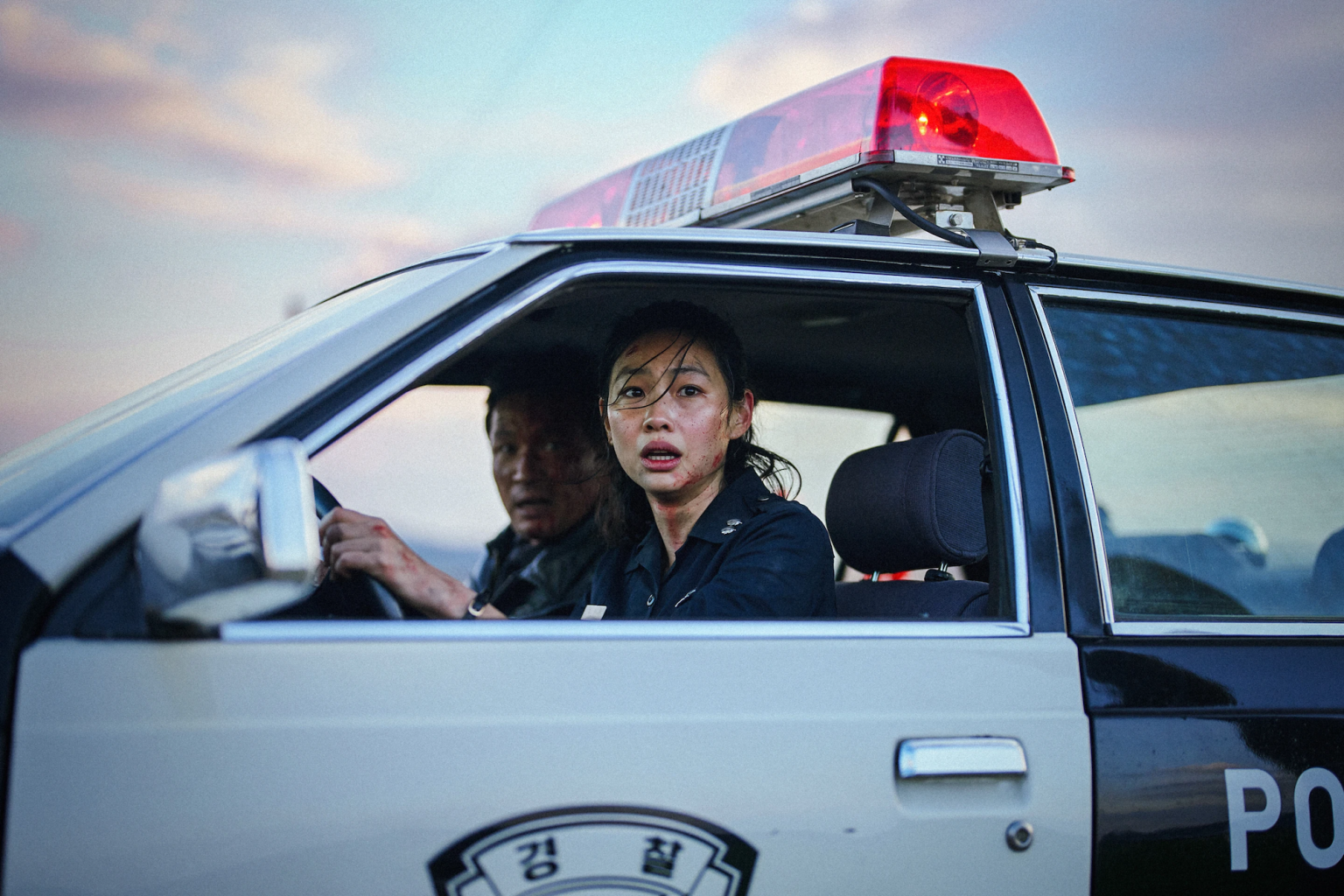
If you are even a little bit tired of the standard American alien invasion playbook, the marines, the countdown clock, the president giving a speech, I need you to go see Hope with an open mind before you read another word of this. It’s the new one from Na Hong-jin, the Korean director behind The Wailing, and it’s the most expensive Korean film ever made, and it uses that budget on something genuinely unusual, an alien invasion story told almost entirely from ground level in one small coastal village near the DMZ, where nobody has military hardware lying around because Korea doesn’t let its civilians own guns like that, and where the “monsters” turn out to be a lot more complicated than monsters. It’s got Michael Fassbender and Alicia Vikander in full alien form, Hwang Jung-min and Hoyeon playing the humans trying to survive it, and it earns its runtime. If you want something that isn’t just Hollywood pablum reheated one more time, this is it. Go watch it, then come back.
Here’s the trailer:

Initial Thoughts on the Movie Hope
The Guy Movie Night group I went with to see the film was very very mixed on their feelings about the film. The consolingly gave me credit for trying. Our one requirement for selecting a movie (reads the bylaws here) “Things have to blow up.” And things blew up in this movie… LOTS AND LOTS of things blew up in this movie. So, how could it have gone so wrong? Well, because coming down the home stretch, in the last five minutes… it just didn’t make a lick of sense. Usually when we go see a Predator movie with Awwnahld, he blows up the final alien… and the underdog wins. That is the required sequence of events. And that decidedly did NOT happen in this movie. Yes, two aliens died… (maybe??!?) in this movie, but they also didn’t. We suddenly can understand them, and what they are saying, and yet, we don’t understand what they are meaning.
But that is what makes this movie so different, and so worth considering… as opposed to the standard Hollywood pablum. We have to go looking for answers. We have to dig. We have to think. We have to consider possibilities (Geopolitics anyone? World religions – Taoism – medieval Chrstianity? Spiritual warfare and demonic forces??) And so if you can put aside your bias towards AWWNALD vanquishing foes and consider a different path, this movie may just be for you. But if you just want bullets, death, and a clear winner… just move along, this movie isn’t for you.
Okay, Full Spoilers From Here On Out. Do Not Keep Reading If You Haven’t Seen It.
I mean it. Go watch the movie. This is your last exit ramp.
Now, the film itself actually reveals its story out of order, doling out the backstory later on in the movie. So I am going to instead go through the timeline of the movie chronologically. Okay? Another reason why you HAVE to watch the movie first because it will reveal things you don’t want to know until you participate in this film. It is the right approach from a screenplay, to dechronologically sift things, but from a deconstructionist, learning standpoint… we are going to discuss the movie in the order in which things actually happen. Great. Glad to get that out of the way.
Section 1: A Townsperson Kills an Alien Child and Hides the Body
Before any of the chaos we actually see onscreen, a local carpenter named Yang-bae encounters a small alien on its own near Hope Harbor. And this is SUPER important (though completely unclear as you are watching) this baby alien is Kali. Kali? What’s a Kali? Well, Kali is the Crown Prince of a royal alien family from a planet called Gertu. Now, importantly… Yang-bae shoots the child alien… and immediately kills him. And instead of telling a single soul, he stores the body in his freezer and goes about his life. This is the event that sets literally everything else in the movie in motion, and the film deliberately keeps it hidden from you at first so that everything that follows plays like an unprovoked monster attack, when it’s actually the opposite. It’s a grieving, panicked family looking for a missing child that a human already killed and hid.
Section 2: The Rampage Begins
This is where the movie actually opens. Something huge and humanlike starts tearing through Hope Harbor, killing livestock and then people, seemingly at random. Police chief Ko Bum-seok gets pulled back into town to find it already devastated. This creature is Va’migere, and here’s the detail that recontextualizes the entire first half of the movie once you know it: Va’migere isn’t a parent, and isn’t even a warrior. He’s kitchen staff to the Royal family. I mean, effectively the royal family’s cook, sent out to search for the missing prince. That’s why he’s crying through most of his rampage, and why early on it the viewing audience is getting a real sense that it is grief that the alien is suffering from… though we don’t know why at the time. It’s not grief exactly, it’s an overwhelmed, out of his depth servant who’s terrified and desperate and being hunted by armed humans who have no idea what they’re looking at. He’s the one alien in the entire film without any special toughness or combat ability, which is exactly why the town is able to kill him. He’s not a soldier. He never had a chance… though he made a complete mess of the entire town of Hope. (COME ON!!! THESE ARE THE BEST SET DESIGNS OF THE ENTIRE YEAR! It’s just gorgeous the destruction that is being wrought on this town by this cook! Loved it… loved everything about these locations and this shooting location. Which basically, the production team took over a town, and built 70’s/80’s facades over the town and then built the destruction on top of that… fantastic.)
Section 3: The Calm Before the Real Storm
With Va’migere dead, Hope Harbor thinks it’s over. One monster, dispatched, town saved, roll credits in their heads. Nobody in Hope Harbor has any idea that Va’migere was a low ranking member of a much larger group, or that a literal empress and her warrior guard are still out there looking for the same missing child he was looking for. This section is short, but it’s doing real work, because it’s the last moment anyone in this story gets to feel safe, and the audience already knows it’s not going to last.
Section 4: The Parents Arrive and They Are Not Messing Around
This is where Empress J’aur and her guardian Ma’veyyo show up, along with Ai’dovor, essentially the family’s nanny, and things escalate immediately. Unlike Va’migere, Ma’veyyo is a genuine warrior class alien, built around a rare internal organ, a literal glowing heart, that gives him enhanced strength, durability, and the ability to shift into a beast form. J’aur is right there with him. Together they tear through anyone standing between them and their son, and for the first time the humans are dealing with something they cannot just out-gun. This is also where the film starts nudging you to reconsider everything from section two, because now you’re watching two actual, capable parents doing exactly what any parent would do if their child went missing in hostile territory, and it does not look meaningfully different from what a desperate human parent would do.
Section 5: A Standstill, Not a Victory
Wildfires cut off any chance of Hope Harbor getting real backup, so it comes down to Bum-seok, his cousin Sung-ki, rookie officer Im Sung-ae, and whoever else is left, fighting J’aur and Ma’veyyo to something that only barely resembles a win. Nobody kills the empress or her guardian. Nobody really can. What actually happens is closer to both sides fighting each other to exhaustion, humans and aliens both taking losses, without either side actually understanding what the other one wants or why this is happening. That’s the whole tragedy in miniature, a war fought entirely on misunderstanding, where a functioning conversation at any point in the last three sections would have stopped everything.
Section 6: The Ship Falls, and a Choice Gets Made
In the final stretch, Emperor Ku’er’s own royal warship, not an enemy vessel, their own side, crashes and is destroyed. J’aur and Ma’veyyo watch this happen together, which means by this point in the film they have lost their son to a human, and quite possibly just lost the emperor too. And then, instead of simply grieving or retaliating, Ma’veyyo makes a choice. He cuts out his own heart, the same organ that made him nearly unkillable all movie, and uses it in an attempt to revive Kali’s body. The alien dialogue gets subtitled for the first time right here, and the line that lands is something like change fate, bring forth true fate. It’s framed explicitly as an act of faith rather than certainty, they don’t know it’ll work, they’re doing it anyway. The film ends without confirming whether the ritual succeeds. There’s also a credits scene showing Sung-ki, who you’d reasonably assume died earlier, alive and walking, which is clearly there to set up more story down the road.
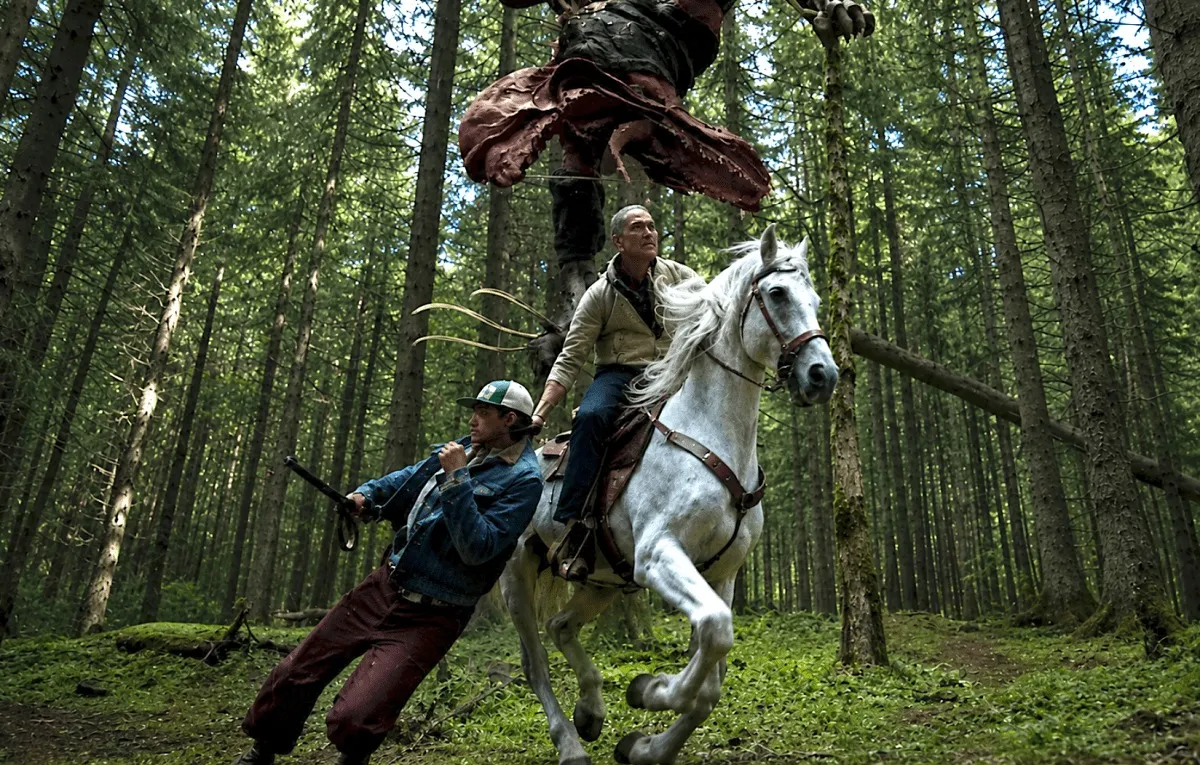
So What Is This Movie Actually Saying? A Few Theories
I’ve seen a handful of readings floating around since this came out, and I want to walk through a couple before landing on the one I actually think is correct.
Theory one, the surface read: it’s just a monster movie. Big scary things show up, kill some people, get fought off. I think this reading only survives if you stop paying attention around section two, because the entire back half of the film is specifically engineered to dismantle this exact interpretation. You’re not supposed to leave this movie thinking monster movie, you’re supposed to leave it uncomfortable that you ever did.
Theory two: it’s a DMZ Cold War parable. This one has real legs, and Na Hong-jin has said as much himself, setting an unknowable, potentially hostile outsider right on the doorstep of an isolated Korean village that can’t even arm itself properly is clearly doing something with Korea’s actual, decades long anxiety about the border it lives next to. I think this is true and intentional, but I don’t think it’s the whole movie, because it explains the setting and the fear, but it doesn’t really explain the ending.
Theory three: it’s a straightforward immigration or refugee allegory. Family fleeing chaos, misidentified as a threat by a fearful community, tragedy follows from that misidentification. There’s something to this too, but I think it undersells how deliberately religious the film’s own imagery gets in that final stretch, which brings me to the read I actually think unlocks the movie.
My actual read: this is a Biblical film wearing an alien invasion costume, and once you see it, you can’t unsee it. Na Hong-jin has said directly that one of his alien characters quotes Hebrews 11:1 almost word for word, faith is the substance of things hoped for, the evidence of things not seen, which is also obviously where the title comes from. That’s not a throwaway reference. That’s the thesis of the whole third act. Ma’veyyo doesn’t revive Kali because he has proof it’ll work. He does it purely on faith, cutting out the very thing that made him strong and giving it away entirely, with no guarantee of a resurrection on the other side. That’s not generic sci-fi problem solving, that’s a sacrificial, faith-based act structured exactly like the language of Hebrews, belief in something unseen, and Na has said outright that he was drawing on how often scripture shows someone giving up a literal part of themselves for the continuation of others. Once you’re reading the ending that way, a lot of the earlier stuff clicks into place differently too, an unprovoked killing that starts a chain of suffering nobody intended, a servant who dies afraid and misunderstood, parents who lose everything and respond not with vengeance but with an act of pure faith. I think the DMZ parable and the refugee reading are both genuinely present and intentional, but I think the Biblical frame is the one actually holding the whole structure up, and it’s the read I’m going with.
Hope is actually a worthwhile watch, and a fun movie. Hell of a lot more fun than The End of Oak Street anyway! Let me know what you thought of the film and if it made sense to you on first watch!!