
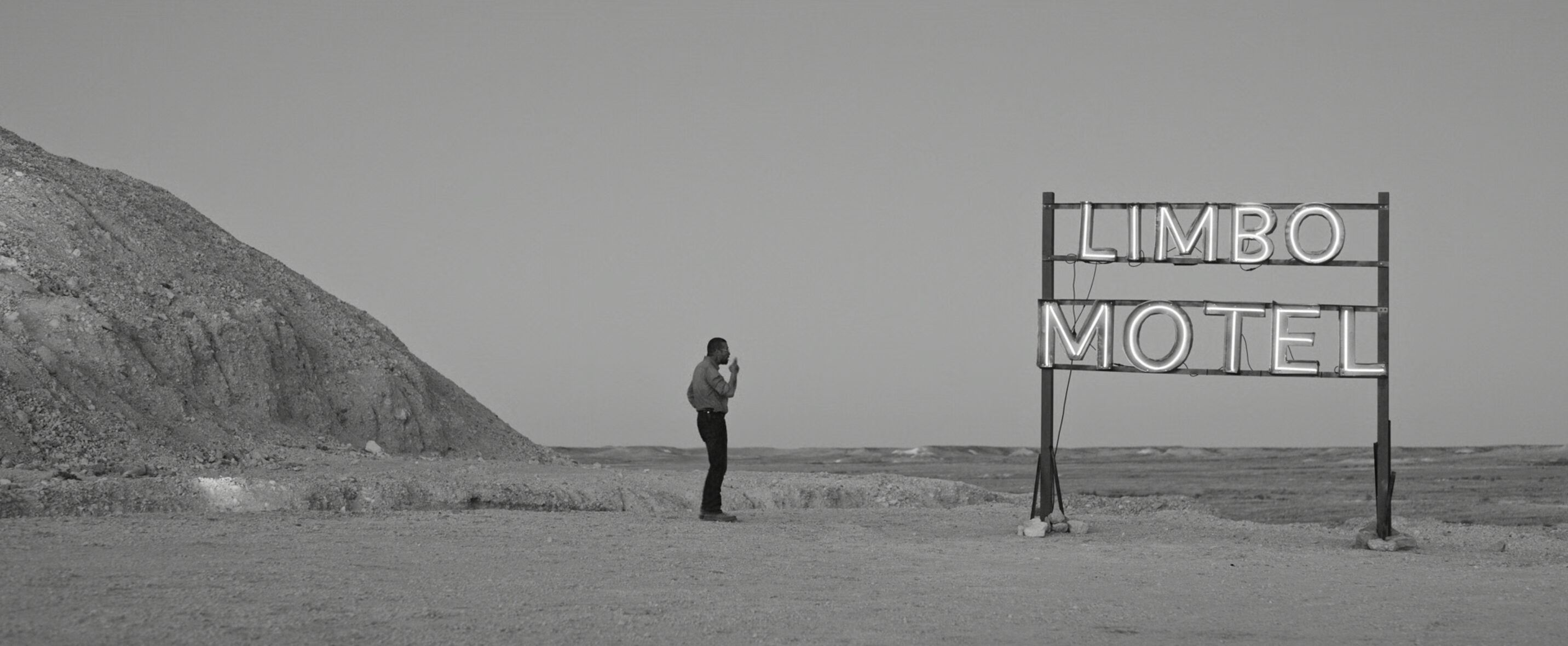
Get it? Your grey matter? It’s a black and white film? No? Yeah, fair enough… This movie is so covered in dust and dirt, I’m not 100% clear whether this movie is in black and white or if it just needs a good power washing. But we here at THiNC. adore Noir films… we have a long history of advocating on their behalf (Brick, Windfall, Nightcrawler, No Country for Old Men, etc., etc). Today’s movie, Limbo, is brought to us by our fearless editor, CY… thanks CY, appreciate the recommendation.

From here on out – here be spoilers … why? Because I’m interested in discussing the ins and outs of this movie… the whys of it. So if you haven’t had a chance to watch it yet, you can find it over on Prime, and it is definitely worth your time, so check it out.
Limbo opens in the stark, black‑and‑white expanse of Coober Pedy, a remote Outback mining town marred by countless opal shafts and barren terrain. I quickly got the sense that those holes in the earth are blatant mirrorings of the emotional voids of its inhabitants. Detective Travis Hurley (Simon Baker) arrives in this desolate place, formally tasked with reviewing a twenty‑year‑old cold case involving the disappearance—and likely murder—of a young Aboriginal woman, Charlotte Hayes. It’s clear from the start that the case was never properly investigated… instead it was filled with threats to the local indigenous population and shoddily covered up. And is this just one more injustice that the locals of this area were forced to endure? Obviously.
Hurley? He is a husk of a human being. Tattoo covered, heroin addicted, he’s a hollow man that seems to only coincidentally be doing something good. His own life seems to be just as fractured as the land he is now investigating in. His arrival doesn’t inspire hope; instead, locals meet him with suspicion. Charlotte’s brother, Charlie (Rob Collins), resurfaces from his own opal‑mining cave only reluctantly, while her sister, Emma (Natasha Wanganeen), keeps her distance behind her café counter and the responsibilities of raising children. It is clear that the community’s reticence is rooted in the trauma of past police harassment’s, institutional racism, and deep-seeded hate. Mainly because the authorities turned their suspicions toward Aboriginal men instead of pressing deeper into the case.
As Hurley delves into tapes from the old investigation, his presence becomes an occasion for buried memories to resurface. Mainly among those who have long been silenced. Gradually, Charlie begins to opening up about perpetually ongoing injustice of the area. “White girl goes missing? She ends up on TV. Black girl, oh, she’s swept under the rug.”
The deeper Hurley digs, the more his visit stirs up familial tensions. Emma cares for her sister’s children, and tensions simmer between her and Charlie—still emotionally distant and estranged from his own children. Eventually, when Emma invites Hurley over for dinner, the moment becomes intimate, vulnerable, and quietly powerful; it’s a rare glimpse of warmth in a film drenched in isolation. But the dinner goes off the rails when Emma takes it a step too far.
Interviews with locals point subtly but incontrovertibly toward Joseph (Nicholas Hope), an elderly man living by a cave who claims to be the brother of Leon—the prime suspect who allegedly hosted parties to lure young Black women. These women had a habit of finding themselves knocked out until the next morning, questioning what might have happened to them in the intervening hours. So the question hangs out there… is Joseph genuinely Leon’s brother, or some sort of delusion? Was Leon’s dementia real, or is his memory a constructed alibi? Ultimately, Hurley is told by his police chief that he needs to shut down the investigation and come home. And he does, but not before he heads back out to “Joseph”‘s place only to find the old man asleep and obviously sickly. Hurley points a gun at Joseph’s head, only to decide to walk away and leave it alone. The film leaves all the answers flitting about in the arid breeze – but symbolically, the failure to bring Leon to justice, and his possible invisibility, represents a deeper colonial amnesia.
Director Ivan Sen, who also wrote, shot, edited, scored, and composed the film, uses the environment as metaphor—cracked land, subterranean domiciles, and cavernous emptiness serve as physical extensions of trauma and forgetting. His choice of black‑and‑white accentuates the memory‑stuck limbo of this place and its people, austere yet resonant with suppressed histories. I personally don’t understand the history of Australia and the collective guilt of that place, but it’s obvious that it was all alive and viral under the surface of this black and white celluloid. There was something much deeper and hostile going on here that a non-local can’t fully put his finger on. But it was clear that this collective forgetting was the root cause of the angst of this film.
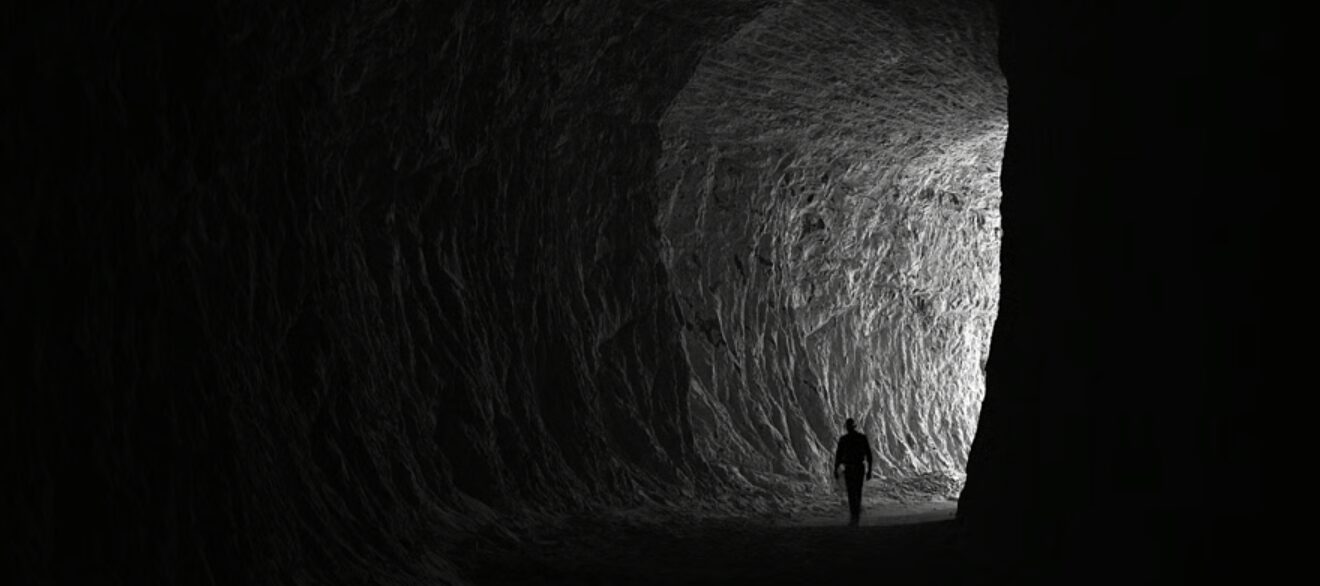
BUT WHO KILLED CHARLOTTE???
It’s pretty clear that Joseph is not actually Joseph by the movie’s end. Joseph is Leon, and Leon’s “death” the previous year was just a construction of his mind. But none of that really matters because by the film’s conclusion, it’s clear that Limbo is less about solving a crime and more about a collective bearing of witness to enduring grief and injustice within the community. Hurley fails to bring legal closure to the case, but he was able to bring about real moments of recognition. Charlie may reach toward reconciliation with his children, Emma finds an unexpected human connection, and Hurley confronts his own fatherhood failures, mirroring the emotional fractures in the community. Ultimately, the central metaphor of this movie – that of LIMBO – which is where these characters dwell. Between heaven and hell, between memory and forgetting. Between isolation and connection.
Edited by: CY