
As a huge fan of thrillers, one evening I was looking to watch something that would give me thrills. Something that would make me scared and wouldn’t involve any fantasy. As I was going through the list of thrillers, my eyes stopped on the poster of the film Watcher. It’s dark, captivating, and makes you wonder, “What secrets lie behind those eyes?” The shadowy figure in the background seemed almost alive, as if it were staring right at me. I felt an immediate pull towards it, with a mixture of curiosity and apprehension, as though the poster itself was a prelude to the tension I was about to experience.
Honestly speaking, I’m one of those people who regret watching a bad film, thinking that I’ve wasted time. In this case — gladly — that didn’t happen. On the contrary, I felt like I needed more of this movie and thought that it’d be great if it were a little longer.
Watcher, directed by Chloe Okuno, is a psychological thriller that immerses viewers in a slow-burn exploration of paranoia, fear, and the unsettling experience of being watched. With strong performances, atmospheric tension, and a thoughtful exploration of gendered vulnerability, Watcher, for me, stands out in the thriller landscape.
Starring Maika Monroe as Julia, the film follows her journey from moving from the U.S. to Bucharest with her husband. She hopes for a happy life with her husband at a new place, but fate has different plans. Instead, she’s plagued by a sense of immediate danger and suspicion.

Setting and Atmosphere
The film opens with Julia and her husband moving from the United States to Bucharest, Romania. The relocation is motivated by her husband Francis’s work, leaving Julia in a city where she doesn’t speak the language fluently and has limited social connections. This setting establishes a sense of isolation that is central to the film’s tension. From the outset, Okuno uses subtle cues to make the audience share Julia’s unease—the unfamiliar cityscape, foreign language signage, and cultural disconnect create a backdrop of alienation that is both realistic and disorienting.
Performance and Characterization
Maika Monroe delivers a compelling performance as Julia. Known for her work in It Follows, Monroe has a talent for conveying fear and vulnerability without descending into melodrama. In Watcher, she masterfully balances the psychological strain of her character with the ambiguity of her circumstances. Julia’s fear is palpable, but Monroe ensures that the audience is never entirely certain whether her suspicions are justified, which sustains tension throughout the film. The ambiguity is deliberate, reflecting the experience of many women whose concerns about safety are often dismissed or minimized.
Cinematography and Visual Tension
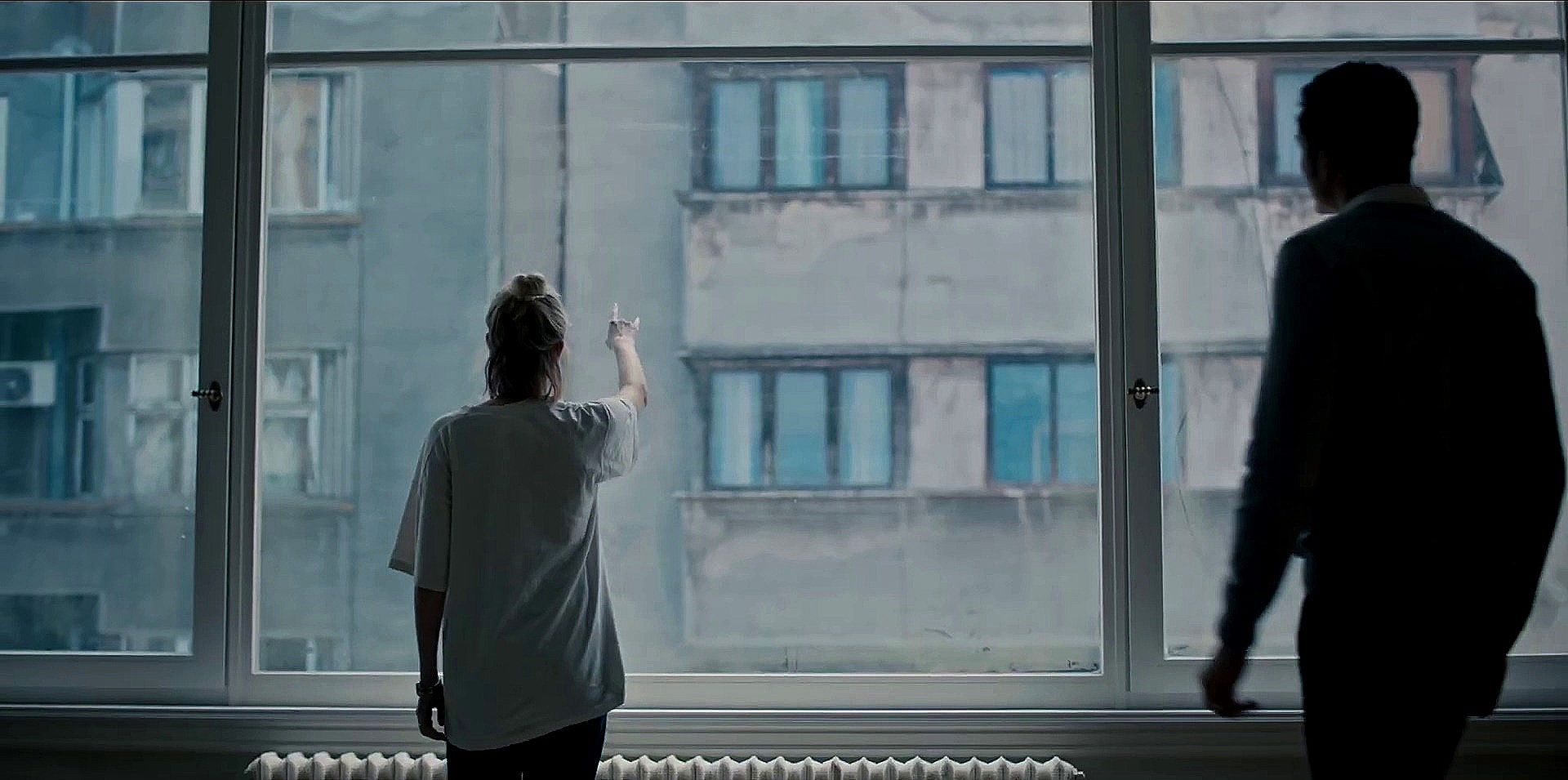
One of the film’s central strengths is its ability to create suspense through atmosphere rather than relying on conventional jump scares. Cinematographer Pawel Pogorzelski, known for his work on Hereditary, employs tight framing, shadowy interiors, and careful use of perspective to make the viewer feel constantly observed. Windows, mirrors, and reflections are recurring motifs, symbolizing both literal and figurative surveillance. These visual elements not only heighten tension but also emphasize Julia’s growing paranoia and the omnipresence of unseen threats.
Themes of Isolation and Expat Life
Watcher also excels in its depiction of isolation and the challenges of being an expatriate. Julia’s lack of social support exacerbates her fear, and the film portrays her struggles with authenticity. She encounters language barriers, cultural misunderstandings, and the indifference of neighbors, which compound her sense of vulnerability. This aspect of the film elevates it beyond a typical thriller, which offers a nuanced exploration of how environmental and social factors can intensify fear.
Plot Ambiguity and Climax
Plot-wise, Watcher navigates the delicate balance between ambiguity and revelation. The story is anchored by Julia’s observations and suspicions, but Okuno resists the urge to provide easy answers. The film’s climax is tense and unsettling, offering a resolution that is satisfying in its emotional and psychological payoff rather than relying solely on spectacle or violence. This approach sets Watcher apart from conventional thrillers.
What Is the Role of Bucharest in the Film?
The film’s use of Bucharest as a setting is more than a mere backdrop; it actively contributes to the narrative. The city’s architecture, from its imposing apartment buildings to narrow, shadowed streets, enhances the sense of surveillance and confinement. The foreignness of the environment amplifies Julia’s vulnerability, which makes the viewer acutely aware of the challenges faced by someone navigating an unfamiliar space. This interplay between setting and character is a testament to Okuno’s skillful direction and attention to detail.
Critical Reception
Critically, Watcher has been praised for its slow-burn suspense, strong performances, and thematic depth. Reviews highlight Monroe’s portrayal of Julia as a standout, with her ability to convey fear and uncertainty earning particular commendation. Critics have also noted the film’s thoughtful approach to gendered experiences of fear, setting it apart from more formulaic entries in the thriller genre. On Rotten Tomatoes, the film holds a strong rating.
Final Thoughts
Watcher is a masterful psychological thriller that combines atmospheric tension, strong performances, and thoughtful thematic exploration. Chloe Okuno’s directorial debut demonstrates a sophisticated understanding of suspense, pacing, and character psychology. Maika Monroe’s portrayal of Julia is both haunting and empathetic, drawing the audience into her world of fear and uncertainty. The film’s exploration of isolation, gendered vulnerability, and the disorienting experience of being an outsider adds layers of depth, which is absolutely worth watching.