

In an era where prestige television seems to have lost some of its daring edge, Pluribus arrives like a revelation—a bold, unsettling, and utterly captivating exploration of consciousness, individuality, and what it truly means to be human. From Breaking Bad and Better Call Saul creator Vince Gilligan, this Apple TV+ series doesn’t just meet the astronomical expectations set by his previous work; it transcends them, delivering something that feels genuinely new in the sci-fi television landscape.
Having just binged the first two episodes, “We Is Us” and “Pirate Lady,” I can confidently say: Pluribus is the new Westworld. Not in the sense that it imitates that show’s mythology-building and temporal puzzles, but in how it announces itself as the next great philosophical sci-fi meditation that will dominate watercooler conversations and Reddit theories for years to come.
A Premise That Hooks You Immediately
The logline—”The most miserable person on Earth must save the world from happiness”—sounds almost comedic, but the execution is anything but. The pilot episode wastes no time establishing its eerie premise: an alien signal from 600 lightyears away contains an RNA sequence that, once synthesized and released on the planet, transforms humanity into a blissful hive mind known as “the Others.”
Everyone, that is, except for thirteen immune individuals, including our protagonist Carol Sturka, played with fierce intensity by Rhea Seehorn. Carol, a curmudgeonly romance novelist already dissatisfied with her life and work, suddenly finds herself in a world where everyone else is perpetually, disturbingly happy—and they desperately want her to join them.
The opening episode unfolds with the methodical precision we’ve come to expect from Gilligan. He luxuriates in atmosphere and process, letting tension build through carefully composed shots of Albuquerque’s Southwest landscape and the gradual realization that something has gone terribly, fundamentally wrong with the world. The sequence where Carol discovers her changed neighborhood—people singing in unison, speaking with unsettling synchronicity, their eyes gleaming with an alien contentment—is genuinely terrifying in its implications.
Rhea Seehorn Commands the Screen
If there was any doubt that Rhea Seehorn could carry a series after her Emmy-nominated performance as Kim Wexler in Better Call Saul, Pluribus obliterates it within minutes. Carol is written as a “flawed good guy” trying to save a world that might not want saving, and Seehorn brings layers of complexity to every frame.
Her Carol is prickly, isolated, and trapped in creative dissatisfaction—writing romance novels she doesn’t believe in while grieving losses we only glimpse in the first two episodes. When the “Joining” occurs, Seehorn’s performance becomes a masterclass in portraying existential horror. She makes you feel Carol’s mounting terror not through histrionics, but through subtle shifts in her eyes, the tension in her shoulders, the edge in her voice when she realizes she’s now truly, cosmically alone.
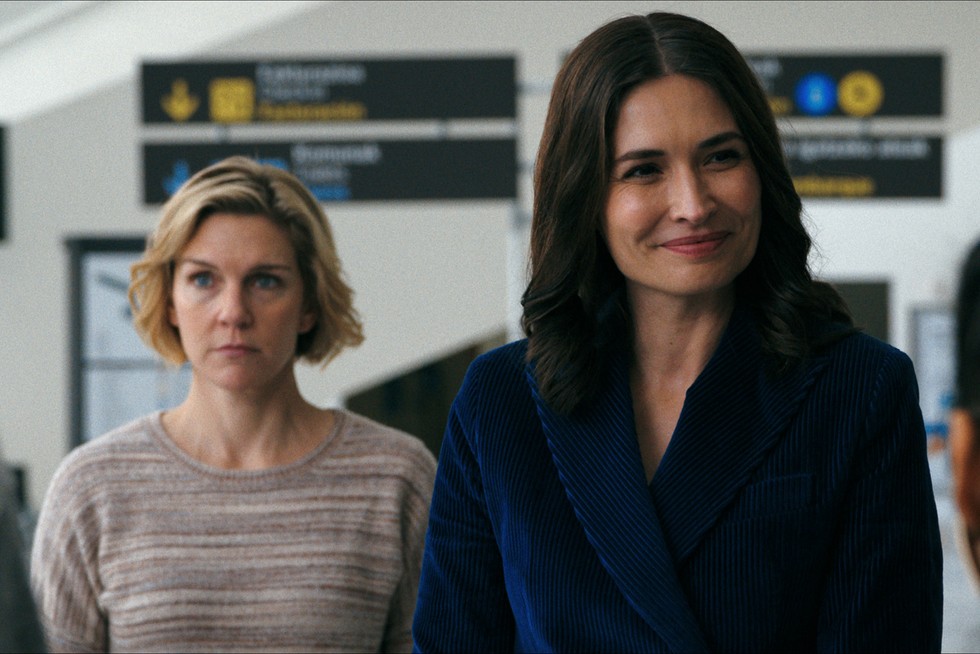
By the second episode, “Pirate Lady,” we’re introduced to Zosia (Karolina Wydra), one of the transformed Others who serves as Carol’s liaison to the new world order. The chemistry—or rather, the fascinating friction—between Seehorn and Wydra crackles with philosophical tension. Zosia is patient, kind, impossibly understanding, and wants nothing more than to help Carol accept the gift of joining. Wydra plays this with an unsettling serenity that makes you question whether the hive mind might actually be… preferable?
Pluribus is Westworld Reprised
Comparing any show to Westworld Season 1 is a bold claim, but Pluribus earns it through its ambitious engagement with profound questions about consciousness and autonomy. Like the first season of Westworld, Pluribus uses its sci-fi premise to interrogate what makes us human. Is individuality worth preserving if it means suffering, loneliness, and conflict? If everyone on Earth were suddenly peaceful, content, and working in perfect harmony toward collective goals, would that be a utopia or the death of humanity?
The show doesn’t hand you easy answers. The Others aren’t portrayed as mindless zombies or obvious villains. They’re still recognizably human—they laugh, they create, they remember their individual lives. They just do everything with a cheerful collective purpose that feels both appealing and deeply wrong. Gilligan is clearly interested in the philosophy here, exploring the tension between individual misery and collective happiness in ways that feel immediately relevant to our current discourse about AI, social media echo chambers, and the erosion of individual thought.
The second episode shifts tones brilliantly, introducing moments of dark comedy and even unexpected romance, proving that Pluribus won’t be a one-note horror show. There’s a gathering in Europe that brings together other immune individuals, creating friction and raising questions about what resistance might look like against an enemy that wants to love you to death. The tonal variety within these first two episodes suggests Gilligan has a complex, multi-layered story to tell.
Gilligan Returns to His Sci-Fi Roots
For those who remember that Gilligan cut his teeth writing for The X-Files, Pluribus feels like a homecoming. The show channels the best of that series’ paranoid atmosphere and big existential questions while bringing Gilligan’s mature storytelling sensibilities to bear. There are echoes of Invasion of the Body Snatchers, The Prisoner, and even The Twilight Zone in the DNA here, but filtered through Gilligan’s unique perspective and elevated by prestige television’s current production standards.
The cinematography is gorgeous, turning Albuquerque into both a familiar and alien landscape. Gilligan has always had a gift for making location feel like a character, and Pluribus continues that tradition. The Southwest becomes the perfect backdrop for this invasion—vast, isolating, and beautiful in ways that highlight Carol’s loneliness.
The pacing is deliberate without being slow. Yes, these episodes take their time, but every scene feels purposeful. Gilligan trusts his audience to sit with the discomfort, to marinate in the atmospheric dread, to think about the implications rather than rushing toward easy payoffs. This is television for adults who want to be challenged, not just entertained.
Minor Quibbles
If there’s any criticism to be leveled at these first two episodes, it’s that the show asks for considerable patience. Some viewers might find the methodical pacing frustrating, especially in an era of increasingly frenetic storytelling. The second episode’s tonal shift toward comedy and romance, while ultimately effective, feels slightly jarring after the intense horror of the pilot.
There’s also the risk that Pluribus could fall into the trap that ensnared later seasons of Westworld—becoming so enamored with its own philosophical questions that it loses narrative momentum. But with only nine episodes in this first season and Gilligan’s track record of satisfying conclusions, I’m willing to trust the journey.
The Verdict
Pluribus announces itself in these first two episodes as essential viewing for anyone who believes television can be art. It’s cerebral without being pretentious, terrifying without relying on cheap scares, and philosophical without becoming tedious. Gilligan has crafted something that feels genuinely original—a sci-fi series that uses its high-concept premise to ask vital questions about humanity, individuality, and the price of happiness.
With a 100% rating on Rotten Tomatoes and near-universal critical acclaim, Pluribus is already the word-of-mouth hit of the season. Rhea Seehorn delivers a career-defining performance, and the production values are film-quality throughout. Most importantly, the show demonstrates that there’s still room in the streaming landscape for ambitious, challenging science fiction that respects its audience’s intelligence.
If you loved the first season of Westworld—the existential dread, the philosophical depth, the slow-burn revelations—Pluribus deserves your immediate attention. This is the show that will define prestige sci-fi television for the next several years. Don’t sleep on it.
Stream Pluribus now on Apple TV+, with new episodes dropping every Friday through December 26, 2025.