
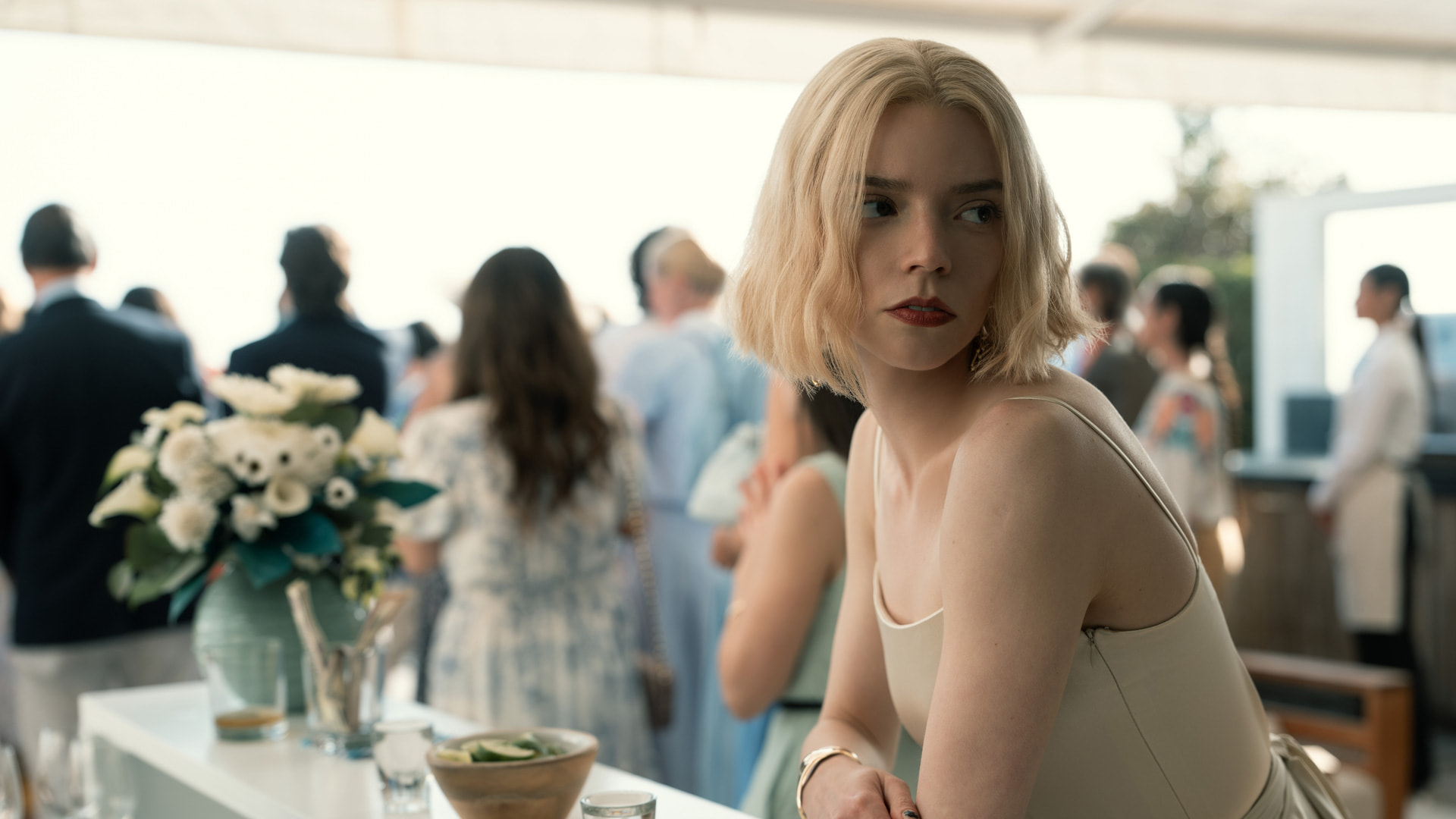
I have a confession to make before we get into this. I am four episodes into Lucky on Apple TV and I am writing this post at what feels like an irresponsible hour because I cannot stop thinking about it and the only thing that is going to help me sleep is getting these thoughts out of my head and into yours.
Lucky premiered on July 15, 2026 on Apple TV. The first two episodes dropped together and then it has been releasing weekly on Wednesdays, which means that as of right now there are four episodes available and three more coming through August 19. It is a seven episode limited series based on Marissa Stapley’s New York Times bestselling novel of the same name, adapted for television by Jonathan Tropper, who also created Your Friends and Neighbors. It is directed by Jonathan Van Tulleken, who you may know as the director of Shogun (which is one of the greatest limited series shows ever created), which won everything last year and deserved all of it. It is produced by Apple Studios and Hello Sunshine, which is Reese Witherspoon’s production company, with Witherspoon executive producing alongside Tropper and Anya Taylor-Joy, who is also the lead actress and who apparently cannot just be in something without also producing it because she is constitutionally incapable of not being extraordinary at everything she touches.
And yes. Annette Bening is in this show. I am going to come back to Annette Bening.
What is Lucky actually about
Lucky Armstrong, played by Anya Taylor-Joy, is a con artist. She has spent her entire life being very good at taking things from people and talking her way out of situations that should not be talkable-out-of. She is also, at the start of this show, a woman standing in the rubble of a betrayal so complete and so personal that it functions almost as a kind of violence.
Her husband Cary, played by Drew Starkey, has stolen ten million dollars. He has stolen it from people who are not the kind of people you steal ten million dollars from, and then he has disappeared, leaving Lucky to deal with the consequences of a crime she did not commit (or did she? that is a greater question than you realize.) and did not know about. The mob thinks she took the money. The FBI thinks she is involved. And Lucky is running, chased by both, trying to stay alive long enough to find the husband who destroyed her life and figure out what she is going to do about it.
That is the show’s engine. But the show is not really about the chase. The show is about everything that built the life Lucky was living before Cary blew it up, and the way the show gets at that material is what makes it genuinely exceptional.
The structural trick that makes this work
Here is the thing about Lucky that you need to understand before you start watching it: the show is running two timelines simultaneously, and the two-step between them is the most sophisticated thing about it.
The present timeline is all momentum. Lucky running. Lucky being chased. Lucky making decisions at speed in situations where the wrong call is a fatal one. The pacing in the present storyline is relentless in a way that television rarely sustains. I have watched four episodes, which is something approaching three and a half hours of television, and the present-day chase has not let up once. Not for a single scene. There is no breathing room in the present timeline and there is not supposed to be because Lucky does not get breathing room and the show does not lie to you about that.
But the past timeline is where the show is really making everything matter. Every episode steps back into Lucky’s history and shows you another layer of the architecture that built her. The web of connections that Lucky is running through is not random. Every mob figure and every FBI agent and every con and every betrayal connects back to something that happened before the show started, and the show parcels out those connections at exactly the rate it needs to in order to keep you permanently one step behind what it knows. You are always catching up. You are never quite there.
This two-step structure between the present chase and the past history is the reason the show does not burn you out despite the relentless pace of the present-day material. The past timeline functions as a pressure valve. Every time the present gets so tense you need a moment to breathe, the show takes you back into Lucky’s history, and the history is so rich and so strange that you find yourself leaning forward into it the same way you were leaning forward into the chase. Then it brings you back to the present and you have had exactly enough of a break to be able to sustain another run of full-throttle pursuit.
It is a structurally brilliant piece of television architecture and Jonathan Van Tulleken executes it with the same precision he brought to Shogun.
The cast, and the Annette Bening situation
Anya Taylor-Joy is Anya Taylor-Joy. At this point I do not know what else to tell you about her. She was extraordinary in The Queen’s Gambit and extraordinary in Last Night in Soho and extraordinary in Furiosa and she is extraordinary here, which is the only word that keeps presenting itself when I try to describe what she does as an actress. There is a quality of attention in her performances that makes you feel like she is genuinely experiencing something rather than performing the experience of something, and Lucky gives her more range to work in than almost anything she has done because the character is simultaneously a person running for her life and a person reconstructing the story of her own life in real time.
Timothy Olyphant plays Lucky’s father John and Timothy Olyphant should be legally required to be in everything. He is one of those actors who walks into a scene and the scene reorganizes itself around him without him doing anything visible to cause it. Aunjanue Ellis-Taylor plays FBI Agent Billie Rand, which is the kind of casting decision that makes you realize a show is serious because Aunjanue Ellis-Taylor does not do small work and she does not go into projects that do not deserve her.
And then there is Annette Bening as Priscilla, a mob ruffian that is not having her best day. And I need to spend a minute on this because Annette Bening in a villain role is something I did not know I needed until I had it and now I cannot imagine the show without her.
I had a Bugsy standee in my bedroom for years. Not a poster. A standee. A life-size cardboard standee of the 1991 Barry Levinson film that is one of the great overlooked Hollywood epics and in which a young Annette Bening was so luminous and so electric that she made Warren Beatty look like the less interesting person in every scene they shared together, which is not an easy thing to do. That film launched her into a career that has included four Academy Award nominations, a Golden Globe win, and a body of work that spans American Beauty and The Kids Are All Right and Being Julia and now, in 2026, Lucky, where she plays a mob boss with the serene authority of a person who has never once in her life needed to raise her voice to get exactly what she wanted.
She is terrifying in this role in the specific way that composed people are terrifying. Priscilla does not shout. Priscilla does not threaten in the conventional sense. Priscilla simply exists in a room and makes it known that the room has restructured itself around her requirements, and anyone who fails to meet those requirements will discover that consequence and Priscilla are very old acquaintances.
The past timeline reveals how Lucky came to be connected to Priscilla and it is a connection that goes back further than you expect, involving Lucky’s father John and a layered history of loyalty and betrayal that the show keeps peeling back one layer at a time. Every time I think I understand the full shape of the relationship between Lucky and Priscilla the show reveals another layer underneath and the layer underneath is always more interesting than what was on top of it.
Why you should watch it right now
We are at four episodes and three more to come, which means this is the perfect moment to get in. You have enough to evaluate whether the show is for you. You have enough to be genuinely invested in where it is going. And you have three more episodes to look forward to on Wednesday nights through August 19, which is the right way to consume television like this: one week at a time, with enough space to think about what you just watched before the next one arrives.
Lucky is the kind of show that Apple TV has been promising it could make since it launched. The budget is evident in every frame. The cast is operating at a level that most streaming television cannot afford and most broadcast television cannot attract. The writing is layered in a way that rewards attention and punishes distraction. The structure is doing something formally interesting that I have not seen another show do quite this way.