
I need to be honest about where I started with this one. I generally despise Tom Cruise movies. Not just find them forgettable, actually despise them. Vapid, shallow, action for the sake of action, built entirely around the one trick of watching a guy run very fast and very seriously. And that’s before you even get into the fact that I think he’s a genuinely horrible human being. Under normal circumstances I would not have gone anywhere near a movie with his name above the title.
But Alejandro González Iñárritu was directing it. Bardo was crazy good – I even had a chance to interview Omar Levya from that movie. Birdman is top tier cinema as far as I’m concerned. A one cut wonder that stands the test of time. (Okay so Victoria was a better one cut movie, but I digress.) And The Revenant might be one of the greatest movies ever made, bar none. So when I heard he was the one running the show on Digger, I gave it a second look I never would have given it otherwise. And then the thing came out and just completely imploded at the box office, the kind of implosion where you start seeing headlines comparing it to John Carter, and that’s when my curiosity really kicked in. A movie this expensive, with this much talent behind it, cannot fail this spectacularly by accident. Something had to be going on underneath the surface that audiences either couldn’t or wouldn’t sit with. What I didn’t expect going in was just how many “underneaths” there actually were. This is not a shallow movie. It is a movie that folds in on itself four or five times, and I think that’s exactly why it bombed, and exactly why it’s worth diving into so that we can see if we can actually understand what is going on here.

From here on out… I am going to be sharing every single spoiler I can think of sharing. If you haven’t seen Digger yet, you have no business continuing. And heck, this might be spoiler material to many of you that have already seen it who didn’t get it at all. Seriously consider watching this movie again before continuing on… that is how deep we are going to go on this thing.
The Wreckage Itself Is Part of the Story
I don’t normally spend a section of these posts on box office numbers, but with Digger the numbers are basically a second text running underneath the movie, so bear with me. This movie reportedly cost somewhere between $125 million and $180 million depending on which outlet you believe, with another estimated $100 million dumped into marketing on top of that. $280 million. Warner Bros needed it to clear something like $300 million worldwide just to break even. It opened domestically to about $8 million, one of the single worst opening weekends of Tom Cruise’s entire career, the kind of number that broke a nine year streak he’d had of never landing a rotten score on Rotten Tomatoes. Critics ended up basically split down the middle, mid fifties percent, which is its own kind of telling. This isn’t a movie everyone agrees is bad. It’s a movie that seems to make people furious in two completely opposite directions.
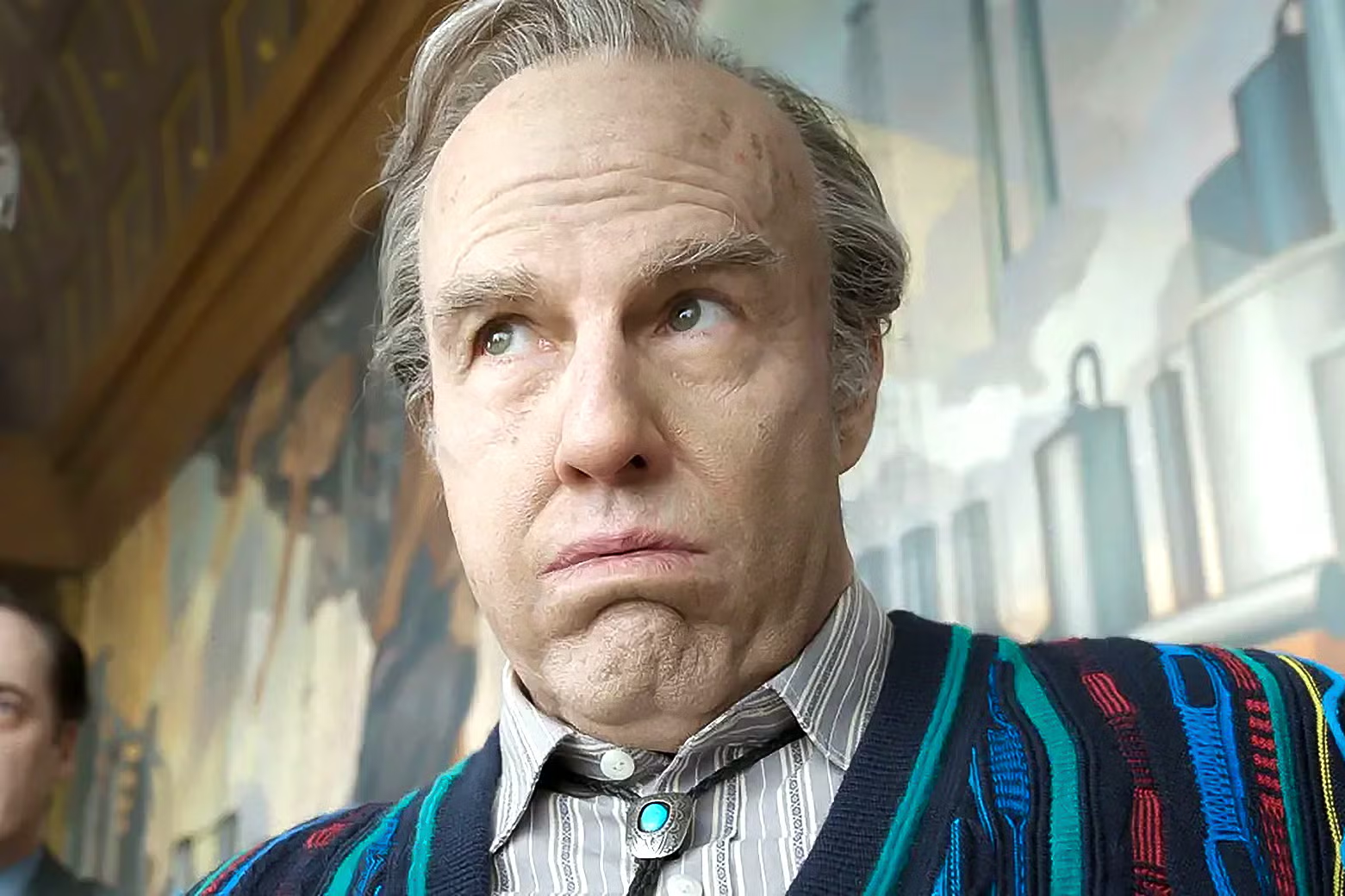
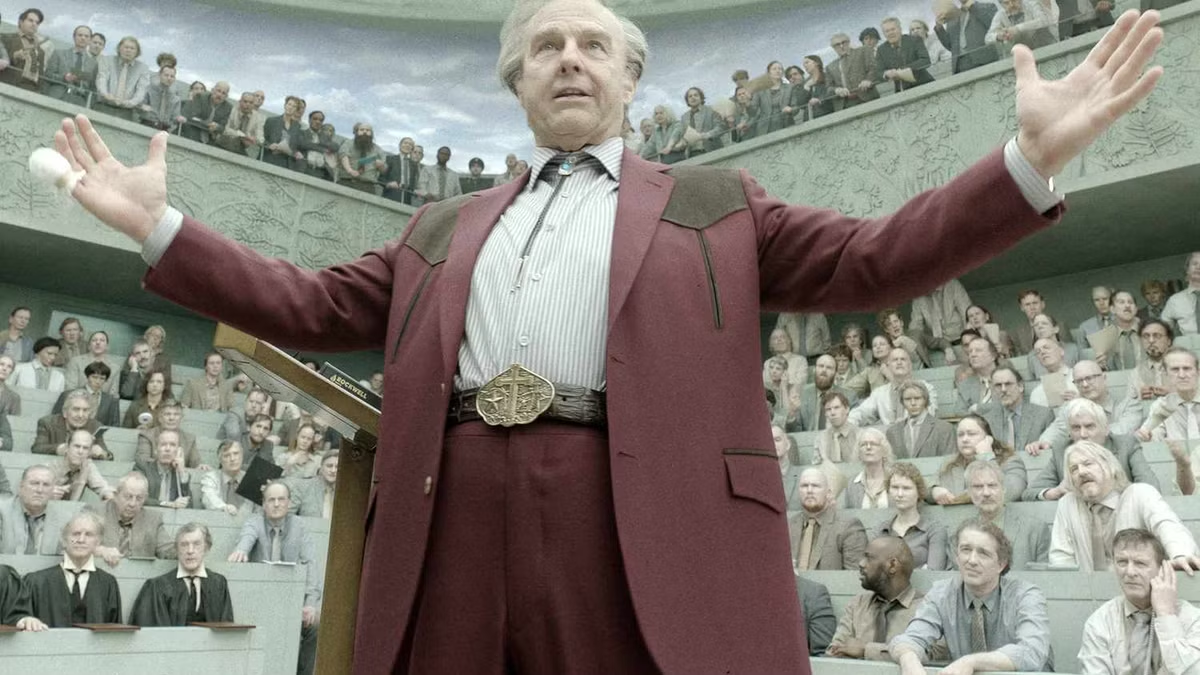
Iñárritu assembled a genuinely stacked cast to tell this story. Cruise plays both the real historical oil tycoon Digger Rockwell and, in the film’s framing device, an actor named Curtis Markson playing Digger Rockwell in a stage production. John Goodman plays a dictatorial sitting president battling cancer in the middle of an unfolding global catastrophe. Sandra Hüller plays Digger’s half sister and business partner. Riz Ahmed plays the scientist trying to talk everyone off the cliff. Jesse Plemons plays Kenny, who ends up being the entire hinge the movie swings on. Emmanuel Lubezki shot it. That’s an enormous amount of serious filmmaking firepower pointed at a story that then goes out of its way to be as uncomfortable and structurally slippery as possible. I don’t think that’s an accident, and I don’t think the box office failure is unrelated to it either. A movie this committed to not letting its audience off the hook easily was never going to be a crowd pleaser, no matter how many stars were in it.
The Deep Dive: What Actually Happens
The movie opens on what at first looks like a fairly straightforward disaster epic about Digger Rockwell, a wealthy oil tycoon who refuses to shut down his Alaska and Greenland drilling operations even after his own people warn him about a dangerous crack forming in the ice. An explosion at the Greenland facility kills workers and dislodges a massive ice shelf nicknamed Judy. President Compson, played by Goodman, convenes his officials, including a scientist named Ganesh played by Ahmed, who tells him Judy is going to slam into Norway within three days and cause a tsunami. Rather than warn anyone, the administration decides to sit on the information and hope the problem drifts away on its own.
It doesn’t. Digger gets hauled in front of the European Parliament, where he accepts responsibility in theory while also arguing that the entire world’s addiction to oil makes everyone in that room just as complicit as he is, right before someone throws a microphone at him. Then a second, even bigger ice shelf he has named Kremlinova breaks off and heads for Alaska, and Compson makes the call to destroy it with missile strikes. That decision backfires catastrophically, shattering Kremlinova into a swarm of smaller icebergs that end up doing even more damage than the original shelf would have.
And then, right around here, the movie pulls its first big fold. All of this, the disaster, the Parliament scene, Compson’s cancer, all of it, is a play. It’s called Fossil Fools, and the man we’ve been watching as Digger Rockwell is actually Curtis Markson, an actor performing the role in a theatrical production about real historical events. The entire first chunk of the film has been a dress rehearsal.
Underneath that layer sits Curtis’s actual present tense problem, which is that his daughter Hope is on a plane flying directly into a dangerous storm, and he cannot get any information about whether she’s safe while he’s stuck performing a satire about a man-made apocalypse. He’s also in open conflict with the play’s director, Hannah, over some of the key details happening on the stage and how the production portrays Digger. Curtis argues the real man was quieter and more composed than the cartoon villain the script has him playing. The producer, Kenny, sides with Curtis on that point, agreeing the real Digger wasn’t this broad, but defends the choice anyway, because he’s watched an earlier staging of this same play, fifteen years earlier, and he saw how much genuine catharsis audiences got from watching this exaggerated version of his own uncle get destroyed. This is another massive pivot – our third reimagining of this story. Kenny isn’t a neutral producer with money. He’s Digger Rockwell’s actual nephew, and he watched this story unfold firsthand, and has already watched one generation of audiences cheer his family’s downfall once before, and he chose to fund doing it again anyway.
The play’s epilogue, set five years after the disaster, follows Digger and his remaining staff and family exiled onto an Alaskan oil rig, starving, with Compson’s actual corpse preserved in a cafe freezer alongside them all. Digger starts hallucinating, at one point imagining their empty freezer has been miraculously restocked with food after an extraordinarily pointed prayer to God to save them. Eventually throws himself overboard into the ocean and drowns himself. The audience watching the ending of the play cheers.
Backstage after the performance wraps, Kenny delivers the following line that I think is the whole movie’s thesis statement, something to the effect of, it’s funny and it’s stupid and it’s scary and it makes no goddamn sense but it happened, and he put a gazillion dollars into this production specifically because everyone was oblivious while it was actually happening. Amused to death. Absorbed in pointless arguments. Enthralled by our own opinions. As an aside – that’s about as direct a citation of Neil Postman’s idea that we are amusing ourselves to death idea as a studio movie has ever put in a character’s mouth, and it’s coming from the one person in the entire story with the money to actually mean it.
And now comes the last inversion. Curtis learns that Kenny personally made sure Hope’s plane was located and that she’s safe, something Kenny quietly handled using his own resources while everyone else was focused on the show. Curtis asks who Kenny even is, and gets told he wouldn’t believe it if he heard it. The cast celebrates. And then the audience filing out of the theater has to put on gas masks before stepping into streets that are actually flooded, patrolled by armed guards and machines, because the real world catastrophe the play just dramatized was never undone. It just kept going, offscreen, the entire time everyone was inside clapping for a man’s symbolic death.
What This Movie Is Actually Saying, Layer by Layer
I don’t think this movie is pointing its acerbic wit at just one thing. I think it’s stacked like a parfait, and every time you think you’ve hit the bottom of it there’s another layer underneath arguing with the layer above it. Here’s how I’d peel it apart.
Layer One: It’s a Takedown of Our Relentless Dependence on Oil
This is the layer that’s actually on the surface, the one you’d get even if you walked out the second the lights came up and never learned it was a play. Digger refuses to shut down operations he knows are dangerous. An administration sits on a warning as opposed to causing a public panic. A missile strike meant to fix the problem turns one disaster into several smaller, worse ones. Digger stands in front of Parliament and basically tells everyone that their own addiction to oil makes them as guilty as he is, right before somebody throws a microphone at him. None of that is subtle, and it isn’t supposed to be. This is the straightforward version of the movie, the one where Big Oil and the politicians who protect it get dragged, full stop. It’s pretty much your Kindergarten – Romper Room translation of the film. Please, for the love of all that is good and holy, do not stop here.
Layer Two: It’s a Takedown of Our Takedowns of That Dependence
Then the floor drops out from layer one, and you find out all of that was a dress reheresal for a play. Then the movie turns around and starts waterboarding the viewer and your assumptions you’ve had up to this point. It turns out that that Kenny, the producer – the money, isn’t funding this production because he’s naive about what it’s doing to his family’s name, he’s funding it because he already watched one earlier staging of this same play, fifteen years ago. He was amazed at how cathartic it was for an audience that got to feel righteous for two hours and then went home. And now he’s paying to have the experience all over again. The movie is pointing out that “eat the rich” entertainment, the kind of satire that lets an audience feel like they did something just by watching a fictional oil tycoon get destroyed, has become its own genre, its own product, and that Digger itself, a hundred and some million dollar studio movie about a hundred and some million dollar oil tycoon, is not exempt from that critique just because it’s aware of it. Curtis, the actor, argues that the real Digger wasn’t this cartoonish. It’s too outlandish a caricature of the man. And, heck, Kenny agrees! And yet, Kenny funds the cartoon version anyway, because the cartoon is what sells catharsis. That’s the takedown of the takedown.
Layer Three: We Are Amusing Ourselves to Death and Missing the Entire Point
This is the one Kenny says out loud, almost word for word, backstage after the show. It’s funny and it’s stupid and it’s scary and it makes no goddamn sense but it happened, and he put a gazillion dollars into this production to remind people that this tragedy happened, because everyone was oblivious while it was actually happening. Amused to death. Absorbed in pointless arguments. Enthralled by our own opinions. That’s Neil Postman’s entire thesis, delivered by the one character in the movie with the money and the blood relation to actually mean it. The audience inside the play cheers when Digger drowns himself, the same way an audience watching Digger might feel a little satisfied watching the fictional version of a fossil fuel executive get narratively punished. Either way, the clapping is the problem. Nobody in that theater, onscreen or off, fixed anything by feeling good for a minute. The planet’s still flooded the second they walk outside.
Layer Four: The Actual Point, Sitting Quietly Underneath All of It
And then there’s the one thing in the entire movie that isn’t a performance, isn’t satire, isn’t catharsis, and isn’t aimed at making anybody in an audience feel some particular way. Kenny, off to the side of all of this theatrical business, just quietly finds Curtis’s missing daughter and gets her home safe, using his own resources, expecting nothing for it. Curtis is asked who Kenny even is by his wife, and he tells her… honey, you wouldn’t believe me if I told you. And personally? I think that is the whole movie whispering its actual answer to you after multiple layers of yelling. Not a bigger, angrier takedown. Not a more self aware piece of satire about takedowns. Just one specific, unglamorous, uncelebrated act. Kenny actually made a difference. He actually did something to make a difference in a life of another human being. That’s the thing none of the cheering in that theater, or possibly in the real one either, was ever going to produce on its own.
The THiNC. Read on the Movie Digger
I’m not a big fan of eco-disaster-make-a-point movies… like, oh I don’t know… Don’t Look Up maybe? You know, movies that are high concept, while simultaneously being higher on their horse. Drives me crazy. And that is definitely what Digger was. A high concept, non-feel good… I HAVE MULTIPLE PROVERBIAL AXES TO GRIND SIR… sort of movie. And yet. Buried in here… under numerous layers of screaming “I HAVE POINT TO MAKE SIR” layers that are too loud for their own good… you can see that there actually is a deeper, much quieter hum that might be saying something… if only you listen very very carefully. Otherwise, sorry… you already missed it.
And that is what the vitriol pointed at this movie on social media is missing. That is what the haters have completely missed. They see the Trumpian likeness, and the hard right parallels… and the counter react against, or over react for… or whatever. Or they see the meta-play within a movie and they run with the meta message and they grab onto the theme of amusing ourselves to death… only to miss the fact that that does literally nothing. At the end of the day, our echo chamber vitriol does nothing. Changes nothing.
But changing one real person’s life through an act of kindness? That’s something. As small as it is. That’s an actual change in the world that makes a difference.
Okay – What Are Your Thoughts on the Movie Digger?
That’s four different movies stacked on top of each other, each one quietly arguing with the one above it, and I think that stack is exactly why Digger bombed as hard as it did. You can’t market a movie that spends its own runtime telling you not to enjoy the thing you paid to enjoy. Audiences wanted a disaster movie or a satire, cleanly, one or the other, and Digger kept refusing to hand either one over without also handing them the bill underneath it. I don’t think that makes it a failure. I think it makes it one of the more honest big budget movies I’ve sat through in a while, which is probably exactly why nobody wanted to pay for the privilege.