
Harold is 20 years old and spends his free time attending funerals. Maude is 79 and steals cars for fun. They fall in love in a 1971 film that most audiences did not know how to process at the time. Five decades later, the discomfort holds up. The best films about unconventional relationships succeed because they refuse to explain why the pairing makes sense. They show it instead, and the audience either follows or walks out.
The Age Gap Films That Got It Right
The Graduate from 1967 remains one of the most referenced films about an older woman and a younger man. Dustin Hoffman plays Benjamin, a recent college graduate who drifts into an affair with Mrs. Robinson, a friend of his parents. The film does not frame the relationship as romantic or aspirational. It treats it as something that happens when two people are bored and lonely at the same time, and the fallout drives the rest of the story.
Harold and Maude sits at the other end of the tone. The 59-year age difference between the leads is played for warmth rather than shock. The film builds its case through scenes rather than dialogue, letting the audience watch two people become better versions of themselves in each other’s company.
An Education from 2009 takes a harder look at unconventional romance films. Carey Mulligan plays a 16-year-old schoolgirl in 1960s London who enters a relationship with an older man played by Peter Sarsgaard. The film earns its tension by making the relationship feel genuinely appealing for most of its runtime before showing what that appeal costs.
Financial Dependence on Screen
Shiva Baby, released in 2020, follows a young woman named Danielle who runs into her sugar daddy at a funeral while her parents and ex-girlfriend are also in the room. The film compresses the entire sugar daddy relationship into a single afternoon of social anxiety, treating the financial and emotional layers of the dynamic with dry comedy instead of judgment. The sugar daddy is married, the ex-girlfriend is present, and Danielle’s parents have no idea. The tension builds through proximity and timing rather than dramatic reveals.
Good Luck to You, Leo Grande from 2022 stars Emma Thompson as a retired widow who hires a young sex worker for a series of hotel room sessions. The film examines what happens when a transactional relationship starts producing something neither party expected. Thompson’s character wants something she missed during 30 years of marriage, and the film respects that distinction.
Forbidden and Pressured Pairings
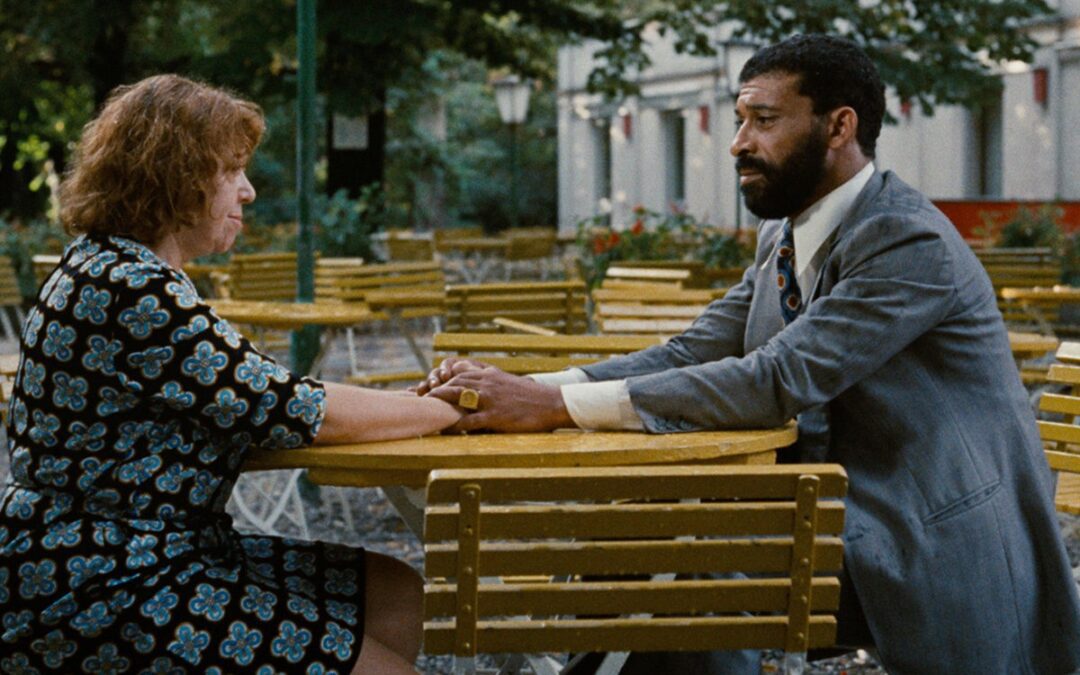
Ali: Fear Eats the Soul, Rainer Werner Fassbinder’s 1974 film, pairs a German cleaning woman in her 60s with a Moroccan mechanic in his late 30s. The relationship draws hostility from family, coworkers, and strangers. The film does not flinch from showing how external pressure corrodes a relationship that functions well in private.
Far from Heaven from 2002 sets an interracial relationship inside 1950s Connecticut suburbs where every lawn is maintained, and every feeling is suppressed. Julianne Moore’s character develops feelings for her Black gardener while her husband hides his own secret. The film stacks two unconventional relationships on top of each other and lets the era’s rigidity crush both.
The Open Relationship Films
Design for Living from 1933 remains one of the earliest Hollywood films to depict a polyamorous living situation. Gary Cooper and Fredric March play two men who both love Miriam Hopkins’ character, and the three of them decide to live together under a “gentleman’s agreement” that does not survive the second act.
Vicky Cristina Barcelona from 2008 builds a love triangle that functions as a quadrilateral. Penélope Cruz, Javier Bardem, Scarlett Johansson, and Rebecca Hall rotate through pairings that the film presents without ranking. The movie never declares which configuration is correct, and that refusal to judge is part of what makes it replayable.
What These Films Share
The films that handle unconventional relationships well tend to avoid two things. They do not moralize, and they do not use the relationship as a metaphor for something else. Shiva Baby is about Danielle’s specific afternoon, not about the state of modern dating. Harold and Maude is about two people who happen to be decades apart, not about age gaps as a concept. The specificity is what keeps these films honest. The ones that fail at this tend to treat their characters as case studies, and audiences notice the difference within the first 20 minutes.
Many unconventional relationship movies also succeed because they allow emotional contradictions to exist without forcing a clean resolution. The characters are often flawed, uncertain, or socially out of step, which makes the relationships feel more human rather than symbolic.
Conclusion
The best movies about unconventional relationships stay memorable because they trust the audience to sit with discomfort, ambiguity, and emotional complexity. Rather than asking viewers to approve of every choice, these films invite them to understand the people making them. Whether exploring age-gap romances, financially dependent dynamics, forbidden pairings, or open relationships, the strongest films about unusual relationships succeed by focusing on individual human connection rather than labels. That honesty is what makes them resonate long after the credits roll, proving that some of the most compelling stories in cinema come from relationships that refuse to fit neatly into familiar expectations.