
Okay. So remember at the end of my Invite writeup when I said I was going to watch every single adaptation of this play that exists? Yeah, welp, so now, a project of mine for the next month is well underway. Well, I started doing the homework, and it turns out the assignment is way bigger than I thought it was. I figured there were maybe seven(?) versions of this thing floating around the world. There might actually be closer to a dozen, once you count the stage productions.
So here’s where my homework stands right now. I am doing all my research, and analysis, in order to find out what this entire corpus even is. This post is the result of that homework so that I will then have a checklist to work against as I watch these films. Some of what’s below comes from actual reviews and trade pieces I dug up, meaning I haven’t seen the movie myself yet (aka, homework still to do) and this is me just passing along what critics said. I’m going to flag those clearly. And some of it is stuff I’m still working through myself, starting with the original film, which I’ve already watched and have technically started (more on that in a minute). Think of this less as a finished ranking and more as the family tree of The Invite Movie offshoots with notes, so that when I actually sit down and watch the French one or the Korean one or whatever, you and I both already know what we’re looking at.
The Play
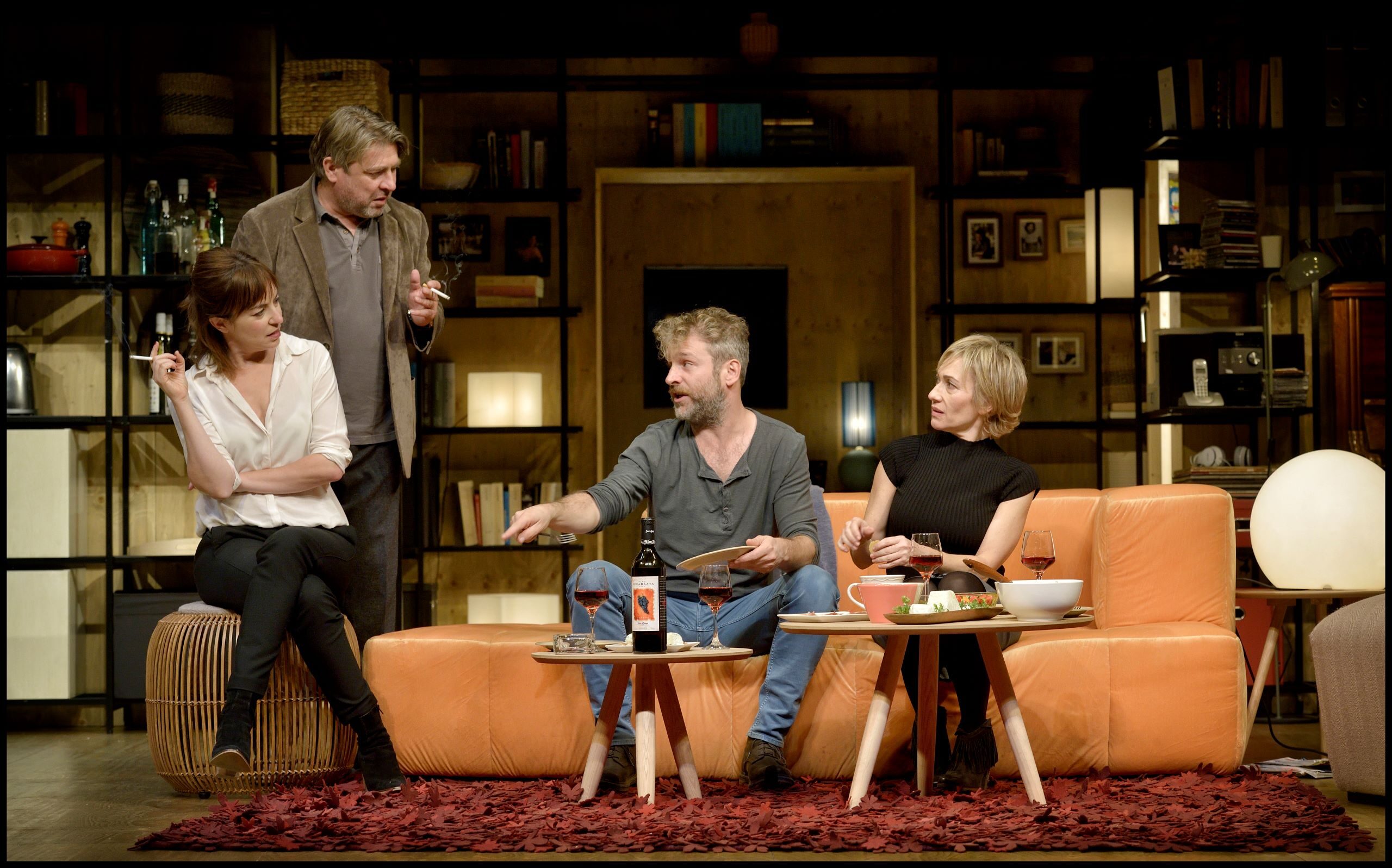
This whole thing started as a play. In Catalan it’s called Els veïns de dalt. In Spanish, Los vecinos de arriba. The Upstairs Neighbors, basically. Written and originally directed by Cesc Gay, and it premiered at Teatro Romea in Barcelona back in 2015, then ran in Barcelona and Madrid for two years after that.
And here’s the detail that actually made me sit up. “Sentimental,” the title everybody knows the movie by, was NOT a separate branding decision somebody made later. It was Gay’s own working title for the play while he was writing the first draft of it. He changed it to Los vecinos de arriba at some point before it hit the stage, and by his own account in an interview, he genuinely doesn’t remember why he made the switch. Then five years later, when he adapted his own play into the film, he deliberately went back and pulled Sentimental out of storage specifically so the movie title would read as its own thing, separate from the stage title. I love that. A title that got abandoned, sat in a drawer for five years, and then got resurrected for the exact opposite reason it probably would have originally been used. Very fitting for a play about people who can’t stop circling back to unfinished business.
One more thing worth knowing before you get anywhere near a movie screen. Gay has said in interviews that the entire play came out of him literally overhearing his real upstairs neighbors having sex through the wall. And he made a specific writing choice that stuck all the way through the original film: sex gets talked about constantly, but it’s never once shown on screen. Always off camera, or already in the past by the time we hear about it. That’s a choice several of the remakes apparently did NOT keep, which honestly might end up being the single most interesting thing to track across all these versions in all these various countries. (aka – what is this saying about the various cultures that picked up this piece, and what are they doing with it and why?)
Quick footnote before I move on to the film side of things. The play itself toured as a stage production in Argentina, Chile, Portugal, Colombia, and Mexico, completely separate from any of the film remakes below. There was also apparently a legendary run in Havana where people waited in line over twelve hours for tickets. No film exists for any of these, so I’m not going to be able to do my usual thing and watch them, but I wanted them on the record because the reach of this one play is honestly kind of nuts.
The Original Film: Sentimental / The People Upstairs (Spain, 2020)
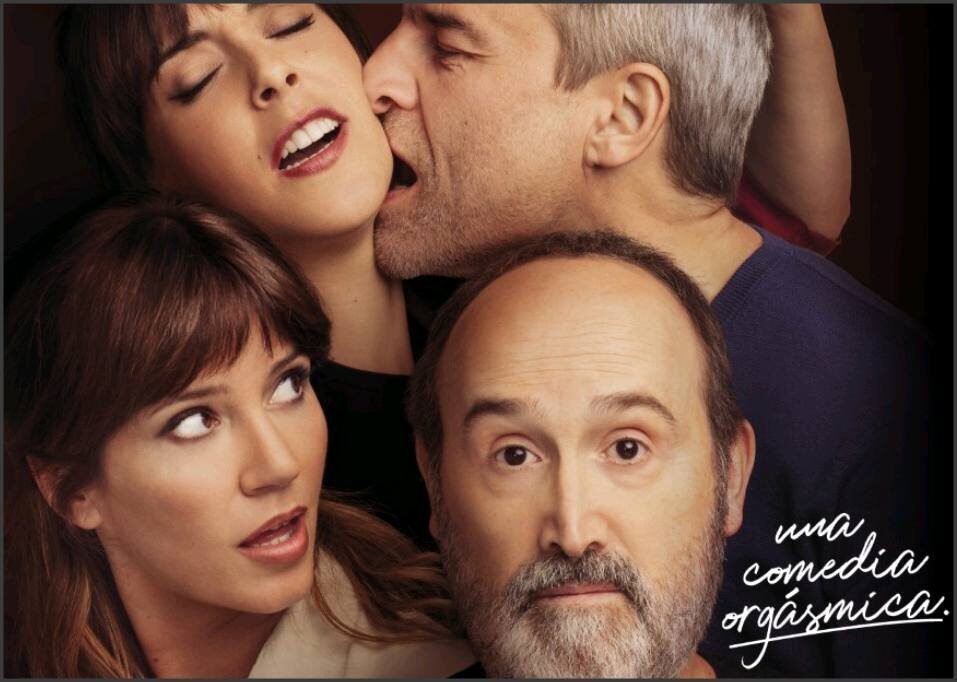
Written and directed by Cesc Gay, adapting his own play. Starring Javier Cámara and Griselda Siciliani as Julio and Ana, the couple whose marriage is running on fumes, and Belén Cuesta and Alberto San Juan as Salva and Laura, the noisy upstairs neighbors. It premiered at San Sebastián in September 2020, picked up five Goya nominations, and San Juan actually won Best Supporting Actor for it. Sitting at a 100 percent on Rotten Tomatoes across the reviews that exist for it, for whatever that’s worth this many years out.
This is the one I’ve actually watched and really have enjoyed it. I knew the moment I first saw the guys carrying a rolled up rug into the movie that I was going to really enjoy watching and tracing all the various tentacles and details from the original and where they landed in each version. So yes, I can tell you with my whole chest, that if you really enjoyed The Invite, tracking down and watching Sentimental is very much worth it. (I watched online for “free” with my Prime membership… I am sure there are other ways as well to get ahold of this fantastic film. Basically the movie is very similar in spirit to The Invite, if you watched this first (sort of wished I had started here instead… tbh). Julio and Ana become Joe and Angela. Salva and Laura become Hawk and Piña.
Italy: Vicini di casa (2022)
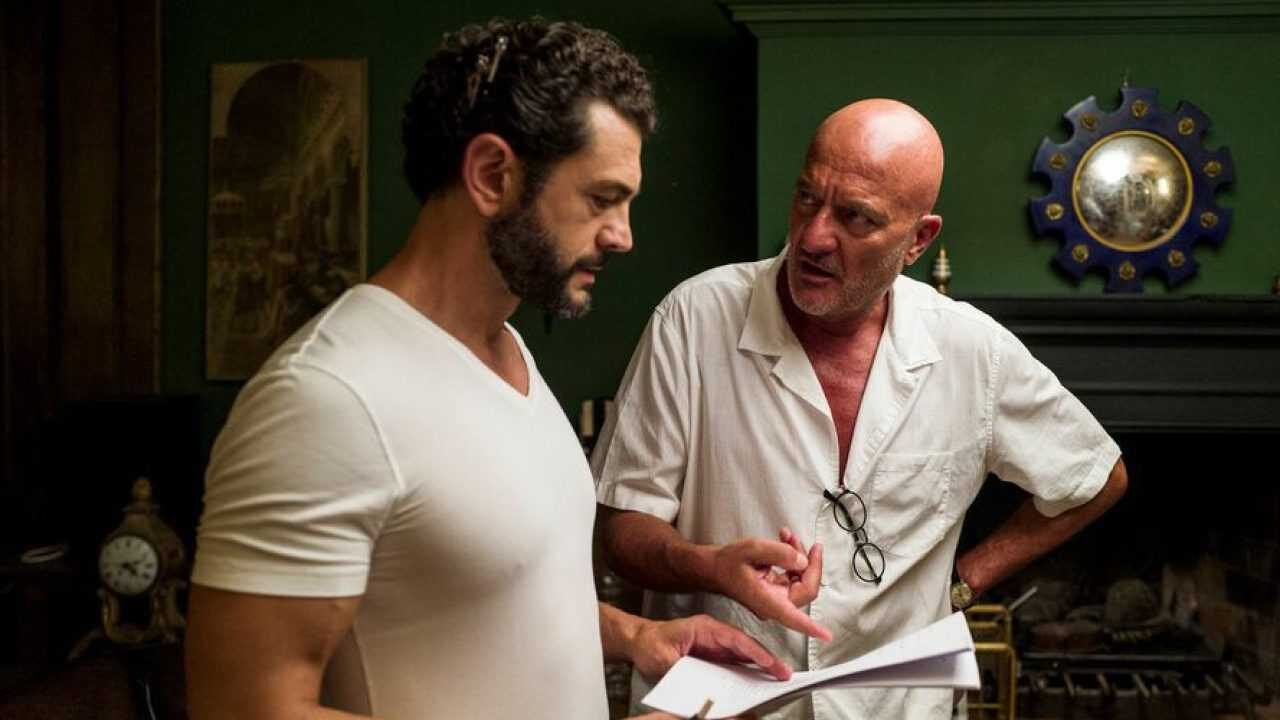
REVIEWS SAY, HAVEN’T WATCHED YET: Directed by Paolo Costella, who was also a writer on Perfetti Sconosciuti (the Italian original that basically launched this entire “one dinner party wrecks four people” subgenre in Europe), starring Claudio Bisio, Vittoria Puccini, Vinicio Marchioni, and Valentina Lodovini. One critical writeup I found argues the Italian version leans hard into a specific angle, essentially using the dinner party to needle at how Italian bourgeois norms suppress eroticism through what one writer called “analytical rationalization,” turning what could be liberation into endless discourse instead. There’s also a recurring bit about Bisio’s character watching the neighbors through a window, which one reviewer read as the film’s whole thesis on voyeurism and isolation in one image. On the other hand, a Letterboxd review I found complained that the script only really bothers to develop Bisio’s character’s conflicts and leaves the other three a little flat by comparison, which is a genuinely useful thing to watch for once I get to this one. Modest box office, somewhere around 1.7 million dollars domestically.
Switzerland: Die Nachbarn von Oben / The Neighbours from Upstairs (2023)
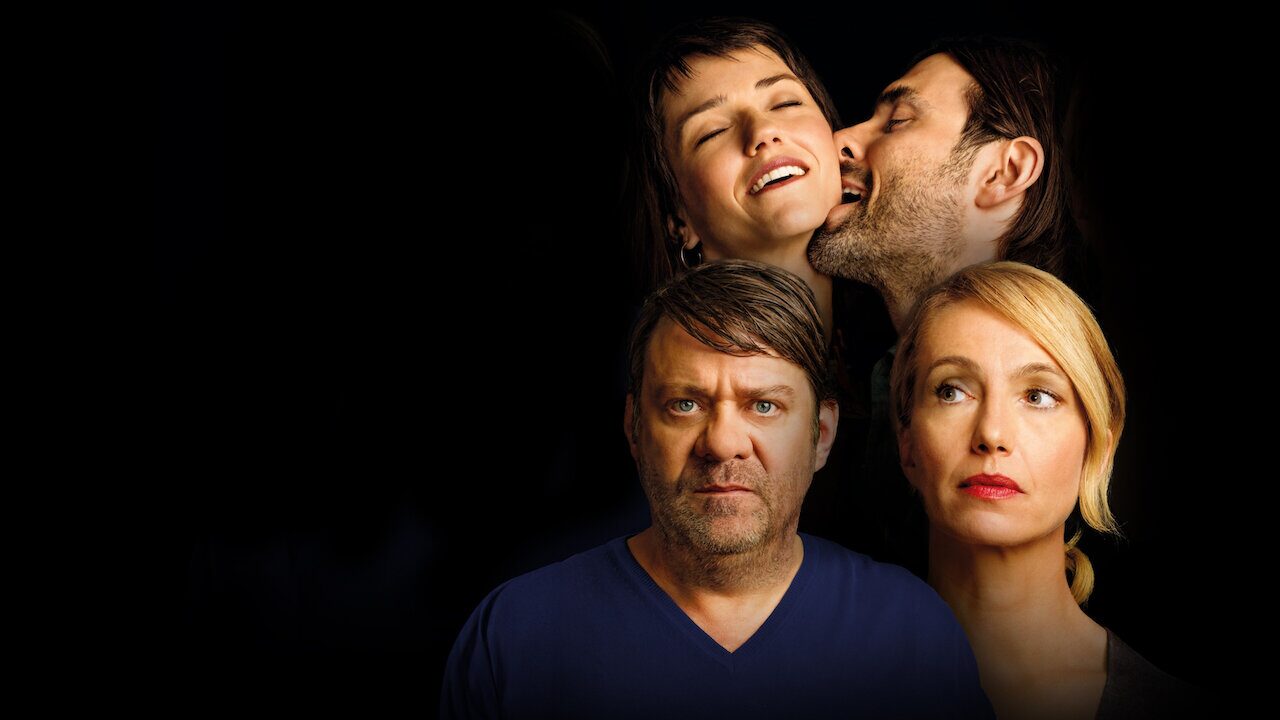
REVIEWS SAY, HAVEN’T WATCHED YET: Directed by Sabine Boss, starring Ursina Lardi, Sarah Spale, Max Simonischek, and Roeland Wiesnekker, shot in Swiss German. This one was a legitimate hit at home, pulling 72,000 admissions in German speaking Switzerland and landing as one of the top Swiss comedies of that year, and Netflix later picked up the rights for Germany, Austria, and Switzerland. But the reviews are much more mixed than the box office numbers suggest. One German language critic described it as staying “typically Swiss reserved,” saying it never really commits to the chaos the premise promises. Another review called it something like a mix between orgy fantasy and couples therapy, which honestly might be the best one sentence description of this entire franchise across every language.
One weird wrinkle. There was apparently a SEPARATE German remake, distinct from this Swiss one, reported as “in the works” back in 2022 by the same production company. I could not confirm whether that one ever actually got made or released. So if it exists, can you please point me to it in the comments? And we will add it to the list. If it doesn’t, this might be the one Olivia Wilde was thinking of when she mentioned a German version in her own interview about The Invite, since apparently even the director of the American version isn’t totally sure how many of these are out there. Which, honestly, tracks.
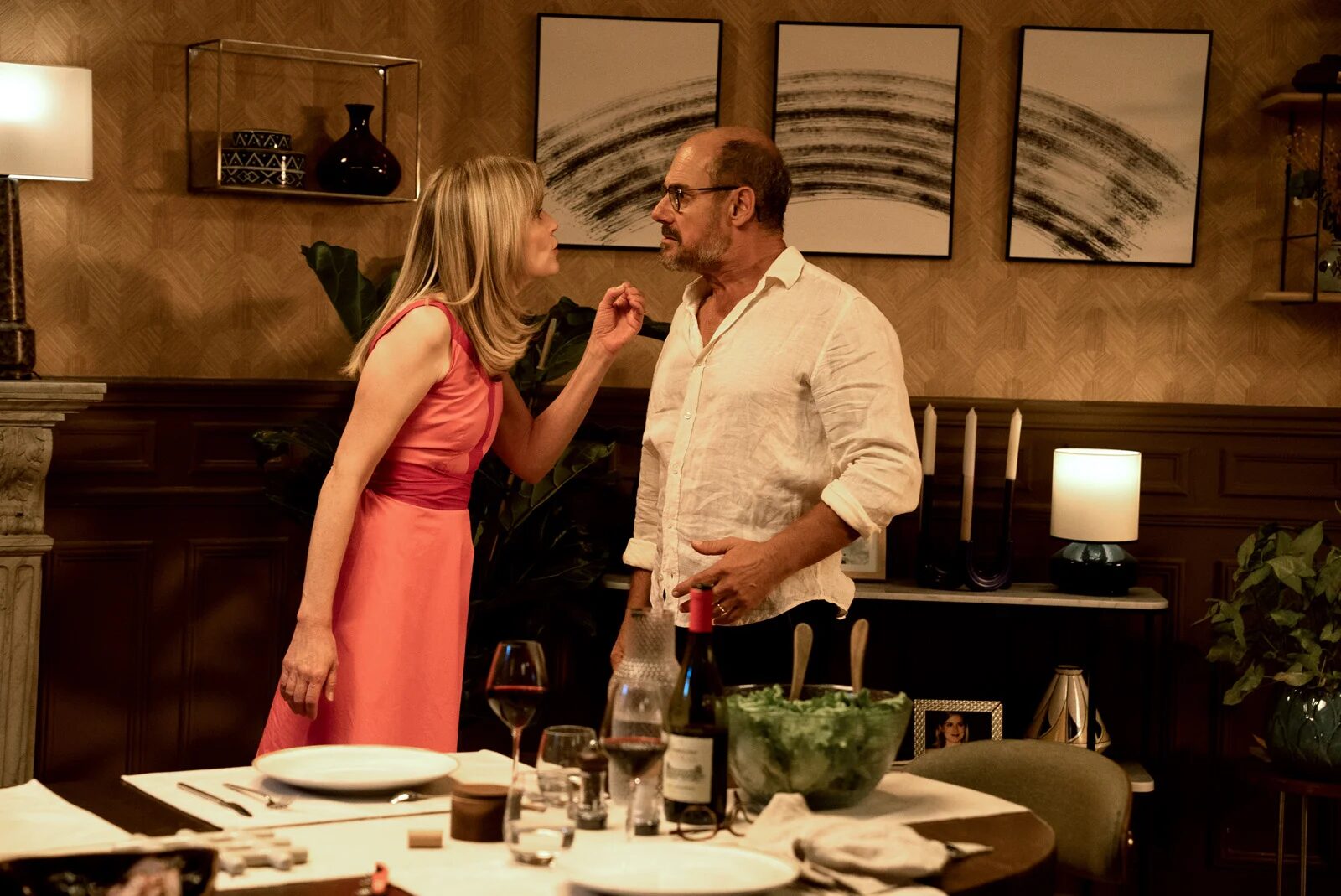
France: Et plus si affinités / Maybe More (2024)
REVIEWS SAY, HAVEN’T WATCHED YET: Directed by Olivier Ducray and Wilfried Méance, starring Isabelle Carré and Bernard Campan as the long married couple, Julia Faure and Pablo Pauly as the neighbors. This one actually won four awards at the Alpe d’Huez comedy film festival, including the audience prize and both acting prizes, and reviews describe it starting as a straight comedy before shifting into something more introspective, closer to actual couples therapy, in its back half. Here’s the part that surprised me though. Despite the festival love, it flopped commercially in French theaters, selling under 22,000 tickets total. For comparison, a different, apparently much worse comedy that opened the same week it left theaters outsold it three to one in a single opening weekend. So somewhere there’s a version of this story that critics loved and audiences just did not show up for, which is its own interesting data point about how this premise plays outside of festival crowds.

Czech Republic and Russia: exists, details thin
I know there’s a Czech version and a Russian version out there. I’ve seen a Czech title referenced as something close to V dobrém i zlém, and a Russian title that I have not been able to confirm with any confidence, so I’m not going to guess at it here rather than get it wrong. If anyone reading this actually knows more about either of these, genuinely, tell me. I’ll update this section the second I have something solid.
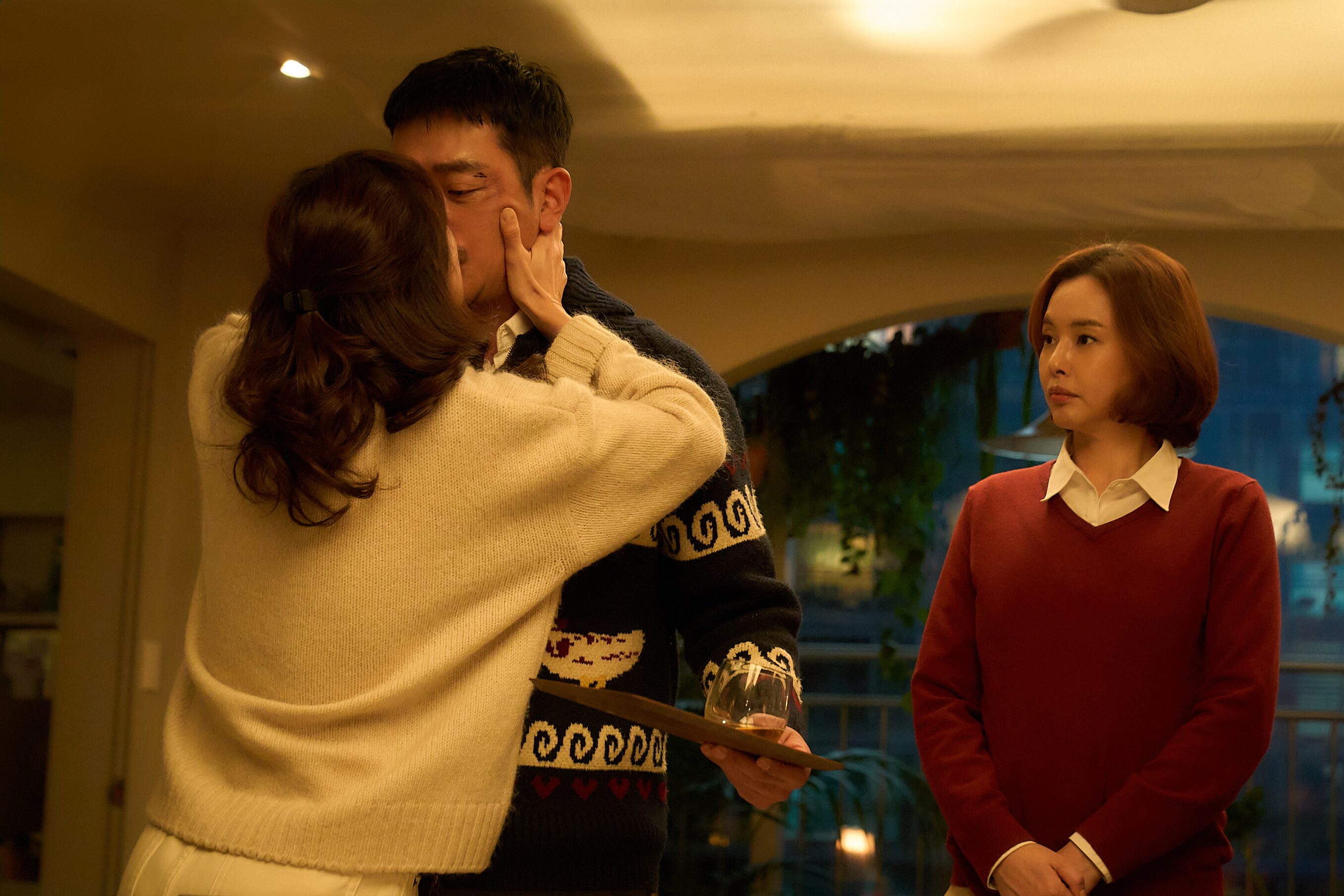
South Korea: 윗집 사람들 / Witjip Saramdeul (2025)
REVIEWS SAY, HAVEN’T WATCHED YET: This is the version that stands out the most on paper before I’ve even seen a frame of it, because star Ha Jung-woo didn’t just take a lead role, he wrote and directed it himself, his fourth film as a director. Co-starring Gong Hyo-jin, Kim Dong-wook, and Lee Ha-nee. It premiered at the Busan International Film Festival in September 2025, released in Korean theaters that December, and actually topped the Korean box office on its opening day. The South China Morning Post review called it a “cheeky sex comedy” and specifically praised Ha Jung-woo’s performance. He reportedly joked during the shoot that he hadn’t seen daylight in five weeks, which tells you something about how tightly this thing was shot on a closed set, very much in keeping with the one apartment, one night structure the whole franchise is built on.
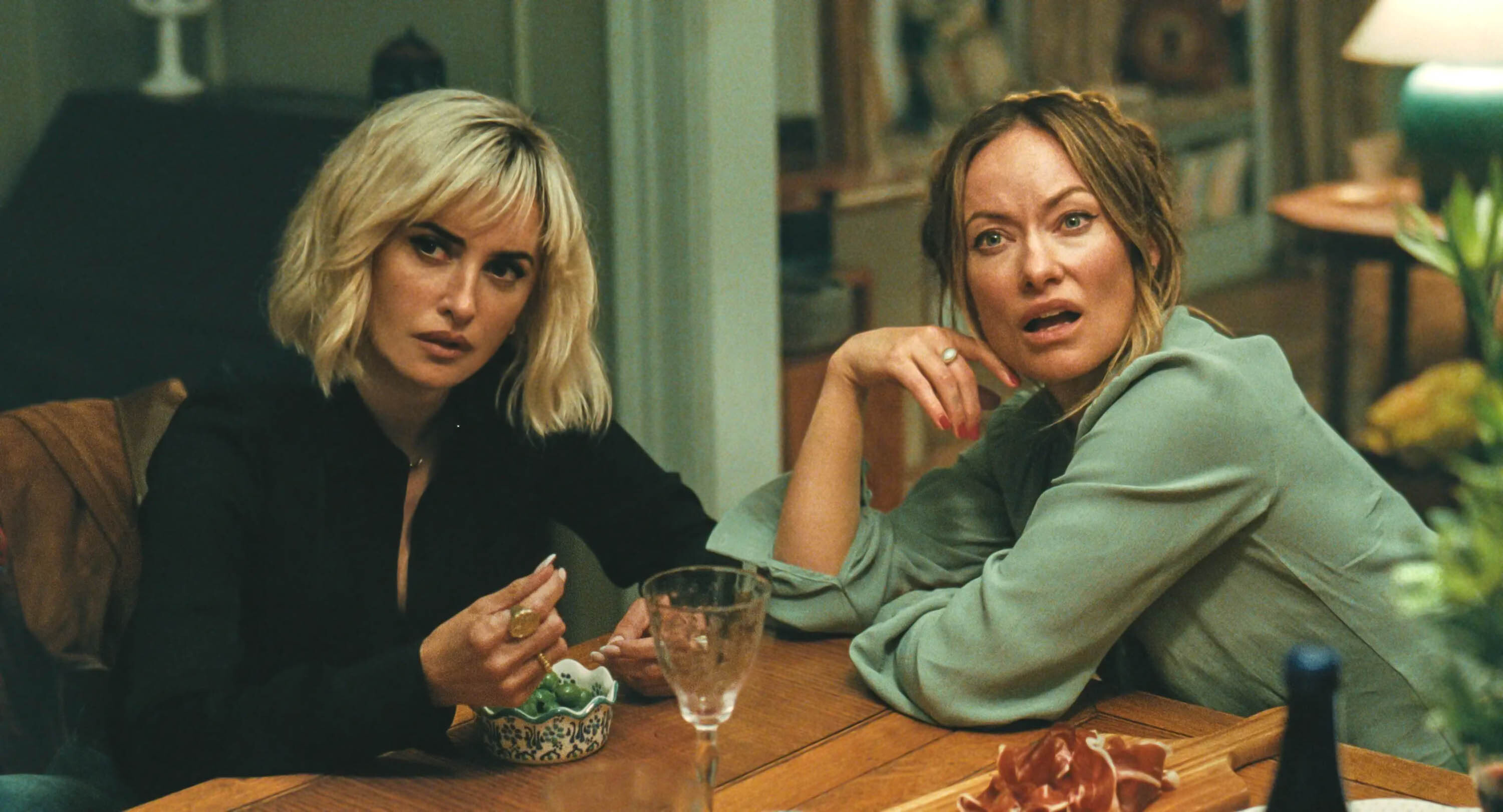
The American Version: The Invite (2026)
You already know this one if you read my other post, but for completeness. Directed by Olivia Wilde, who also stars, written by Rashida Jones and Will McCormack, starring Seth Rogen, Penélope Cruz, and Edward Norton. A24 acquired it for north of 10 million dollars out of Sundance. This is the one that kicked off this whole rabbit hole for me in the first place, so it feels right that it’s the one closing out the list, for now anyway, since who knows what other country is quietly shooting their own version of this dinner party as I’m typing this.
So what’s the actual plan here
I’m going to work through these in whatever order I can actually get my hands on them, starting with finishing Sentimental, then probably the French one, then who knows. Every time I finish one, I’ll come back and update its section here with what actually changed, what got kept, and how it compares to what Wilde did with it. If you’ve seen any of these already, especially the Korean one or either of the ones I couldn’t nail down details on, I want to hear about it. This post is going to keep growing.