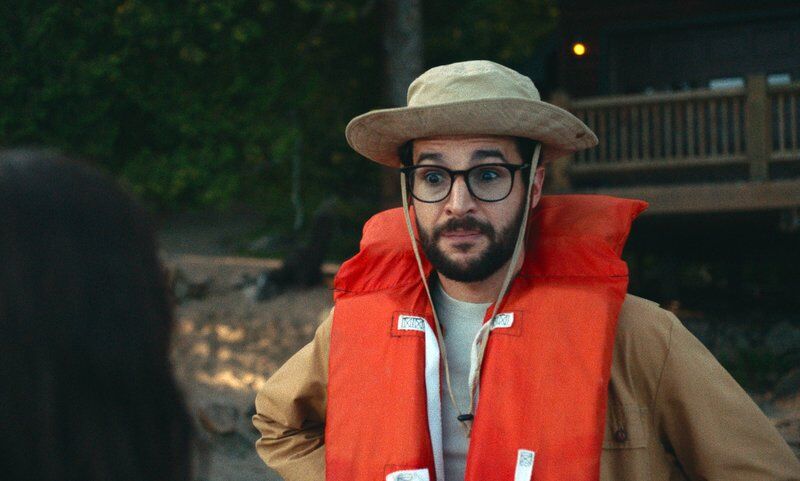
Steven Spielberg made a movie about the entire human race learning, definitively, that we are not alone in the universe. And somehow the thing I cannot stop thinking about is a throwaway line uttered by a nameless control room technician about pixels.
We need to talk about Disclosure Day. Spoilers from frame one. If you haven’t seen it and don’t want it ruined, go watch Midnight Special instead — seriously, go right now, I’ll wait — because I’m about to walk through why this movie broke me… I hated it with a passion of a thousand suns, and this movie walk through is not going to be subtle.
The Two Original Sins
Everything wrong with this movie traces back to two decisions Spielberg made, and both of them are about a man who has simply lost the plot on what year it is.
Sin one: he thinks the truth still works.
The entire mechanical premise of Disclosure Day is that if humanity is finally shown undeniable proof of extraterrestrial contact — real footage, real data, terabytes of it, pushed onto every news feed simultaneously — we will collectively sit up, pay attention, and believe it. We’ll grapple with it. We’ll be changed by it.
That is an extraordinarily 1980s idea of how information moves through a population. It’s a Close Encounters idea, repurposed for a world that no longer exists. We don’t do that anymore. We meme it. We screenshot it with a caption. We copy-pasta it into seventeen group chats with a skull emoji. Half the country decides it’s a deepfake by lunch, the other half decides it’s a deep state psyop, and somebody’s uncle has already built a YouTube channel about it by dinner. Spielberg seems to genuinely believe we still trust the news the way we trusted Walter Cronkite, and that belief is the load-bearing wall of his entire script. And you know what? Those load bearing trusses do not exist. The movie is building a mansion on a foundation we tore out decades ago.
Sin two: the CGI choices are baffling, and one in particular took me completely out of the theater.
Let’s start with the animals. Throughout the film there are these strange, off-model creatures — low-poly, uncanny, clearly Not Quite Right. I get the theory of the defense here: they’re stand-ins, visual foreshadowing for the aliens themselves, and they need to read as unreal so we register that something is wrong before the characters do. Fine. I’ll grant the concept.
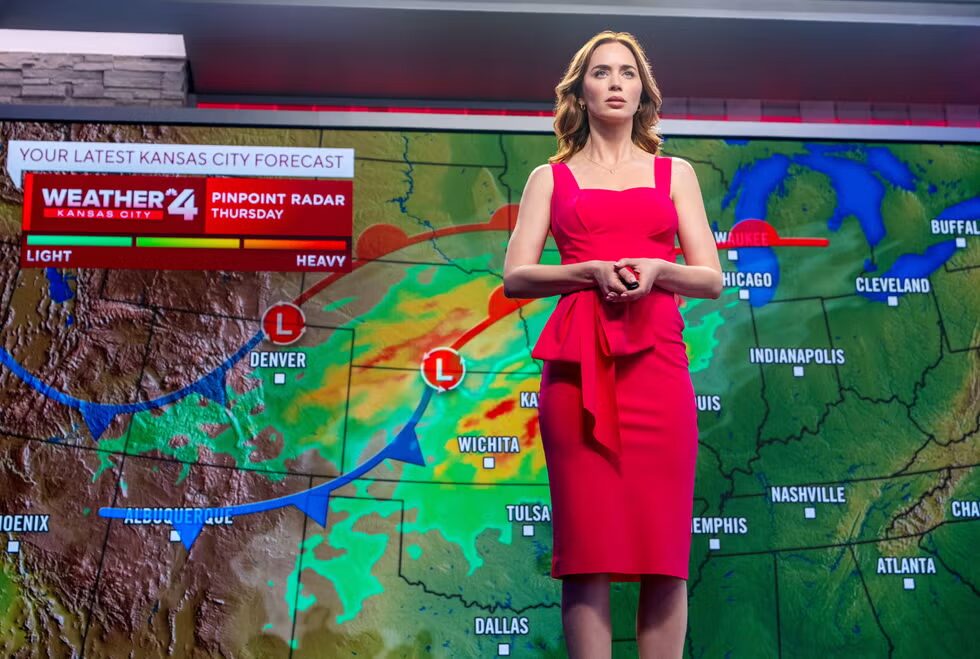
But then there’s the cardinal. The cardinal that swoops in and imbues Emily Blunt’s character with her powers, mid-movie, in what’s supposed to be a transcendent, awe-filled moment. And you know what?? It looks like a screensaver… you know… a flying toaster of a screensaver. It looks like a tech demo from 2009. I physically sat back in my seat. I felt the seat. I was, for a solid ten seconds, no longer watching a movie — I was watching a render. With the actual budgets and actual AI tools available right now, in 2026, there is no excuse for that bird to look like that. It should have been the easiest, most beautiful shot in the film, the moment that sells the entire mythology, and instead it’s the moment that breaks it. Hell, train a real bird for the love of all that is good and holy.
The Story Doesn’t Earn Its Own Stakes
We open in the middle of a chase. Cold open, no context, a man surrounded by FBI in a wrastle mania event housed out the White House… oh sorry… differerent travesty. And we’re just supposed to care. Why are we running? Why this guy? Why this woman? The movie assumes we’ll backfill the emotional investment later, once the plot mechanics catch up.
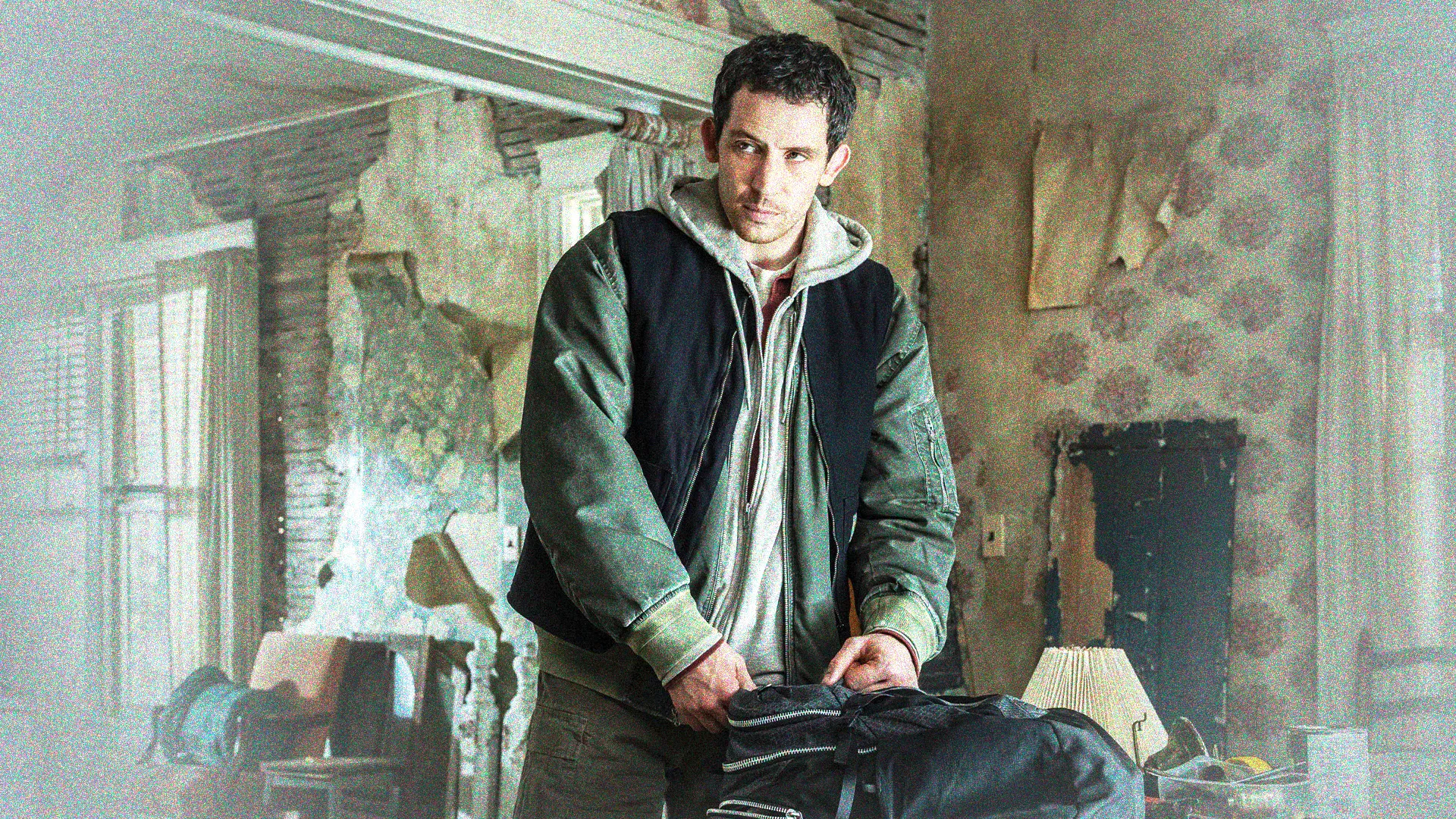
They never really do. Even once we understand what’s happening — O’Connor’s character is a cybersecurity whistleblower who’s stumbled onto proof of decades of extraterrestrial contact, Blunt is the Kansas City meteorologist who gets overtaken by some kind of alien-adjacent force live on air — the characters never become real enough to carry the weight the film wants to put on them. This is, structurally, Alien Snowden. A man decides the public has been lied to for too long and that disclosure, now, is a moral necessity regardless of consequence. That’s a genuinely great premise! Spielberg just never does the work of making us love these two people enough to feel the cost of what they’re risking. We’re told the stakes are enormous. We never feel them.
Compare that to Midnight Special, which is doing almost the exact same bones — a chase, a hunt, a child or person who may be something more than human, a government apparatus closing in, a found-family unit trying to outrun it — and which absolutely nails the emotional core in the first fifteen minutes. You know exactly why these people love each other and exactly what they stand to lose. Disclosure Day spends two hours and never gets there.

Ground Truth Pixels
And now, the moment. The one I can’t let go of.
So here’s the problem the script eventually has to solve: if the entire plan is “release all the alien evidence simultaneously across every news outlet so the world has to confront it,” there’s an obvious hole. It’s 2026. Why would anyone believe raw video evidence of anything? We’ve had years of AI generation tools good enough to fabricate a head of state declaring war. The second this footage hits the air, the obvious and immediate public response isn’t wonder — it’s “fake, AI slop, next.”
Spielberg knows this is a hole. So he plugs it. In the control room, as the various affiliates debate whether to patch the Kansas City feed into the national broadcast, someone looks at a monitor, runs some kind of scan, and says the line: “These are ground truth pixels.”
I’m still laughing a few hours later. THESE. ARE. GROUND. TRUTH. PIXELS. This is the 2026 edition of Unobtanium. So horribly awful. Are you kidding me right now?
And that’s it. That’s the whole solve. With those four words, the movie tells us the footage is real, verified, undeniable — and so, in the world of the film, everyone believes it. Disclosure happens. The wonder cascades across the planet exactly the way Spielberg needed it to.
Except “ground truth pixels” is not a thing. There is no scanner, no tool, no piece of forensic video software anywhere on Earth that can look at a clip and certify “this genuinely happened in front of a camera, an alien being was truly present, this is reality.” There are tools that can flag certain generation artifacts. There is no tool that proves a positive like that. The line is technobabble wearing the costume of a fact-check.
And the irony is almost too perfect, because this is the exact same wall every actual UFO video runs into in our actual world. Somebody posts shaky abduction footage, somebody else says “these are clearly real, I had the file analyzed,” and nothing has actually been proven, ever. Spielberg needed a magic phrase to make his entire third act work, and the magic phrase he chose is the same hollow incantation that’s been failing to convince anyone of anything in the actual UFO discourse for fifteen years. He wrote the joke and didn’t notice he was making it.
Where That Leaves Me
I did not like this movie. I want to be precise about that, because “didn’t like” undersells it — I sat there for two-plus hours feeling the specific, particular disappointment of watching someone whose work shaped how I think about wonder and awe on screen completely misread the room he’s filming for. The animal effects, the cardinal, the cold open with zero earned investment, the entire third act resting on a phrase with no real-world meaning — none of it would sting nearly as much if it weren’t Spielberg. A lesser director gets a shrug. This one gets genuine grief.
If you want the version of this story that actually works — the chase, the hunted family, the something-more-than-human at the center of it, the government closing in, and crucially, the earned emotional stakes — watch Midnight Special. It’s the same skeleton with an actual heart inside it.
Disclosure Day, unfortunately, is just pixels. Not even ground truth ones.