
I have been loving deepdiving into this world of liminal spaces, and Kane’s fantastically messy mind. The VHS grainy texture, the evil fluorescent lights, and these biological warfare creatures that are haunting the hallways and corners of our minds. But I have to say, keep the order of these Youtube videos held lightly in your minds. I have gone looking for the EXACT CANON order and cannot find them anywhere. Even Kane’s “official” order changes regularly by adding or removing videos. So, if when you come upon this thread, and they don’t exactly match … just roll with it. Or if you find a newly inserted video between number 14 and number 15? That’s just the kind of fluid world we are plumbing. It’ll all work out. Please remember to be mindful when watching any of the videos on YouTube on unsecured public networks. Consider a Tor browser for security and peace of mind.
Backrooms Youtube eps 1 – 10 explanation post
Backrooms Youtube eps 11 – 17 explanation post
Backrooms Youtube eps 18 – 22 explanation post
Backrooms Movie explanation walkthrough
Backrooms Movie Theories Explanation
Backrooms Definitive Timeline
Where Were We Before We Stopped?
Okay. Where we left off: Marvin barely escaped the Backrooms with his life. He’s coughing at the end of Pitfalls in a way that feels like a footnote you don’t want to linger on. The Lifeform — that elongated, wire-limbed nightmare that has apparently been in there this whole time — is documented. It mimics voices. It lures.
And Async has seen the footage.
This is where the series shifts gears. The first ten episodes built the world and established the horror. Episodes 11 through 18 do something different. They turn the lens on the people responsible. And what they reveal is something almost more disturbing than the creature: a group of scientists and administrators who know exactly what’s in there, and keep going anyway.
Let’s keep going, I’m loving this. (And yes, I’m writing these up in real time, as I’m watching them… can’t wait to see where this is going!)

Episode 11: Report
Report is an interestingly pivotal episode, and it’s notable for one specific reason: it’s the first time in the entire series that we actually see Async researchers as human beings with faces.
Up until now, every Async-side piece of content has been documentation, drone footage, clinical audio narrations, and institutional text. The researchers were abstract. Bureaucratic. The machinery of the thing, not the people inside it.
Here, the suits come through the Threshold outpost door and a supervisor greets them with an expression that tells you everything. He’s not relieved they’re safe. He’s alarmed at what they’re bringing back with them. We watch them watching the footage from the previous episodes. We are there inside the Async facility, and we see two researchers review Marvin’s video from Pitfalls and they are visibly disturbed. In the background, a man in a white lab coat — later identified as Kirk Maxwell — walks to a telephone and makes a call.
To whom? We never hear. But the implicit message is clear: somebody above Kirk Maxwell needs to know about this. And the section of the Backrooms where Marvin encountered the Lifeform gets boarded up. Report is the moment Async stops being a nameless institution and becomes a group of people making choices — people who now know definitively that there is something hostile in the Backrooms and are deciding what to do about that information. The answer, it turns out, will not be “stop.”
Episode 12: 9780415263573 (The Yellow Wall-Paper)
This one requires a small note for context: it’s an unlisted episode, hidden in the description of Report. You’d miss it entirely if you weren’t looking. Which is very much the point.
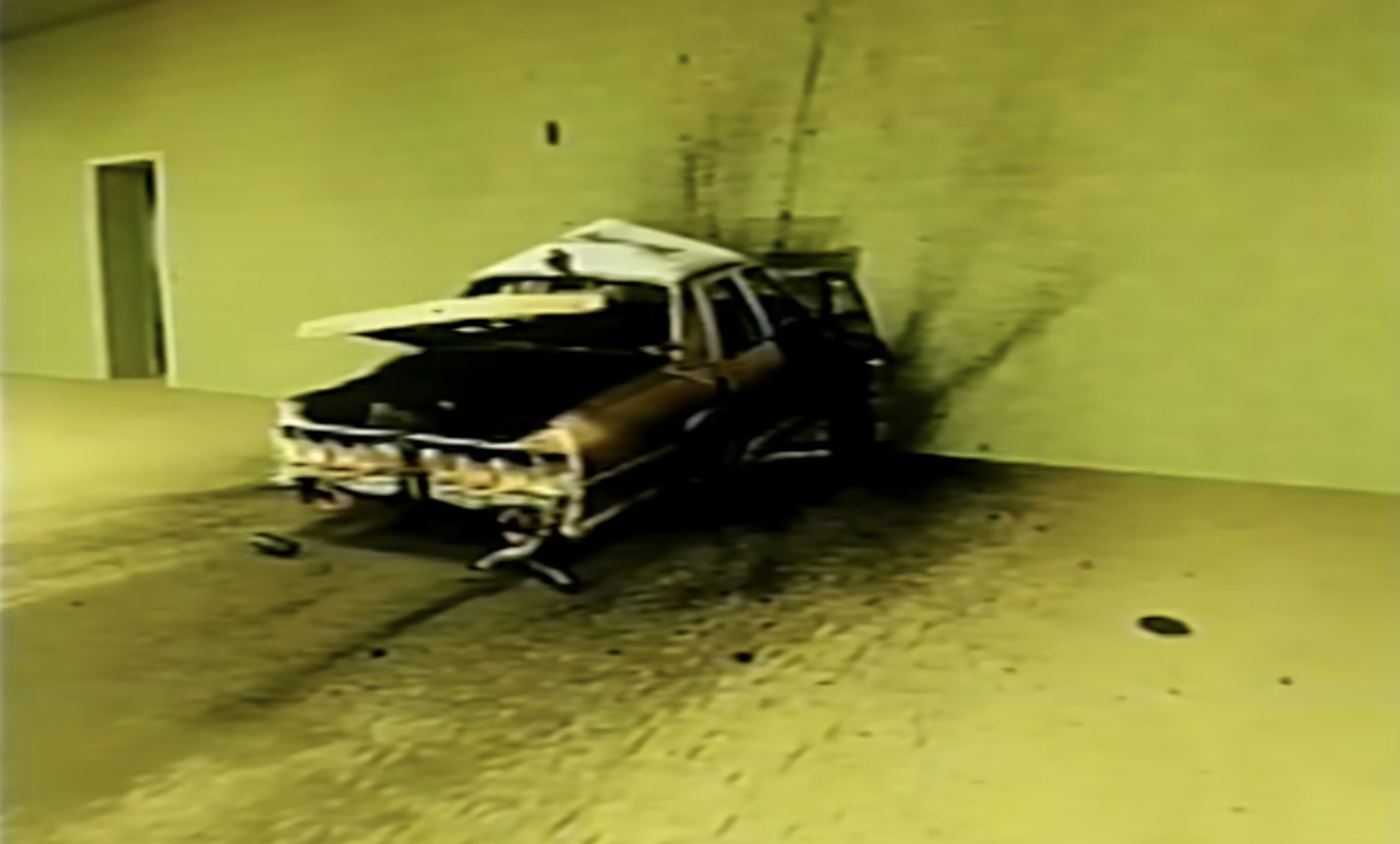
It’s brief. A car — driving on a highway at night — noclips through the road and falls into the Backrooms. No explanation. No context. Nobody to witness it except the camera.
If you are curious enough – you’ll realize that the title of the episode: 9780415263573 is an ISBN number. An ISBN that points to a a collection of Charlotte Perkins Gilman’s short fiction, anchored by her most famous story, The Yellow Wall-Paper – the 1892 psychological horror story about a woman slowly driven to madness by her confinement in a yellow room she cannot escape.
I mean, COME ON. Kane Parsons is eighteen years old at the time of crafting this video and he is hiding literary references in unlisted video titles. The audacity of it. It’s freaking brilliant. And I’m so here for it. The parallel is uncomfortable: The Yellow Wall-Paper is about a woman trapped in a space that looks innocuous and turns out to be consuming. Sound familiar?
Episode 13: Presentation
And here it is. The episode that reframes everything.
Presentation opens with an FBI warning — this tape is for restricted use only — and then cuts to a conference room, a projector screen, the Async logo, and a title card: “A-Space” Prospective Development.
What follows is a sales pitch. An actual, polished (for the 1990’s anyway), corporate sales pitch for turning the Backrooms into a solution to the world’s overcrowding and pollution crisis. The narrator explains that with expanding Threshold technology, Async can move freight and eventually people into the Complex. Warehouses. Residential space. A trillion square miles of habitable real estate that doesn’t consume a single acre of actual earth. The animation shows freight trucks rolling through the Threshold. Then housing concepts. A diorama. A vision of the future.
And woven into the presentation, intercut with the corporate footage, is archival film of James D. Watkins — the actual, real United States Secretary of Energy from 1989 to 1993 — being shown the Threshold in person. Shaking hands. Looking at the diorama. This is not a fringe operation. This is government-adjacent infrastructure. This is a plan.
Then, as contract negotiations are apparently underway, an alarm sounds.
A sensor at the Threshold outpost has been triggered. One of the scientists at the table excuses himself. And at the end of the episode, we see who tripped the alarm. Peter Tench. The researcher who got separated from Marvin’s team on February 29, 1990. The one Async declared dead to cover up his disappearance. The one whose family was told he died in a car accident near a vineyard.
For Peter Tench, it has been a few hours since he got separated from his team. He’s confused and frightened and looking for his colleagues.
For Async, it has been two months. And they have told his family he is dead.
Presentation is the episode where you realize that Async is not just reckless. They are willing to do whatever it takes to protect the project. Peter Tench is evidence they need to manage. The Backrooms is product they need to sell. And neither of those facts is going to stop them.
Episode 14: _Recording014
This episode is almost entirely the recording of a one sided telephone call. The caller is calling from the Async Research Institute and they are attempting to get ahold of their supervisor, Ivan Beck. The caller then identifies themselves as Clyde. Apparently, while the Department of Energy was on site reviewing their contracts, the motion detection machines in a certain section were set off.
It turns out that a fully suited employee was found within the Backrooms on a day off. Just turned up out of nowhere. The employee was completely disoriented and unclear on where he was or what was going on. His name, was Peter Tench. The voiceless person on the other end of the phone begins inquiring about who knows, who is aware that Tench has been found. And with that the recording ends.
Episode 15: Found Footage #2
This video jarringly pulls us back away from Async, and we instead head back to the civilian horror. And the contrast is brutal.
An unnamed woman has discovered what she calls a Null Zone in her garage floor — a small patch of ground that objects fall through. She’s been experimenting with it, on camera, in a very methodical and curious way. She extends a tape measure through the floor to test the depth. At around 28 inches, she notes it vibrating. And with that the anomaly expands. She, the camera, the tripod, and various items all fall through into the Backrooms.
This is one of my favorite of the videos so far… returning back to the feel and vibe of episode 1 and the initial chaos and excitement of the movie’s original explorations. After exploring a while, and eventually discovering the car that fell through the freeway in episode #12 she discovers what looks to be a nest of some kind – and then the Lifeform inside that nest opens its eyes and comes for her.
Here’s the detail that stuck with me: as the woman flees and calls out for help, the Lifeform begins echoing her. Her cries. Her voice. Coming back at her from the dark ahead of her. Luring. Just like it lured Marvin.
She finds a dead end. The walls begin spidering with electric light and the camera loses signal.
There’s an implied lore revelation buried in this episode that the series never spells out explicitly: the Lifeform appears to be formed, at least in part, from human remains. The crashed car. The blood trail. The fact that the creature seems to learn and mimic the behavior and sounds of the specific person it’s hunting. The Backrooms is not just a place where people disappear. It is a place that uses them.
Episode #16: home_27647
This is a super low key video. Super simple. It seems to just be family vacation video. But there is one haunting detail at the very end. A family is standing around a piano, smiling happily, and there, at the end of the video… on the wall is the same painting from the end of Reunion. You know, the painting deep in the nest?
Are you confused? This is what these videos are confirming for us. As I have hinted at, and mentioned already… we are getting more and more evidence of the fact that The Lifeforms are actually made from reconstituted humans. The bio-organism of humans strung out into stringy malevolence and menacing horror. Right there in that room, where the piano was… became the nest of this horror show.
Episode 17: Reunion
It’s May 25, 1990. Async has reopened the boarded section of the Backrooms – Room 14D, you know… the Pitfall Room, and they have sent in two teams. Team A is constructing a walkway across the pitfalls. Team B, led by Marvin and including Mark Blume, is conducting a routine layout analysis of an adjacent area, Room 14C.
The rover enters the dark section of Room 14C. It finds someone.
Marvin recognizes him. The man in the black jumpsuit, agitated and wild-eyed, is Peter Tench.
From Peter’s perspective, only a few hours have passed since he got separated from Marvin on the Informational Video expedition in February. He’s been wandering the Backrooms for what feels like a workday. He’s frightened and disoriented, but he’s Peter. He knows Marvin. He’s desperate for help.
And then Async’s behavior starts to hit him hard.
The cover story. The fake car accident. The family that has been grieving him for two months. He was declared dead and it was convenient because it closed the question cleanly. The Backrooms needed to stay a secret and Peter Tench’s disappearance was a liability. So Async made him a corpse on paper and moved on.
When Peter finally realizes what has been done to him, his entire mental state cracks. He shoots Mark Blume with Blume’s own weapon. And he runs. Reunion is the episode where Async stops being merely reckless and becomes genuinely villainous. Not cartoon villain. Something worse: the kind of institutional villain that is so focused on the project, so convinced of the importance of what they’re doing, that the human cost just keeps getting quietly absorbed into the spreadsheet.
Could it be a metaphor about how corporate life, the fluorescent lighting, the office/cube space, are ripping our souls out of chests and there is nothing we can do about it? I have to wait until the end to start tossing theories around. But, the only reason I am not vibing with this particular theory is because its so stinking obvious.
Episode 18: Damage Control
The title is pretty literal here. The opening of the segment is security footage of Peter wielding the shotgun and navigating his way back through the portal, and past frightened employees of Async.
But the rest of Damage Control is structured as an all-hands meeting wherein an Async representative addresses the entire employee base and lays out, for the first time on record, the full Peter Tench timeline from beginning to end. (Really nice for those of you who haven’t been groking the details in full.)
The voice addressing the employees clearly details out the February expedition. Peter’s sudden disappearance and obvious time-displacement. He then explains Async’s decision to fake Peter’s death and conduct a funeral with his family. But then, Peter’s reappearance at the Threshold in May throws everything into chaos. Then the Async upper level executive explains that they kept Peter for weeks in Async’s secure facility while they figured out what to do with a legally dead man who was very much alive. He also discusses Peter’s obvious mental deterioration. Then we learn of Peter’s escape from the secured area, and his re-entry into the Backrooms. The shooting of Mark Blume. His eventual flight from the facility.
And then his death: found outside, on the hillside near the Async Research Building. He tripped. Hit his head on a rock. Died alone in the dark, not far from the door, after surviving the Backrooms and everything it contained.
There’s a final shot in the episode that the fandom has been arguing about ever since — a figure running into a city, implying that maybe Peter made it. Maybe he got out. The official Async account says he’s dead. But there’s a needle, a backpack, freeze-frame footage that doesn’t quite line up with the clean ending they’re presenting.
Did Async clean this up too? Did Peter actually survive?
Damage Control is the series at its most S.O.A.P. — scandal, obfuscation, accountability theater. The meeting isn’t about justice or transparency. It’s about making sure everyone in the building knows the official version before they hear anything else. Async has lost a researcher, shot another, failed to contain a witness, and watched their entire A-Space commercial dream develop a body count. And their response is a PowerPoint.
Episode 19: I Remember (a.k.a. Overflow)
This one is an outlier in the series, and intentionally so.
Where every other episode is found footage, institutional documentation, or surveillance footage, I Remember is atmospheric and almost poetic — a man’s voice reciting a fragmented, melancholy monologue over distorted imagery. It sits slightly outside the documentary logic of the rest of the series. It doesn’t explain itself.
The working interpretation is that it’s connected to the woman from Found Footage #2 — that we’re hearing something related to her fate, her perspective, the space between what she recorded and what happened after the camera lost signal. It may also be the earliest seeding of the idea that the Backrooms doesn’t just trap people. It remembers them in some form after.
It’s the series at its most ambiguous and, honestly, its most affecting. Short. Strange. Hard to shake.
The Shape of the Arc
So what just happened across these past few episodes? Async begin from a stance of curiosity and scientific investigation. That quickly flipped to ambition in over drive and naturally catapulted them into the face of catastrophe. They found something genuinely unprecedented, an infinite alternate dimension that could theoretically solve humanity’s resource and space problems, and they handled it the way institutions almost always handle things that are both enormously valuable and enormously dangerous: they put the world at risk to capitalize on profit. It’s a tale as old as time.
Peter Tench is the human cost of that calculation. A man who wandered into a room at the wrong moment, got chewed up by the physics of a place no one fully understands, and came out the other side to find that the organization responsible for his fate had already filed his paperwork. His story is the part of the Backrooms mythology that doesn’t need a creature to be horrifying. It just needs reams of corporate paperwork, faxes, and lawyers providing the most profit imaginable.
The Backrooms killed some people through teeth and wire limbs. Async killed Peter Tench with bureaucracy.