
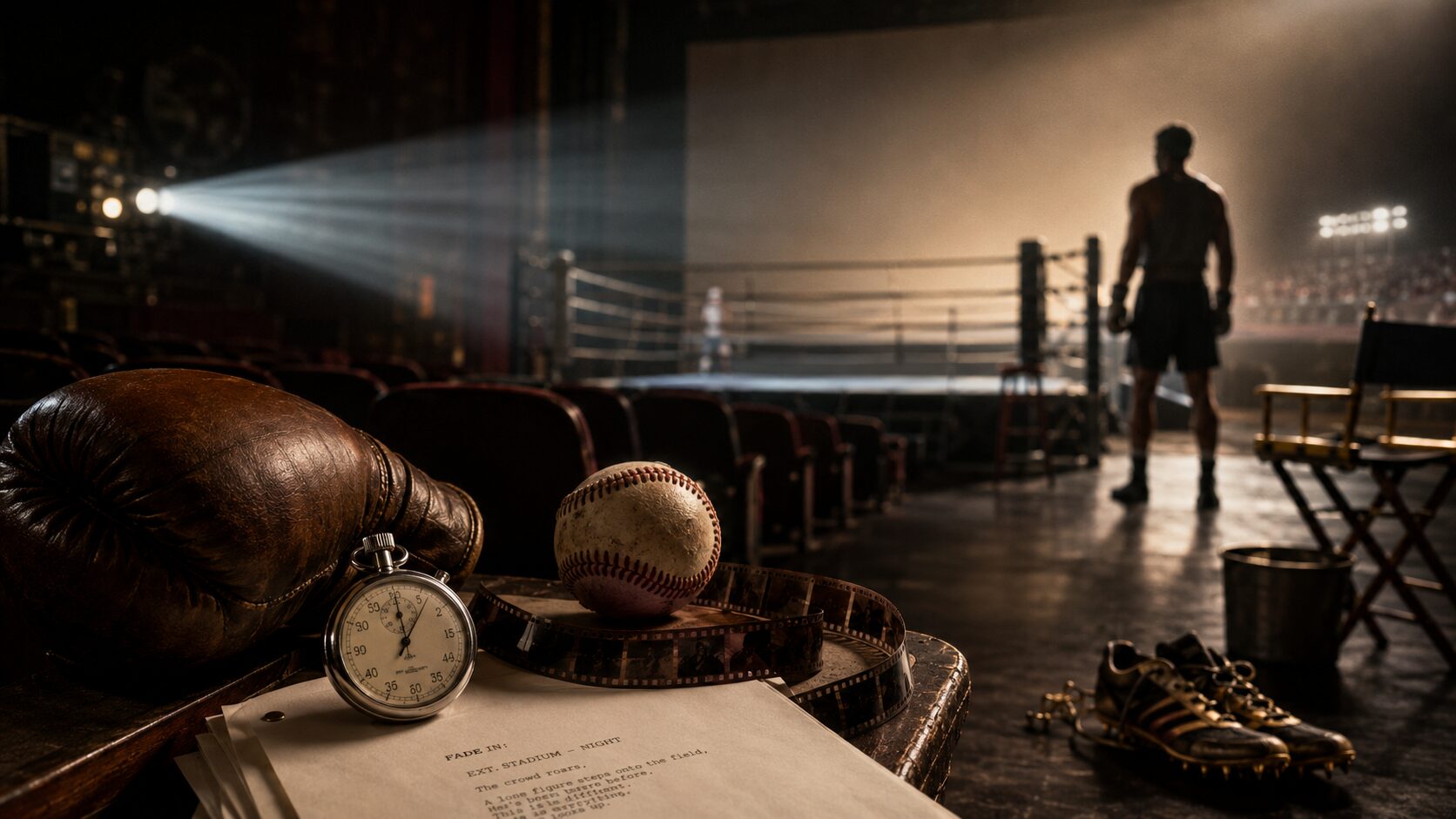
A good sports film reveals such aspects of human nature that we didn’t know existed, be it endurance, strength, or just the will to win at any cost. Rocky won an Oscar for Best Picture because every bell of its 15-round fight with Apollo Creed took Philadelphia’s club boxer closer to damage or dignity, giving the audience a clear drama meter. Cinema likes sport because the ending is measurable, but the cost is not. That split gives editors something rare: suspense with a visible finish line.
The Scoreboard Gives the Script a Spine
Most screenplays spend an hour building stakes; sports bring them already installed. Moneyball used the 2002 Oakland Athletics and Billy Beane to frame a front-office drama where the antagonist was not a villain but a payroll gap and an old scouting language. The real club’s 20-game winning streak supplied the release valve, even if the film simplified parts of the roster story and reduced the role of Oakland’s pitching staff. A baseball trade can carry more dread than a car chase when the season lasts 162 games, and one undervalued first baseman can change a front office’s belief system.
Losing Is Often the Better Close-Up
The tidy comeback isn’t usually what sticks. In Raging Bull, Jake LaMotta ends up worn down by fame, appetite, and his own habits, not lifted by a championship. The Wrestler tracks Randy “The Ram” Robinson as his body stops cooperating the way it once did on those old arena circuits, where a blade, a folding chair, and a shaky heart are all part of the show. In the end, the body keeps its own record.
Odds, Nerves, and the Scene Before the Bell
The best fight scenes feel less like choreography at first and more like a betting line taking shape. The Fighter builds tension around Micky Ward’s left hook to the body, the grip of family in Lowell, and the rough math of whether a new camp can actually change his path. For viewers who follow sports betting (French: pari sport) during fight weeks, the connection isn’t about guessing outcomes but about risk: odds shift with injuries, weight cuts, late bets, and fighting styles, and a bankroll can vanish when emotion gets ahead of discipline. Both film and betting have a way of punishing anyone who mistakes momentum for certainty.
Real Events Keep Resisting Clean Editing
The strongest sports films usually know where the record fights back. Nyad, released in 2023, turned Diana Nyad’s Cuba-to-Florida swim into a story of age, endurance, and friendship, but AP reported that the swim has not been officially ratified and that some marathon swimmers have cast doubts on it. Rush used the 1976 Formula One season to stage the contrast between James Hunt and Niki Lauda, yet Lauda’s Nürburgring crash keeps the film anchored in risk rather than rivalry alone. Facts complicate the frame, and that complication gives the film weight when a viewer already knows the headline result.
The Second Screen Has Entered the Theater
Sports audiences now watch contests with phones in hand, checking injuries, lines, clips, and official results before the broadcast has settled on a replay angle. That habit changes how films about sport are received, because viewers already understand stoppages, reviews, odds movement, and postgame data from UFC cards, Champions League nights, and Formula One weekends. For adults following fixtures and live markets, downloading MelBet can sit beside official results and odds screens, but the practical checks are still licensing, KYC, stake limits, and market-settlement rules. A clean app flow does not remove variance, just as a clean montage does not remove pain from a training camp.
The Camera Finds What the Result Misses
The final score is just the bare bones. Hoop Dreams tracks Arthur Agee and William Gates through Chicago basketball, but it’s never just about a single game, a scholarship, or a missed shot. Steve James’ 1994 documentary spends time with their families, their daily commutes, the pressure at school, and the injuries, showing how talent can still be boxed in by money, where you live, and plain timing. It gets something a lot of scripted sports movies miss: the dream can be real, the effort can be real, and the system can still close things off. The scoreboard just flashes and moves on.