I’m probably in the minority on this one… but I literally don’t care. I absolutely loved this movie by Robbie Banfitch. (Anyone happen to have his email address? I’d gnaw my own arm off to interview this guy.) So yeah, let’s talk about this guy. Because understanding who made this film is essential to understanding why the film works the way it works.
Banfitch burst onto the indie horror scene in 2022 with The Outwaters, a psychedelic found footage nightmare that divided audiences cleanly between people who thought it was one of the most genuinely disturbing things they had ever watched and people who thought it was an endurance test dressed as a horror film. I was firmly in the first camp. What Banfitch did in The Outwaters was use the found footage format not as a genre exercise but as a genuine formal commitment, and the result was something that felt like it had been pulled from a frequency nobody else was broadcasting on.
Tinsman Road is his sophomore feature and it is a completely different animal. Where The Outwaters was sensory overload and abstract dread, Tinsman Road is slow, intimate, and rooted in something very recognizable and very human: a family that cannot figure out how to grieve together because they have not yet finished grieving alone.
Banfitch wrote Tinsman Road, Banfitch directed it… oh, by the way, he also shot it, oh yeah, that’s right, he also edited it, and produced it, and did I mention that he stars in it? He also cast his actual mother in the role of the grieving mother. (I will get back to that casting decision because it deserves its own dissection.) There are not enough movies in the world like this. There just aren’t. We need more film makers that are this brave and committed to their craft.

What is Tinsman Road actually about?
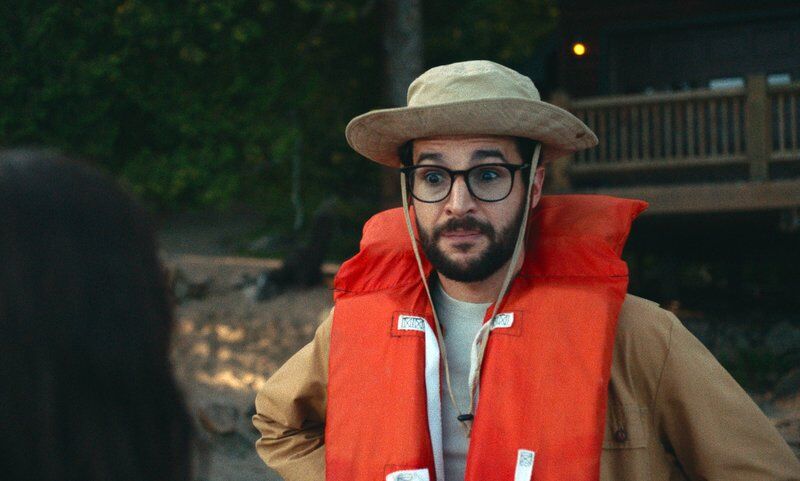
Robbie Lyle (played by Banfitch, doing that Operation Avalanche trick of essentially playing a version of himself) returns to his family home in the backwoods of New Jersey after being away in Los Angeles for three years pursuing a filmmaking career. He has been away long enough to miss two things: the death of his father and the disappearance of his sister Noelle somewhere in the woods off Tinsman Road.
Here is the first thing the film does that I found genuinely affecting: Robbie did not know his sister was missing. His mother Leslie never told him. He thought he had done something to upset Noelle. He spent three years in Los Angeles assuming his sister was just not talking to him. That specific detail of a family that communicates so poorly that a daughter can disappear without the son being told is doing a lot of quiet emotional work that pays off over and over again throughout the film.
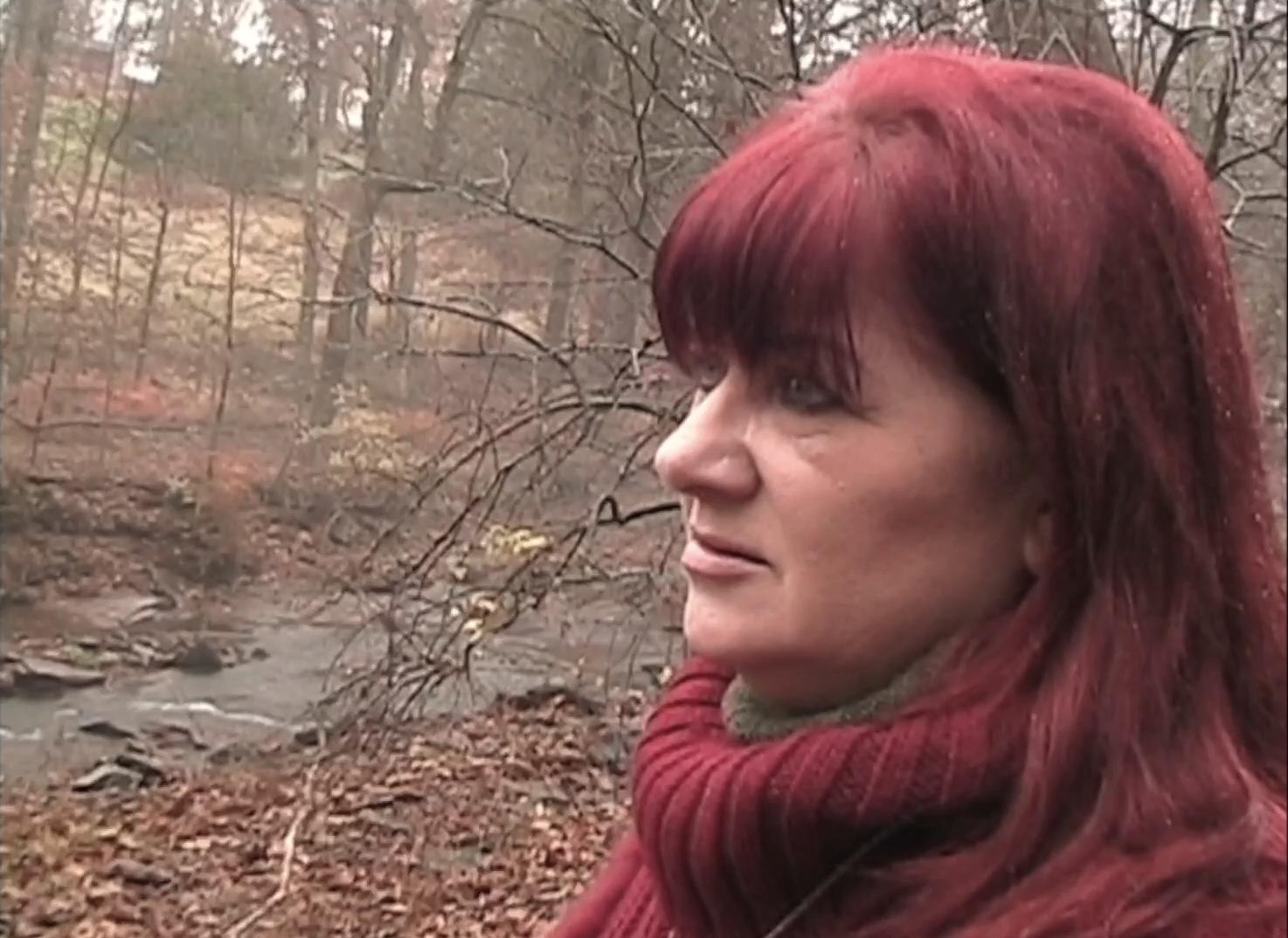
Leslie (played by Leslie Ann Banfitch, who is, as I mentioned already, Robbie Banfitch’s actual mother. And I will keep mentioning it… because how?) believes that Noelle is still in the house. She believes this not in the vague grieving-parent way that everyone believes a dead child is somehow still present, but in the specific way that she can point to evidence: the lights in the dining room flicker whenever someone says Noelle’s name. They also flicker when Leslie cooks the things Noelle loved. There is a music box that belonged to Noelle that plays in the middle of the night for no reason anyone can explain. Leslie has organized her grief around these phenomena the way other people organize their grief around religion, which is not so different when you think about it.
Robbie does not believe any of this. He is a filmmaker. He is a skeptic. He is the classic found footage protagonist who points the camera at what his mother believes because he thinks it might make a good documentary, not because he thinks she might be right.
The documentary structure is the film
What Banfitch is doing with the found footage format here is more interesting than the format usually allows. Robbie is not just a person who happens to be filming everything. He is explicitly framing himself as a filmmaker making a documentary, which means the film is about the act of bearing witness as much as it is about what is being witnessed. When Robbie films his mother talking about Noelle, we are watching a son try to understand his mother through a camera lens, which is both an act of connection and an act of distance simultaneously. That tension between the camera as a bridge and the camera as a barrier runs through the whole film and it gives the otherwise slow middle section a layer of meaning that rewards paying attention.
Banfitch shot the entire film on a 2003 camcorder in 4:3 aspect ratio, and I cannot overstate how much this single technical decision shapes the experience of watching it. The format degrades the image in exactly the right ways. It makes the New Jersey backwoods feel simultaneously banal and wrong. It makes the faces of the people Robbie interviews feel like faces from a home video you found in a box you do not remember owning. The verite quality is so complete that there were multiple moments where I forgot this was a scripted film and then remembered and found that the remembering was itself a slightly unnerving experience.
The investigation and what Robbie finds
Robbie starts asking questions about Noelle’s disappearance with the methodical patience of someone who has three years of guilt to process through action. He goes out to Tinsman Road itself, the stretch of backwoods where she was last seen. He meets two local women, Heather and Nancy, who know something happened out there but are not sure exactly what. He talks to Officer Middleton, who was part of the original search and who carries the particular weight of a law enforcement officer who could not close a case.
And then he meets Keith Bixby.
Keith owns part of the woods adjacent to Tinsman Road. He shares his name with the actor playing him, which is one of several moments in the film where Banfitch deliberately collapses the distance between the fiction and whatever reality it is operating adjacent to. Keith is not initially presented as sinister. He is presented as a local guy who knows the woods, maybe a little odd, the kind of man you find in small New Jersey towns who has been there so long he has become part of the landscape.
Noelle’s tapes are the other significant discovery. Robbie finds recordings she made of herself singing and playing piano. Salem Belladonna, who plays Noelle and who also worked on the soundtrack for The Outwaters, has a voice that is doing something very specific in this film: it is making Noelle real to the audience at the exact rate that Robbie is discovering her. By the time the film reaches its final act you want to know what happened to her in the same way you want to know what happened to a real person, which is the hardest thing any found footage film has to accomplish and the thing most of them fail at.
The sound design is the real horror
I want to spend some time on this because it is the thing that separates Tinsman Road from ninety percent of found footage horror and it deserves more attention than most reviews have given it.
Most found footage horror uses sound as punctuation. The jump scare bang. The sudden silence before the thing appears. The distorted voice on the recording. These are genre conventions that have become so familiar they have almost no effect.
Banfitch uses sound completely differently. The horror in Tinsman Road is ambient. It is the sounds that should not be there but are there: footsteps in an empty house, a music box activating on its own, something moving in the dark at the edges of the frame that the camera cannot quite catch. The soundscape in this film works the way sound works in actual haunted-feeling spaces, which is to say it is not dramatic or punctuated but constant and slightly wrong, like a frequency that is just a few hertz off from where it should be. If you watch this film with headphones in a dark room it is significantly more unsettling than you might expect from something that is otherwise so quiet and conversational.
The ending, and what Keith Bixby wanted
The final act arrives with the force of something that has been building for the entire film even when it did not feel like it was building.
Robbie eventually follows the evidence to Keith Bixby’s property, and what happens there is both exactly what you suspected and more disturbing than you were prepared for. Keith killed Noelle. But why? He killed her because he wanted her to sing for him. The specific horror of that motivation sits in the same register as the specific horror of the Zodiac Killer’s correspondence or the BTK Killer’s need to be recognized: it is the horror of a violence that comes from a void inside a person that was shaped like something beautiful and could only be filled by destroying the thing it wanted.
The confrontation is shot in the chaos of genuine found footage crisis, which is to say it is disorienting and brutal and does not let you get comfortable. Robbie discovered the truth, hides in a tent, and Keith hunts Robbie down. The confrontation then erupts into violence and chaos as Robbie shoots Keith multiple times. But in the confrontation we hear that Keith commits suicide. Robbie has been gut shot. He is on the ground with a jawbone in his hand, his sister’s jawbone, and he is recording himself saying “it was Keith Bixby it was Keith Bixby” over and over because he is a filmmaker and a filmmaker documents things and maybe also because he is not sure he is going to survive and he needs someone to know. Keith in his final moments is saying he just wanted her to sing to him. Then the police arrive with sirens blaring.
Then the film jumps to January.
Robbie is watching old home videos of his family. His sister is on the tape, alive and young, singing and playing piano the way she always did. And in the yard of the family home there is a handmade cross. He has buried what he found of Noelle there, her jawbone, possibly other remains, and given her a grave in the yard of the home where her mother has been feeling her presence in the flickering lights and the music box for years.
The ending is not ambiguous. But it is heartbreaking in the specific way that ambiguous endings rarely are, because the answer is worse than the mystery was. Keith Bixby wanted her to sing to him. That is why Noelle is a jawbone in a backyard in New Jersey and not a person who grew older and came home and sat at the piano again.
On Leslie Ann Banfitch and the question of luck versus talent
Robbie Banfitch’s actual mother plays the grieving mother in this film and she is genuinely good in it. Not good in the way that you would describe an amateur who exceeded expectations but good in the way that you recognize craft and presence when you see them. There is a scene where Leslie talks about the flickering lights and what she believes they mean, and the performance in that scene has the kind of specific emotional truth that professional actors spend careers trying to manufacture and most of them get to maybe occasionally.
How does Banfitch have a mother who can act like this? The cynical answer is that she is playing a version of herself, that the grief in her performance is not manufactured because Banfitch has externalized a real family dynamic into fiction. The more generous answer is that some people simply carry something the camera can see and Leslie Ann Banfitch is one of them. Whatever the explanation, the film would not work without her. The emotional anchor she provides is what makes the slow middle section feel earned rather than indulgent.
Is Tinsman Road worth your time?
Here is my honest take: if you need your found footage horror to scare you in the traditional sense, to make you jump, to give you something visually chaotic and kinetic to hold onto, this is probably not your film. The Bloody Disgusting reviewer who called it “flawed found footage that trades frights for feelings” was not wrong about what the film is doing. They were just describing it as a negative when it is actually a description of a deliberate artistic choice.
If you are the kind of person who watches Lake Mungo and thinks it is one of the best horror films of the last twenty years, which it is, then Tinsman Road is absolutely your film and you should find it immediately. The Letterboxd window is closed as of July 31 but keep your eyes open for its digital distribution because it is coming.
Robbie Banfitch is doing something in his filmmaking that almost nobody else is doing, which is using the found footage format not as a genre shortcut but as a genuine formal language for telling stories about real human experiences. The Outwaters was him learning that language and pushing it to its absolute limits. Tinsman Road is him using it to tell a story about a family, and grief, and a jawbone in a backyard, and a man named Keith Bixby who just wanted a girl to sing to him.
Watch it in the dark. Watch it with headphones. Give it the patience it asks for. It will pay you back.